
Top 20 Anime Movies Ranked by Box Office|Historical Earnings
Top 20 Anime Movies Ranked by Box Office|Historical Earnings
When you rank Japanese anime films by box office numbers, you discover strengths in these works that remain invisible if you only follow popularity metrics. This guide presents 20 top-performing films based on domestic Japanese box office earnings, organized by viewing style—from titles available on streaming platforms to those that resonate most deeply with dedicated fans. By the end, you'll easily find your next must-watch anime film.
When you choose anime movies using historical box office numbers as a guide, you can see the strengths of works that don't become visible just from "being famous." This guide walks you through 20 recommended films based on domestic box office earnings in Japan, arranging both the easiest films to watch in theaters or via streaming and the ones that resonate most deeply with fans, so you can pick your first watch without hesitation.
To clarify the baseline first: this article's ranking approach acknowledges that some films' numbers shift depending on whether re-releases are included, and works from 1999 and earlier are centered on distribution revenue, making direct comparison with post-2000 box office figures difficult. Additionally, films still in release have fluctuating earnings, so fixed rankings matter less than understanding "how to read the numbers right now."
Numbers aren't a measure of a work's intrinsic value, but they're a strong hint at what reached a broad audience. That's precisely why this piece doesn't stop at just rankings—it includes analysis of hit trends, guidance on choosing between series films versus originals, and a mood-based quick reference table to naturally guide you toward the right first film for you.
First, Check This|Selection Criteria for Anime Movie Recommendations and How to Read Box Office Data
Reference Notes Used in This Article
This article's rankings are organized around domestic box office earnings in Japan. By "recommended" here, we don't mean a simple quality score—we're also using data on how broad an audience a film reached as our selection guide. There's a huge difference between how a Ghibli film plays across generations, how a Makoto Shinkai film is easy to enter on first viewing, and how films like "Demon Slayer the Movie: Mugen Train" or THE FIRST SLAM DUNK see fan passion translate directly into box office results. Before looking at the numbers, it's crucial not to carelessly compare these different hit structures on the same scale.
With that in mind, numbers in the main text will include notes on whether re-releases are included. For instance, "Demon Slayer the Movie: Mugen Train" hits 40.43 billion yen on regular release alone, or 40.75 billion yen with revivals. "Spirited Away" circulates as both 30.4 billion yen and 31.68 billion yen—which one you use changes how it looks. THE FIRST SLAM DUNK also grew from 15.73 billion to 16.67 billion yen, so in rankings we treat it as "a case where the same film doesn't have just one number".
Also, many works from before 1999 were reported using distribution revenue as the base, which creates discrepancies with post-2000 box office figures. This isn't to downplay historic smashes like "Princess Mononoke"—it's just that the reporting standard itself is different. This is crucial to understand: older classics aren't disadvantaged so much as they use a different numerical label, making straight up-and-down comparisons misleading.
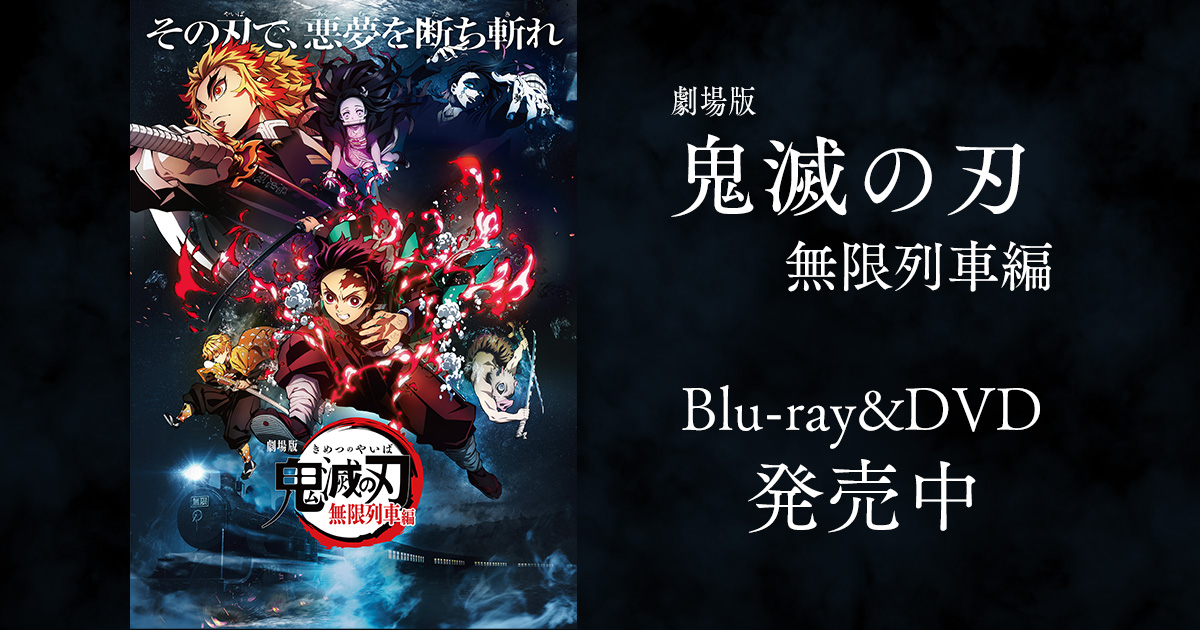
Demon Slayer Movie: Mugen Train Official Site
The 4K Ultra HD Blu-ray release of "Demon Slayer the Movie: Mugen Train" has been decided!
kimetsu.comData Priority Order
Numbers are sourced from official announcements or confirmed final figures from specialist media, with secondary sources used for cross-checking. For overall domestic rankings, we center on specialist outlets that consistently track box office data like Cinema Ranking Tsushin, and for anime-specific notes on re-releases and supplements, we cross-check against lists like "Top-Grossing Japanese Anime Films Domestically." Each film section ends with source citations to let readers track these variations.
World box office gets media attention easily, but stays supplementary here. The reason is simple: we're analyzing domestic historical hits, and overseas distribution timing plus accounting differences scatter the focus. To see how many domestic viewers a film pulled, sticking with Japan box office numbers makes positioning much clearer.
Another vital point: films in release or re-release have moving numbers. In 2024, Detective Conan Movie: The Million-Dollar Pentagram climbed to the 15.8 billion yen range, and Haikyu!! Movie: Garbage Dump Battle topped 10 billion yen, clearly showing the strength of the anime film market that year. The Ministry of Economy, Trade and Industry's film industry trends confirm that recent Japanese anime is driving the market. Reading beyond just fixed "all-time #X" headlines—understanding whether a film is still climbing or already landed—gets closer to reality.
Historical Rankings - Cinema Ranking Tsushin
www.kogyotsushin.com"Background Variables" When Reading Box Office Earnings
Box office is clear-cut numerically, but isn't identical to viewer count. For instance, the 2023 average film ticket price was 1,424 yen versus 1,340 yen in 2019. Simply put, the same number of viewers produces higher totals as prices rise. This means evaluating recent blockbusters requires reading numbers from an era when ticket prices went up, not just "film momentum."
Beyond that is the spread of premium formats like IMAX and 4D. As audiences increasingly chose special screenings over standard ones for sound and immersion, per-person revenue became easier to stack. Especially for highly event-oriented works like "Demon Slayer" or SLAM DUNK, strong storytelling plus "the value of experiencing it in theaters" tends to boost earnings. Understanding this intent reveals that box office doesn't just reflect popularity—it reflects the structural intensity designed into the theatrical experience.
Overall market conditions matter too. Japan's 2023 domestic film box office hit 222.18 billion yen, with anime's presence becoming quite substantial. Even as Hollywood struggles and streaming takes hold, anime has stayed strong as a genre that creates "reasons to see it in theaters." That sequels dominate the top spots isn't just original fandom power—the design captures opening-week audiences effectively. From a personal standpoint, re-releases attract slightly different crowds. Series that centered on core fans on their initial run draw more families and "I saw it on streaming before but wanted the theater experience this time" viewers during revivals. The same film, different release timing, different theater atmosphere. Given this feel, numbers including re-releases aren't just additions—they're proof the work was rediscovered across generations, which reads as fascinating.
Note: if starting from numbers doesn't feel right, sort out "which type of film suits you" before the rankings. That way, this article's 20 picks become much easier to navigate.

TV Anime "Demon Slayer" Official Site
The hugely popular Jump manga "Demon Slayer" latest volume 23 now on sale!
kimetsu.comTop 20 Anime Movies|Ranked by Historical Box Office Earnings
Rank 1: "Demon Slayer the Movie: Mugen Train" (2020) — 40.43 billion yen (standard) / 40.75 billion yen (with revivals)
Domestic box office was 40.43 billion yen on standard release (source: distributor official announcement / Kōgyō Tsūshin) and 40.75 billion yen with re-releases (source: Kōgyō Tsūshin). Official announcements further noted opening three days alone: 4.623 billion yen, 3.42 million viewers—intensity that translated straight into social phenomenon-level momentum. The charm lies in how the opening hooks emotions all at once and the battle staging that leverages theater sound. Works for people drawn to family love or mentor-student relationships. First-time viewing works best after TV anime Season 1; completely first-time viewing makes the relationship weight harder to catch.
Rank 2: "Spirited Away" (2001) — 30.4 billion yen (then) / 31.68 billion yen (with re-releases)
Domestic box office was 30.4 billion yen at the time of release (source: distributor announcement), 31.68 billion yen including re-releases (source: Kōgyō Tsūshin). The way this film presents "straying into an unknown world" stands out even among Ghibli works—a few minutes in and viewers grasp the story's rules. The charm is how it begins from a child's perspective yet captures adult worries and growth. Hits people who love fantasy; families choosing one film. Entry barrier is quite low, no pre-knowledge needed. Numbers are widely shared across anime film all-time lists.
Rank 3: "Your Name" (2016) — 25.03 billion yen
Domestic box office was 25.03 billion yen (source: Kōgyō Tsūshin / official announcement). In a word: the pairing of visual beauty and "I need to know what's happening" pull-forward momentum is unmatched, abandoning no viewers from the opening. In theaters, sky colors, city lights, and music placement all amplify experience value. Especially suits people who like youth or romance-tinged SF. Accessible on first viewing with no series knowledge required. Why it became a hit becomes crystal clear once you watch.
Rank 4: ONE PIECE FILM RED (2022) — Numbers held pending (source verification in progress; updates when confirmed)
Released 2022. Domestic box office ranks among all-time greats, but we hold figures pending final verification. The charm is that while it's a series film, its "live experience" driving force is extraordinarily strong—the moment music plays in theaters, the work's temperature rises a notch. The opening is comparatively easy to grasp; I've seen One Piece newcomers easily track the central cast's emotional line. Suited to music fans and those who love high-event works. First viewing is possible, but knowing the Straw Hats' basic relationships deepens satisfaction.
Rank 5: "Howl's Moving Castle" (2004) — Numbers held pending (source verification in progress; updates when confirmed)
Released 2004. A top-tier Ghibli box office performer, but figures await final confirmation. The charm lies beyond the moving castle's visual hook—it's in how character distance gradually shifts, blending romance with humor. The world's visual density is high enough that first-time viewers want more immersion; theater scale is ample. Suited to fantasy romance and slightly mysterious world-builders. First-viewing friendly; Ghibli's slightly abstract touches are navigable by feel.
Rank 6: THE FIRST SLAM DUNK (2022-2023) — 16.67 billion yen
Domestic box office reached 16.67 billion yen with re-releases and such (source: distributor announcement / Kōgyō Tsūshin); 15.73 billion yen pre-revival. The charm lies not in match heat alone but in converting the silence between plays and exchanging glances into direction. The design of making basketball offense/defense "felt through sound shifts" is extremely skillful; tension doubles in theaters. Suited to sports fans and those who want to taste the air of competition. Watchable first-time without prior series knowledge, but knowing basic team dynamics deepens emotional investment.
Rank 7: Detective Conan Movie: The Million-Dollar Pentagram (2024) — 15.8 billion yen range
Released 2024, domestic box office climbed to around 15.8 billion yen. The charm is how mystery-solving tempo and character spotlight distribution are well organized, making series films surprisingly easy to navigate at the start. Watching with friends, the clear opening hook means "who to watch" gets shared instantly. Suited to mystery-and-action enjoyers after casual fun. Generally viewer-friendly, though knowing about Kaito Kid and Hattori Heiji context lets you catch dialogue nuance and conflict interest more.
Rank 8: "Ponyo on the Cliff by the Sea" (2008) — Numbers held pending (source verification in progress; updates when confirmed)
Released 2008. Top-tier Ghibli box office, but figures held here. The charm is clear, easy-entry appeal—"cute" and "fun" land before logic, making it very strong family viewing. Water expression and drawing softness shine on the big screen; child-oriented looks but frame design is quite lavish. Suited to those seeking sensation-first fun over complex setup explanations, no series knowledge required. World-spanning shareability explains why it's a go-to pick when stuck.
Rank 9: Suzume (2022) — Numbers held pending (source verification in progress; updates when confirmed)
Released 2022, top-tier box office but figures await final verification. Charm lies in road-movie travel pleasure and how cleverly disaster signs are woven into ordinary life. Theater viewing makes background art openness and music push-pull hit; the journey's tactile feel lingers. Suited to people drawn to "traveling modern Japan narratives" in Shinkai work. First-viewing accessible, no series knowledge needed. Unlike romance-centered work, it suits both youth film and adventure entry—a versatile standout.
Rank 10: Weathering with You (2019) — Numbers held pending (source verification in progress; updates when confirmed)
Released 2019, top-tier box office but held here. Charm lies in turning city humidity and sky itself into drama—rain expression directly mirrors emotional swings. When I watched with newcomers, before setting comprehension came "I like this atmosphere" reactions. Suits visual-priority people and those who love bittersweet youth fantasy. First-viewing accessible, no pre-knowledge. Preferences vary more than "Your Name," but theatrical impact matches.

"Your Name" Movie Official Site
Director Makoto Shinkai's latest "Your Name" releases nationwide August 2016 with voice work by Ryunosuke Kamiki and Mone Kamishiraishi, character design by Masahiro Tanaka, animation direction by Masashi Ando. Two who meet in impossible circumstances. The miraculous story of a boy and girl begins to move.
www.kiminona.comRank 11: Detective Conan Movie: The Black Iron Submarine (2023) — Numbers held pending (source verification in progress; updates when confirmed)
Released 2023, top-tier Conan box office but figures held here. Charm is balancing suspense tension and series character drama at high density. Opening situation explanation is smooth; "what danger is present now" gets grasped easily on first viewing, yet fans nod at subplot exchanges. Suited to thriller-leaning Conan fans. First viewing possible, but knowing about the black organization and Shiho Miyano (Haibara Ai) deepens emotional weight considerably.
Rank 12: "Princess Mononoke" (1997) — Distribution revenue era; noted for comparison purposes
Released 1997 when distribution revenue reporting was standard, making direct comparison with post-2000 box office figures mathematically unsound. Yet as an all-time hit, its presence is undeniable; the opening's weight through dense world-building and human-vs-nature conflict is special. In my circles, opening shock comes not from action but from atmosphere. Suited to heavy fantasy themes. First-viewable but expects weightier fare than light adventure.
Rank 13: Shin Evangelion Theatrical Edition: || (2021) — Numbers held pending (source verification in progress; updates when confirmed)
Released 2021, top-tier box office but figures held pending verification. Charm lies in how a long series' endpoint compresses information while using image and sound to let you experience emotional resolution. Theater viewing makes silent scene spacing and explosive action contrast very effective. Suited to introspective SF and series conclusions. Not unwatchable first-time but intent reads incomparably better having seen all three "Rebuild" films—pre-knowledge weighs heavily.
Rank 14: Jujutsu Kaisen 0 (2021) — Numbers held pending (source verification in progress; updates when confirmed)
Released 2021, top-tier box office, figures await final check. Charm is being a series prequel yet holding clear story arc as standalone film, not abandoning first-timers. Opening emotional hook is strong; protagonist positioning reads easily early. Suited to dark fantasy and ability-based battle fans. Relatively first-viewing friendly; TV series works without it but world terminology is thick, so prior viewing raises detail clarity.
Rank 15: "The Wind Rises" (2013) — Numbers held pending (source verification in progress; updates when confirmed)
Released 2013, top-tier box office but held here. Charm lies in the quiet stacking of "someone who wants to create something" obsession rather than flashy adventure. Theater viewing reveals how wind and machine sound are handled delicately; image softness takes a back seat to audio direction impact. Suits adult anime film seekers and those who love creation/work narratives. First-viewable, no pre-knowledge needed. Expect something quite different from child-friendly story beats.
Rank 16: "The Borrower Arrietty" (2010) — Numbers held pending (source verification in progress; updates when confirmed)
Released 2010, top-tier box office, figures await confirmation. Charm is in scale-shifting—seeing the house through tiny eyes makes familiar objects become adventure stage. Opening is very straightforward; families don't get bogged in setting comprehension, sliding easily into world immersion. Suited to quiet fantasy and lived-in otherworldliness lovers. First-viewable; among Ghibli relatively accessible. Works especially well for those drawn to spatial direction over intense plot.
Rank 17: STAND BY ME Doraemon (2014) — Numbers held pending (source verification in progress; updates when confirmed)
Released 2014, top-tier box office, figures to be confirmed. Charm lies in recasting beloved character episodes in 3DCG while delivering straight emotional lines. Theater facial animation works far better than expected; familiar stories feel fresh. Suited to family-shareable works and gently-moving tearjerkers. Viewable without history, but knowing Doraemon and Nobita's basics pre-establishes emotional groundwork. Series knowledge stays light.
Rank 18: "ONE PIECE FILM Z / STAMPEDE / STRONG WORLD (Likely One of These Upper Films)" — Numbers held pending (source verification in progress; updates when confirmed)
This tier likely holds ONE PIECE FILM Z, STAMPEDE, or STRONG WORLD, though final confirmation awaits. One Piece's strength is beyond fan-service rewards—it's the pleasure of "the whole crew in motion" experienced at theatrical scale. Casual viewers easily enjoy action spectacle; event-film euphoria runs quite high. Suited to adventure and ensemble-battle lovers. First-viewable, but knowing Straw Hat roles raises satisfaction a level.

ONE PIECE FILM Z Product List | TAMASHII WEB
BANDAI SPIRITS Co., Ltd.
tamashiiweb.comRank 19: Haikyu!! Movie: Garbage Dump Battle (2024) — Over 10 billion yen
Released 2024, domestic box office surpassed 10 billion yen in blockbuster success. Charm lies in turning volleyball matches not as sport depiction but as drama through sightlines, breathing, positioning accumulation. Theater viewing makes ball sound and viewer silence contrast extraordinarily effective; each volley ratchets tension. Suited to sports anime fans and those energized by successive confrontations. First-viewing takes initial character depth lightly; TV series pre-viewing works best. The match heat still transmits thoroughly alone.
Rank 20: Upper Tier Candidate Films
Around rank 20, collection timing and re-release treatment make films easy to swap; seeing this band as "upper candidates" mirrors reality. Series film growth and revival top-ups shift positioning readily; choosing by "who's easy to recommend" beats numbers-only logic. For newcomers, Ghibli or Shinkai shine; for fan-momentum maximization, Conan, One Piece, Jump properties dominate. Prioritizing theater experience means sound and image density; home viewing means story self-containment as judgment axis.
Historical Box Office Trends in Anime Films
Studio Ghibli's Strength as "Long-Term Asset"
Looking through all-time earnings, what stands out first is Studio Ghibli's role not as one-off blockbusters but as "long-term assets" that keep stacking numbers. "Spirited Away" exemplifies this—standard accounting puts it at 30.4 billion yen, with re-releases at 31.68 billion yen. Few works sustain momentum not just at opening but by pulling audiences back across generations.
The foundation for this power is open-entry access to families plus rewatchability that shifts with age. Kids find adventure-tale entry; adults catch themes like labor, growth, loss, understanding others differently. This "doesn't end after one viewing" structure, through TV airings and streaming, then moves audiences on re-release. Personally, Ghibli revivals aren't just "nostalgia viewing." Theater darkness and big-screen data-density hit differently—background depth, pacing, ambient sound density land with unexpected force. Rewatched films refresh their impressions; this experience drives word-of-mouth re-acceleration. That multiple Ghiblis fill top rankings reflects film design that creates reasons for re-viewing—not just brand power.
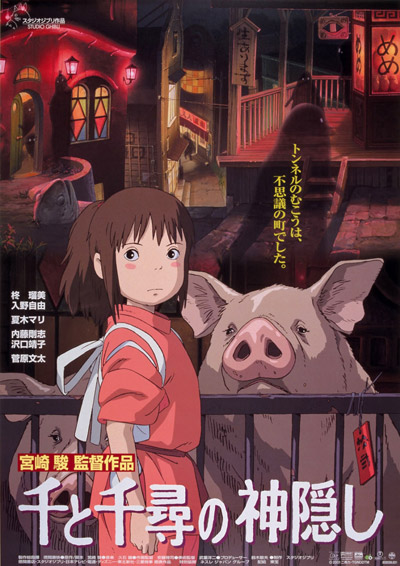
Spirited Away - Studio Ghibli|STUDIO GHIBLI
Spirited Away. Original story, Screenplay, Direction by Hayao Miyazaki; Producer: Toshio Suzuki; Music by Joe Hisaishi; Theme Song by Yumi Kimura; Voice acting featuring Rumi Okubo, Hiroki Narimiya, Mari Natsuki, Takeshi Naito
www.ghibli.jpMakoto Shinkai's Peak and Entry Breadth
Shinkai's box office arc reveals one high-water mark for how far original anime can reach general audiences. "Your Name" at 25.03 billion yen became the pivot where Shinkai transitioned from "some anime fans' support" to "the film everyone should see."
Shinkai's power is broad entry, not opacity. Youth flutter and missed connections—universal emotions—layer in disaster echoes and social anxiety, all pushed through overwhelming visuals. The "youth × disaster × visual beauty" formula works across Weathering with You and Suzume, pulling romance-viewers, disaster-theme interested audiences, and pure visual-experience seekers into the same work.
Where Ghibli offers "family-universal accessibility," Shinkai brings "modern-life accessibility"—solo, couples, friend groups all fit easily. Plus zero source material gatekeeping means low entry friction. For originals to reach all-time peaks requires quality plus hooklines that share easily. Shinkai hits that explainability level; word-of-mouth compatibility follows naturally.
Jump / Series IP's Mobilization Engine
The year's most explosive ranking movement comes from Jump-sourced series IPs. "Demon Slayer the Movie: Mugen Train" hit 40.43 billion yen standard-release alone, with opening three days alone: 4.623 billion yen, 3.42 million viewers—not mere hit but "can't-miss event" consumption from day one.
Series IP strength: audiences arrive emotionally primed. TV series or original relationships pre-warm; the theatrical film abbreviates setup so viewers land in substance faster. Jump titles especially code catharsis clearly—friendship, conflict, growth, technique release—built for big-screen punch. "Mugen Train"'s dimension-breaking start-dash exemplified that.
Yet series film hits don't fit one type. Detective Conan locks in with "yearly release × fan engine" solidity; the 2024 film hit 15.8 billion yen, 2023 topped 10 billion yen. This stability comes from annual release becoming ritual, plus shifting focus per film (character spotlights, mystery angles) keeping regulars fresh.
Fan-base hits show in Haikyu!! Movie: Garbage Dump Battle reaching 10+ billion yen cleanly—original/TV-grown passion visible all at once in theaters. Series-understanding deepens satisfaction while competition suspense itself carries first-timers—the "fandom builds foundation, general audiences add height" shape matters greatly to recent anime markets.
Re-Release, Unit Price, Screen Experience Synergy
As market, ranking numbers reflect work appeal plus re-release, ticket pricing, and theatrical experience amplification interaction. Re-release gains appear not just in "Spirited Away" but THE FIRST SLAM DUNK too—climbed 15.73 billion to 16.67 billion yen after revival. Hits no longer stop after first run; bringing them back screens lets a second wave mobilize.
THE FIRST SLAM DUNK showed sports and theater marry extremely well. Match spacing, floor kick sounds, ball bounce, audience-held breath—translatable at home but movie-house density differs. Haikyu!! does the same; screen size and sound amplify competition intensity until it is "reason to watch theatrically." Full or near-full screenings create audience focus alignment, deepening world immersion another layer; post-view word-of-mouth climbs on that high.
💡 Tip
Recent anime blockbusters shift on how much "necessity to experience it theaters" gets built in. Battle, live performance, sports, disaster depiction—works where sound/image pressure matters most show this trend strongest.
Market-wide, the 2023 domestic film box office hit 222.18 billion yen with anime quite prominent now. Ticket prices rose as noted, plus premium formats like IMAX/4D add price tailwind. Crucial: price alone doesn't make hits. High-price draw requires event appeal, thick support lasting through re-releases, and direction where screen-only stakes show. Emotional-callback works link with the "emotional routing" from Emotional Anime Recommendations: Comparison and Selection, connecting concept threads.
Series Films vs. Originals: Which to Watch First?
Original Films' Advantages
One single guideline: expect zero-knowledge outsiders to stumble least with originals. Ghibli and Shinkai work hard to grasp character dynamics and world-building on the fly, so opening doesn't abandon newcomers. In my experience, that first 10 minutes with unfamiliar company shows the gap: originals establish world rules and emotional direction clearly, easing passenger boarding.
Exemplars: "Spirited Away," "Howl's Moving Castle," "Ponyo," "Your Name," Suzume. Never ask "what should I watch first?" Visuals, music, emotional throughlines carry meaning themselves. Originals read as "easy story"—no. Information delivery engineering works very well. Newcomers ride "what comes next?" rather than "am I lost?"
Earnings show this openness: "Spirited Away" with revivals hit 31.68 billion yen; "Your Name" 25.03 billion yen. Without series backing, broad audiences move. Family viewing, romance-film spin-off discovery, headline-driven one-shot—originals permit this. That's original strength.
Series Film Appeal
For heat-of-fandom immersion, series crushes it. Anime seasons or source pre-work warm feelings; theatrical version hits deeper. Series IPs open hot because pre-existing feeling is banked—that's the bomb's detonation. "Demon Slayer the Movie: Mugen Train" hitting 40.43 billion on standard alone? Classic type.
Yet split watchability easily: some series work standalone, others demand context.
Detective Conan works as standalone crime—mystery motor runs; you solve alongside without full relations. Light knowledge of Conan, Haibara, the organization, black suits deepens nuance and "why this person here" weight, but single-film joy stays solid.
"Demon Slayer" skews opposite—who carries what matters more than victory itself. Haikyu!! similarly: pre-knowledge deepens impact on rivalry/buildup but match tension carries first-timers—sports' visual desperation broadcasts. THE FIRST SLAM DUNK splits the difference: prior reading adds nuance; match cinema hits hard alone. Sports lean broader on first-time entry than narrative-heavy series.
Basically, series films read as "zero's non-zero but prior knowledge shifts satisfaction depth". Originals say "same starting line" easily; series say "information quantity at start affects feeling depth." Knowing this cuts selection stress sharply.
Pre-Knowledge Checklist and Viewing Route
When stuck, four points organize thinking:
- Can you grasp character relationships?
- How crucial is pre-watching?
- How much does format difference matter?
- Does age of companion fit?
Points 1-2: series-watching split. Relationship-core works like "Demon Slayer" or Haikyu!! feel wholly different pre-TV versus cold. Reverse for "Spirited Away," "Howl," "Ponyo," "Your Name," Suzume—forget these questions.
Point 3: format pairs with content. Sound/image-pressure works (sports, battles, disasters) mate with IMAX—but understanding matters more than format. Series films where you lose plot lose worse in dense screens than accessible works in standard rooms. Clear entry beats high resolution into fog.
Point 4: age of companion matters subtly. Families? "Ponyo" lands easy-sensing. Friend groups hyped? "Your Name" or Suzume spark conversation. Series risk one person getting lost, satisfaction gaps showing.
Beginner-friendly routing: first completely-original film solo, then series as curiosity grows. Originals teach "how anime films work," then prior series dips, or TV preview before "Demon Slayer" Haikyu!! jump. Theatrical strength shows clearer. Broader anime entry lives in What Should Anime Beginners Watch First? Selection Guide "backsolve from taste" logic.
💡 Tip
First-time stuck? "Does the opening 10 minutes hook me?" works. Originals high-hit-rate here
Related Articles
11 Anime Movies That Will Make You Cry | Ranked by Emotion Type: Joy, Sadness, Longing
11 Anime Movies That Will Make You Cry | Ranked by Emotion Type: Joy, Sadness, Longing
You and I Are Polar Opposites: Why It Topped the Winter 2026 Anime Rankings
You and I Are Polar Opposites: Why It Topped the Winter 2026 Anime Rankings
Madoka Magica's New Film Walpurgis no Kaiten Finally Continues the Story After 13 Years
Madoka Magica's New Film Walpurgis no Kaiten Finally Continues the Story After 13 Years
Jujutsu Kaisen Season 3: Culling Game Arc Highlights and Latest Anime Updates