
Posisyon at Komposisyon sa Cosplay Photography|Paano Magmukhang Maganda Para sa Mga Nagsisimula
Posisyon at Komposisyon sa Cosplay Photography|Paano Magmukhang Maganda Para sa Mga Nagsisimula
Maaaring ang dahilan kung bakit nagmumukhang pareho ang bawat larawan ay dahil nakatuon ka lamang sa pagpapasok ng pose. Sa cosplay photography, ang tunay na pagbabago ay nangyayari kapag pinagsama mo ang pose × komposisyon × focal length × liwanag sa isang komprehensibong disenyo.
Maaaring ang dahilan kung bakit nagmumukhang pareho ang bawat larawan ay dahil nakatuon ka lamang sa pagpapasok ng pose. Sa cosplay photography, ang tunay na pagbabago ay nangyayari kapag pinagsama mo ang pose × komposisyon × focal length × liwanag sa isang komprehensibong disenyo.
Ang artikulong ito ay nakatuon sa mga praktikal na gabay na maaari mong gamitin sa lokasyon. Saklaw nito ang tatlong pangunahing pose na madaling gamitin para sa solo, pangunahing komposisyon tulad ng rule of thirds, positioning ng maraming tao, settings para sa araw na iyon, at mga etiketa na hindi dapat palampasin sa events. Kahit nasa "siyang-siyang" situation sa event venue kung saan walang sapat na oras, ang kombinasyon lamang ng rule of thirds, S-curve, at standard 50mm focal length ay makakatulong na makuha ang magandang shot nang maaasahan.
Para sa mga baguhan na hindi pa nakakahanap ng tamang style kahit naghahanap ng pose references, o sa mga dumarating laging sa kombinasyon shoot, ang artikulong ito ay makakatulong. Kung gusto mo matuto ng mga basic ng cosplay participation at real event operations, tingnan din ang venue reports ng site na ito. Kung unawain mo mabuti ang character at i-reverse-engineer ang gustong visual impression, makakakuha ka ng mas malakas na imahe sa maikling shooting time.
Sa Cosplay Photography, Hindi Lamang Pose ang Mahalaga—Kailangan mo ng Tamang Komposisyon
Pagsasalin mula 2D tungo 3D
Ang dahilan kung bakit mahirap ang cosplay photography ay dahil hindi mo maaaring simpleng ilagay ang 2D character sa real world at inaasahan na gagana. Sa anime o game art, lahat ay kontrolado ng artist—ang linya, ang background, ang visual flow. Ngunit sa photography, isang pagbabago ng camera position ay mababago ang lahat: ang shoulder width, ang depth ng mukha, ang information sa background.
Ang ganitong approach ay malapit sa "image planning" na tinutukoy ng Nikon Cosigenic Lesson 1. Kapag tinukoy mo kung saan maglalagay ng depth at anong linya ang dapat sa frame, ang pose ay biglang nagiging powerful. Kung tinitipon mo lang ang pose nang wala ang tamang composition, manatili itong simpleng "recreation" lamang.
Halimbawa, ang simpleng pose ng braced arms ay maaaring magmukhang "static" sa dead-front center composition, ngunit kung kukunin mo from a lower angle na may diagonal line, biglang lumalabas ang "dominance" at "power." Ang parehong concept ay sumasaklaw sa foot positioning, hand placement, at background elements. Isipin ang pose bilang body shape, at ang composition bilang ang blueprint kung paano dapat basahin ang shape na iyon.

Lesson1 Matuto ng Mga Tips para sa Cosigenic Shot | Cosigenic Lesson | Nikon Imaging
Kahit perpekto ang makeup at costume, minsan hindi pa rin nabubuo ang perpektong imahe. Basahin ang ilang mga tila simpleng secret sa cosplay photography.
nij.nikon.comReverse-Engineering Mula sa "Mood Word"
Kapag naguluhan ka sa set, hindi dapat ang unang gawin ay maghanap ng pose. Bilang huwaran, dapat muna itakda mo ang mood o atmosphere ng larawan sa isang salita. Halimbawa: "cool," "energetic," "melancholic," o "everyday." Kapag napili mo na, ang pagpili ng pose at composition ay nagiging mas malinaw.
Kung "cool" ang mood, ang vertical composition na may negative space o clean horizontal/vertical lines ay mas bagay. Kung "energetic," mas kailangan mo ng open posture combined with diagonal composition. Ang ganitong reverse-engineering approach ay mas epektibo kaysa pagplano mula sa pose itself.
Ang mahalagang parte ay ang mood → composition → pose flow na ito. Kung iniisip mo lang ang pose nang walang composition, ang background ay magiging obstacle lang. Pero kung simula sa mood, ang background ay nagiging parte ng storytelling.
Three-Step On-Set Decision Process
Sa aktwal na shooting, mas praktikal na gumiwa ng decision system:
- Itakda ang mood sa isang salita
Klaro kung anong "temperature" ang larawan.
- Hanapin ang usable lines sa location
Floor tiles, corridor, window frame, handrail. Tingnan kung saan maglalagay ng depth.
- I-fine-tune ang pose para sa composition
Hindi i-force ang pre-planned pose. Iwasan ang background lines na mag-intersect sa mukha, i-adjust ang jaw angle, shoulder position, foot placement.
💡 Tip
Kapag naguluhan ka, simple lang: rule of thirds + background lines avoid the face + standard 50mm. Maliliit na pagbabago lang sa positioning ay nagbabago ng buong impression ng photo.
Basic Poses Para sa Solo Cosplay Photography
Twist at S-Curve para Alisin ang "Plank" Look
Ang pinaka-epektibong trick para sa solo ay i-separate ang upper at lower body direction. Kung pareho ang lahat (feet, hips, shoulders) ng direction, agad mukhang promotional photo lang. Kaya gamitin ang S-curve: direkta ang hips, ngunit i-rotate ang shoulders sa opposite direction.
Simpleng proseso: put weight on one leg, twist hips slightly, return shoulders back, and let the face follow the camera. Iyon lang. Biglang may depth at natural curve ang body line.
Para sa female characters, mas strong ang effect. Para sa male characters, ginagamit pa rin ito para sa controlled composure instead na aggressive stance.
Hand Placement—Five-Category System
Ang pinakamabilis na paraan para i-fix ang awkward hands ay "trace the outline" method. Face area, neck, torso, waist, small props—itakda sa isa lang sa limang ito. Simpleng gusto lang:
- Cheek (soft, approachable)
- Neck (elegant)
- Waist (controlled, cool)
- Other arm (interlocked)
- Weapon/prop (active)
Hindi dapat maraming options sa set. Piliin, at tapos na.
Eye Line, Jaw, Neck Angle—The Final Polish
Ang expression ay nasa face angle. Kahit maganda ang pose, kung wrong ang jaw angle, mukhang incomplete.
- Dropped jaw = cool
- Raised jaw = dominant or proud
- Tilted neck = approachable or vulnerable
- Straight neck = composed authority
Maliliit lang na adjustments dito ang nagsasabing "finished character" vs "work in progress."
Gender-Based Directional Tendencies
Huwag automatic na mag-separate base sa gender, kundi sa character direction:
Female-leaning aesthetic: Curves matter more. S-line, soft hands, slight neck tilt.
Male-leaning aesthetic: Angles and weight distribution matter more. Shoulder width, foot stance, minimal neck tilt.
Mixed-gender teams o complex characters? Combine nila ang both.
On-Set Cheat Sheet: Three Core Poses
Kapag stuck, cycle through lang:
- Twist S-Curve
One leg anchored, hips diagonal, shoulders back, face to camera. Hand sa cheek, neck, o waist. Universal.
- Staggered Stance (One Leg Forward)
Front foot tip, back foot weight. Full body reads as 3D. Shoulder and hip offset.
- Wall-Leaning Counter Pose
Shoulder or back slightly against a wall/pillar. Legs staggered. Face diagonal, not dead-forward. Cool, composed.
Pagsundin ang order: feet → hips → shoulders → hands → neck/eyes.
Core Composition Patterns (4-6 Archetypes)
Rule of Thirds—Safest Starting Point
Grid the frame into thirds. Place key elements (face, weapon) at intersection points or along lines. Creates balance while maintaining negative space for storytelling.
Kailangan: Avoid being too "safe"—fill the 2/3 negative space meaningfully with background or light direction.
Center Composition—Pushing the Subject Forward
Subject dead-center. Strongest when foreground or light creates depth layers.
Risk: Can flatten if background is unmanaged. Use front-layer bokeh (flowers, railings) to separate subject from background.
Diagonal Line—Action and Momentum
Camera captures diagonal across the frame. Weapon, extended arm, body lean all along one diagonal axis.
Strength: Makes stillness read as "pre-action tension." Caution: Angle matters—too extreme = discomfort.
Frame-within-Frame—Location as Partner
Window, doorway, arch, tree branches. Natural border that isolates subject while keeping location context.
Master concept: Avoid letting the frame overshadow the subject. It should whisper, not shout.
Pull-Back Composition—World-Building (20% or Less of Frame)
Tiny figure in expansive space. Shows scope, scale, atmosphere.
Trick: Even at 20% figure size, placement matters. Put on a strong sight line (hallway vanishing point, cliff edge) so the subject doesn't disappear.
| Komposisyon | Best For | Strength | Watch Out |
|---|---|---|---|
| Rule of Thirds | Balanced, narrative | Stable, negative space | Can feel "safe" |
| Center | Hero shot | Direct, powerful | Demands background management |
| Diagonal | Battle, action | Momentum | Over-rotation breaks comfort |
| Frame-within-Frame | Location integration | Keeps context, isolates subject | Frame can dominate |
| Pull-Back | Scope, atmosphere | Cinematic | Subject placement is critical |
ℹ️ Note
Same location, three shots: rule of thirds (pose), frame-within-frame (place), pull-back (world). One location becomes three different pieces.
Multi-Person Positioning Rules
2-Person: Direction Offset + Depth
Don't stand parallel. Offset the direction (one facing left, one facing right) and depth (one forward, one back). This creates relationship and conversation.
Use the same S-curve principle per person: each person twists slightly toward the other, even if overall they're offset. Hand placement creates hierarchy (one protective, one active).
3-Person: Triangle Formation
Center subject, two anchors left and right, with slight inward turn. Instantly stable.
Trick: Vary height. One standing, one slightly crouching, one on toes. Prevents "wall of faces."
4-Person: "へ" (Heto) Shape, Not V
V-shape often collapses. Instead, stagger: two in front, two in back, with slight angle so it's not dead-symmetric. Creates depth without losing anyone.
5+ People: W-Shape + Role Delegation
Mountain-valley-mountain silhouette. Front row holds stance, back row directs via face/shoulder angle. Not everyone fights for the spotlight.
Concept: Teamwork in framing. Not everyone at 100%—some at 70%, some at 100%, creates breathing room.
💡 Tip
More people = less symmetry needed. Break the urge to line them up. Offset, angle, vary heights. Breathing room beats "impressive wall of costume."
Context-Dependent Shooting Strategies
Event Venue—Three Steps, Fast
- Background scan (2 seconds)
Find a "clean pocket"—wall far enough back, tree shadows, empty space.
- Pose base (5 seconds)
Rule of thirds standard. S-curve on one or both people.
- Variation (10 seconds)
Same base, change face direction or hand position. Done.
Time awareness: Event lines move fast. Your focus should be "did this person get a good shot in their window?" not "did I capture their essence in 47 takes."
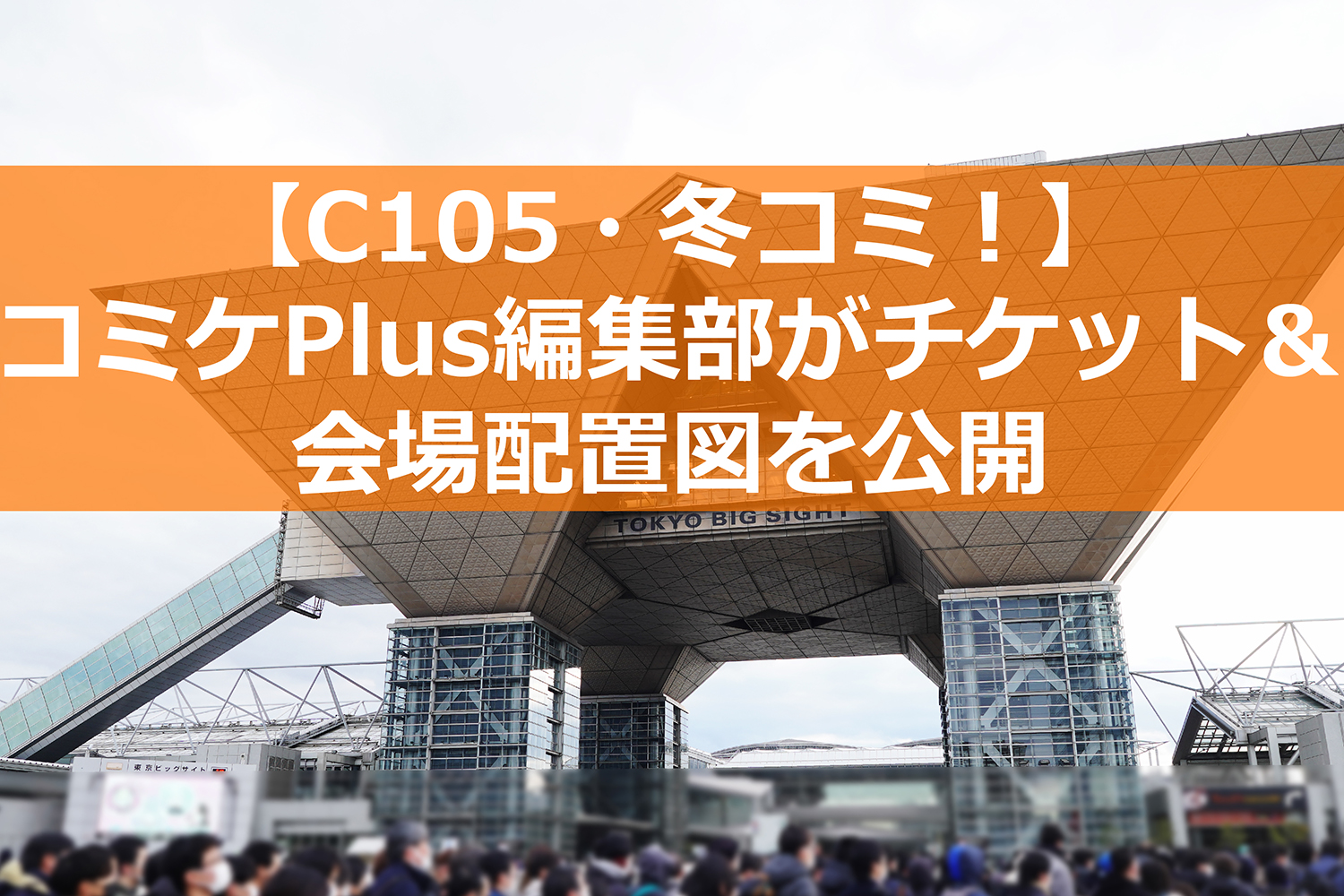
105th Comic Market (Winter Comiket) Venue Info—Otas Po Guide
Large-scale event, thousands of participants daily. Time management is respect.
otaspoguide.comStudio—Pre-Design Lighting + Depth
Unlike events (improvise within chaos), studios (design with intention). Decide:
- What foreground/background context do I want?
- How much of the set do I want readable? (F/2.8 for isolation; F/5.6-8 for set integration)
- What's the light role? (Key, fill, rim—separate or unified)
Lighting goal: key establishes the form, fill softens shadows without erasing them (roughly 1/3 to 1/4 of key strength), rim separates from background (roughly 1/2 of key strength or more for dark hair).
Home Cosplay—Maximize Limited Space
Use:
- Mirror (check full-body posture before shooting)
- Articulating monitor (frame check before each shot)
- Foreground layers (curtain edge, plant blur) = instant depth
Setting shorthand: F/4 · 1/60 · ISO 800—soft background, hand-hold safe, room-friendly.
ℹ️ Note
Small space trick: don't clear the room, frame it. Window side + natural light + white reflector = instant uplift.
Focal Length + Angle = Impression
50mm—The Truth Serum
Same pose, 50mm reads "honest." Good for checking if a pose actually works, or if you're relying on lens trickery.
Beginner habit: Over-rely on wide angle to "fix" weak poses. Check at 50mm first.
85mm—Subject Isolation
Background falls away, subject pops. Bokeh helps separate layers. Ideal for detail shots (face, weapon, fabric).
Rule: Longer lens = background compression. Use this to your advantage or avoid it deliberately.
Wide Angle (16-35mm)—Amplification
Action reads as MORE dramatic. Leading lines exaggerate distance.
Gotcha: Face distortion, foot/hand over-emphasis, wall tilt. Manage intentionally. Don't apologize—wield it.
Angle (High, Low, Eye-Level)
Low angle = hero shot, dominance, strength. High angle = vulnerability, cuteness, intimacy. Eye-level = conversation, baseline, neutral.
Same pose, three angles = three different characters. This is not decoration—it fundamentally re-reads the pose's meaning.
💡 Tip
Shoot eye-level first for baseline, then vary angle. Compare before choosing final.
Exposure Settings + Lighting Basics
Indoor/Outdoor Baseline
Shutter speed floor: 1/60th second (hand-hold safety). Aperture range: F/4 (subject focus) to F/8 (set integration). ISO strategy: Don't fear it. Raise ISO to hit 1/60, not the reverse.
Interior example: F/4, ISO 1600, 1/100th = sharp + moody.
One Light, Two Light, Three Light
One light (key only): Establishes shape. Shadows strong. Learn here.
Two lights (key + fill): Fill softens shadows to 1/3–1/4 key intensity (~1.6–2 stops less). Realism without flatness.
Three lights (key + fill + rim): Rim backlight separates from background. Rim ≥ 1/2 key intensity, especially for dark hair.
This progression teaches you what light actually does, rather than "more lights = more better."
Practical Setups
Cross-lighting: Angle light slightly. Avoids flat front-light. Backlight: Rim + separation. Especially strong for translucent costume elements. Bounce: Soft, forgiving. White ceiling/wall bounces light indirectly. Beginners' secret weapon.
ℹ️ Note
Think in terms of "shadow placement" not "brightness." Where do you WANT shadow to sit?
Common Mistakes + On-Set Fixes
Plank Posture → Quick S-Curve Twist
Symptom: Straight up and down, no flow. Fix: One foot forward weight, hips angle 10°, shoulders back, neck tilt. Takes 3 seconds.
Hands Dangling → 4-Choice System
Symptom: Arms at sides, no purpose. Fix: Cheek, neck, waist, or prop. Pick one. Done.
Busy Background → Position Shift, Not Lens Change
Symptom: Poster, signage, clutter right behind subject. Fix: Half-step sideways (often clears the frame). If not, rule of thirds + diagonal away from clutter.
Or 85mm + F/4 (longer lens compresses background noise).
Dark Interior Blur → Shutter Speed First
Symptom: Hands and face are soft/blurry in darker venue. Fix: Raise ISO to hit 1/60 shutter floor. Grain < blur.
Bonus: Ask subject to "hold pose on count 3" for locked stillness.
Multi-Person Cramping → Breathe Through Stagger
Symptom: Line of faces, all forward, wall-like pressure. Fix: Offset depth (front-back) and offset angle (who faces where). Even 15° difference helps.
Voice Direction Mishap → Three-Word Rule
Don't: "Can you shift your weight slightly to the right while tilting your chin down just a touch and moving your left hand from your waist to near your face?"
Do: "Weight right." [pause—watch them adjust] "Chin down." [wait] "Hand to cheek."
Provide one cue, watch them land it, affirm ("good, hold that"), move to next cue. Rhythm > length.
Pre-Shoot Checklist + Ethics
Beforehand
- Read venue rules (photography zones, equipment restrictions, costume rules).
- Get subject consent (scope of shoot, SNS posting, tagging).
- Set timing expectations (event queue pace, available window).
- Charge batteries, test gear.
On-Site Etiquette
- Respect queue flow. Don't hog time.
- Avoid blocking throughways (people move around you, not you demanding space).
- Background awareness: Check for identifiable people/signage before posting. If someone's face is clear in background, blur it or ask permission.
Post-Shoot Before Posting
- Confirm posting consent. "This shot—okay to post on X / Instagram?"
- Check background. Zoom in. Third-party faces? Signage? Nametags?
- Tag wisely. Only include tags/accounts the subject approved.
Ang essense ay simple: space → light → pose (in that order of urgency). Kasama ang respect para sa time, location rules, at people sa background. Kung ito ay mastered, ang "perfect shot" becomes reproducible instead of lucky.
Kaugnay na Mga Artikulo
Ulat ng Comiket 105 (C105): Kahanga-hangang Cosplay, Trending na Doujin Works, at Mga Highlight ng Corporate Booth
Ulat ng Comiket 105 (C105): Kahanga-hangang Cosplay, Trending na Doujin Works, at Mga Highlight ng Corporate Booth
Gastos sa cosplay: Budget guide | Magsimula ng ₱1,500-2,000 (approx.)