
What Should Animation Beginners Watch First? Choosing Your First Series
What Should Animation Beginners Watch First? Choosing Your First Series
Many people want to start watching anime but freeze when faced with 'so many famous series, where do I even begin?' Your first series succeeds far more often when chosen by genre × episode count × pacing, rather than popularity alone.
Many people want to start watching anime but freeze when faced with "so many famous series, where do I even begin?" Your first series succeeds far more often when chosen by genre × episode count × pacing, rather than popularity alone.
This guide is for anime beginners and those returning to anime after a break—it helps you decide what to watch today by clarifying your decision-making process. Using roughly 30-minute episodes as the standard, we'll help you distinguish whether to start with a film, try a 1-cour (13-episode) series, or dive into longer shows. A genre comparison table and simple flowchart will reduce your uncertainty.
I've personally noticed that since I started hitting play on just one episode after work and switching genres rather than series when something doesn't click, I've given up far less often. Choosing an entry point that matches your current mood and available energy is the most reliable shortcut to enjoying anime.
Why Anime Beginners Struggle to Pick Their First Series
The biggest reason people hesitate is that in anime, "being famous doesn't necessarily mean it's easy to watch." While there are simply many series to choose from, beginners actually stumble less on sheer volume and more on the fact that hit shows often don't match individual preferences. Popular series carry dense worldbuilding, unique conversational rhythms, and expectations built on long-running franchises. When these elements don't align with what you're looking for, you feel "this is supposed to be popular, but I'm not connecting with it"—and that feeling comes first. Here's what's crucial to understand: a series being highly rated and being easy to finish as your first anime are not the same thing.
Genre and episode count are emphasized in beginner-friendly recommendations precisely to avoid this mismatch. In practice, series repeatedly suggested for beginners share traits like good pacing, understandable worldbuilding, easy emotional investment—all of which offset the entertainment value question. Battle series work because their goals are clear and easy to follow; slice-of-life and school series require little prior knowledge and let you enter through atmosphere. Mystery and drama series excel at "making you want to know what's next," but high information density can leave you behind in early episodes. Ignoring these differences and chasing top-ranked series risks hitting mismatches that damage your motivation significantly.
Your first series also sets the overall impression of anime itself for you personally. This is why some people drop out of anime entirely after one mismatched first series, thinking "maybe anime just isn't for me." I've experienced this myself—I started a critically acclaimed series on recommendation but couldn't engage comfortably through episode 3 and simply stopped. Conversely, with series whose pacing and tone matched my taste, I could tell within the first 15 minutes "yes, I can do this." The decision to continue actually happens surprisingly quickly.
"Popular" Matters Less Than "Finishable Entry Point"
Based on my experience and this media's assumptions, light-to-mid-level viewers typically watch about 5–10 series per year as a rough benchmark (this varies significantly by person and viewing style).
From this perspective, series with clear endpoints work better as entry points than sprawling long-runners. A 1-cour series or self-contained film is easier to plan viewing around. Because the anime catalog is so vast, starting with smaller successes tailored to your tastes—rather than tackling canonical masterpieces—actually builds momentum toward your next series.
The 30-Minute Format Is Remarkably Beginner-Friendly
Standard TV anime episodes run about 30 minutes each. Animation reference materials are even organized around this format. This length hits a sweet spot: not as daunting as a film, not as demanding as a drama series. The ability to try "just one episode tonight" on a weekday is a significant advantage for beginners.
Used well, this 30-minute structure dramatically lowers viewing barriers. If you have two hours free, you can watch roughly four episodes—enough to confirm early momentum over a weekend, or alternatively, test compatibility with just one on a weekday. Anime can seem like a time-intensive hobby, but in your entry phase it's actually quite easy to sample. So when in doubt, judge by whether one episode gives you the impulse to keep going, not by chasing the perfect series on first try.
💡 Tip
What beginners should avoid isn't "difficult series" but rather series that don't match your current mood. Wanting excitement but watching quiet slice-of-life will feel boring; the reverse mismatch is equally problematic.
From a production perspective, each 30-minute TV anime episode involves many staff members. Reference materials sometimes cite "200–300 people" as a rough benchmark, though this varies significantly with production format and outsourcing ratios. For this article, we emphasize the principle that many processes are concentrated into this format.
Confusion itself is natural, but broken down, it's not complicated. You don't hesitate because candidates are too numerous—you hesitate because popularity, length, genre, and pacing hit you all at once, making judgment difficult. What beginners actually need isn't "the most famous series" but rather a series that makes you want to watch one more episode after that 30-minute trial. From your first series, you're not seeking a masterpiece to discuss—you're seeking the confidence that anime as a format feels genuinely good to engage with.
5 Criteria for Choosing Your First Series
Though picking your first series by feel alone often misfires, breaking judgment into five axes makes things highly manageable. When I recommend series to beginners, I don't ask "is it supposedly good?"—I ask what might actually work as a gateway. What made the biggest difference: not being greedy about conditions, but narrowing them down first. "Funny × 1 cour × strong opening hook"—once I decided that in advance, my completion rate jumped dramatically. Series selection is more about design than taste.
Matching Your Genre Preference
For beginners, starting with genre compatibility is the most stable approach. Rather than chasing popularity, matching it against how you typically respond to stories changes how smoothly you'll take to episode one. For example, if you usually get curious about "how a case resolves" in films or dramas, mystery leans well. If you prefer "easy conversation and relaxed watching," slice-of-life and comedy fit better. Battle series have clear goals making them easy to enter, but many expand into long formats, so pairing them with length checks helps you avoid fumbles. The early structural clarity of strong content is valued across visual media generally. Video composition theory emphasizes early viewer judgment as designs continue being valued, and this applies strongly to anime's first episode too. The closer your genre matches your taste, the easier you'll grasp that initial hook.
Checklist
- Battle/Adventure suits you if: You enjoy clear objectives, growth arcs, recognizable spectacles like special techniques
- Slice of life/Comedy suits you if: You want entry without heavy setup, enjoy witty exchanges or atmospheric moments
- Mystery/Drama suits you if: You're drawn to plot structure, want to follow foreshadowing and emotional shifts
- Romance/Coming-of-age suits you if: You're intrigued by relationship changes and emotional distance
- SF/Isekai as your first choice works if: Setting explanation is well-organized and early objectives are clear
- Unsure? Try: Leaning toward whatever film, drama, or manga genres you usually watch
Concrete examples make this easier: for clear action entry, Demon Slayer and One Punch Man have strong hooks. For dialogue-first enjoyment, Spy×Family and Teasing Master Takagi-san let you touch character appeal before fully grasping the world. For story priority, Erased and Hyouka make "what's next?" your reason to keep watching.

Why Video Composition Matters: Methods, Frameworks & Benefits of Making Your Own|Borderless Tokyo - Video Production
A complete breakdown of video composition and scripting methods! Composition templates by purpose and tips for creation. Clarify your message, grab viewer attention with composition principles, scriptwriting steps, and purpose-specific composition templates.
www.borderless-tokyo.co.jpEpisode Count & Length
Length is your next strong tool. "Episode count" gets emphasized in beginner picks not because of entertainment level but because of how clearly you can see the finish line—this removes viewing burden. Long series where early episodes misalign create "there's more?" resistance. Conversely, predictable endpoints feel trial-friendly and let you pace yourself.
Since standard TV anime runs 30 minutes, roughly four episodes fit in two hours. With this sense, 1-cour series becomes "testable length for a weekend" while films around 100–120 minutes complete in roughly four episodes' time, delivering one whole world and emotional arc. Length is less about preference and more about whether today's rhythm and energy match.
Checklist
- Want to watch one episode per weekday: 1-cour TV series fit best
- Want self-contained completion: Films like Your Name and Summer Wars feel natural
- Uneasy about long series: Start with clear-endpoint material first
- Want weekend binges: Series showing direction within the first ~4 episodes work well
- Want to slowly love characters: TV series usually work better than films
- Avoid mid-series dropout: Prioritize "clarity of trajectory" over raw length
The key here is that longer isn't bad—long series deliver huge satisfaction once you're hooked. But your first series should build success, not test endurance. So: not "a big acclaimed hit," but "can I realistically finish this?" That alone dramatically narrows options.

Your Name Film Official Site
Director Makoto Shinkai's latest *Your Name* releases nationwide August 2016 via Toho. Voices: Tatsuhiro Kamiki, Mone Kamishiraishi. Character Design: Shota Tanaka. Animation Direction: Masashi Ando. Two people who never meet. A boy and girl's miraculous love story begins.
www.kiminona.comPacing
Even 30 minutes feels different subjectively. Series beginners find "easy to watch" usually shares strong pacing. Here, pacing doesn't just mean fast development—it means whether value appears early, whether character relationships show quickly, whether each episode plants a "why watch next?" From production perspective: series that communicate "here's what makes this fun" to audiences quickly have stronger first impressions.
Especially in battle series, early pacing, clear spectacles, and visible hero goals tend to work as gateways. The Battle Anime Primer 15 Picks repeatedly emphasizes this: speed of understanding matters as much as intensity. I notice that series where direction becomes clear in episode-one's first half flow easily into episode two.
Checklist
- Main character's goal is clear in the first half
- Spectacles show rather than explain heavily
- Dialogue stays engaging even when lengthy
- Episode endings plant reasons to continue
- Setting exposition doesn't consume the full 30 minutes
- Series tone becomes evident from early moments
ℹ️ Note
Unsure about pacing? Narrowing to "funny × 1 cour × early hook" makes you quite hard to miss. First-episode good feeling matters more than later depth for your first series.
For example, Spy×Family carries spy-genre setup but feels like family comedy—fun lands before difficulty. One Punch Man communicates action spectacle immediately, while Erased has strong structure making "must know next" durable. Pacing is "not abandonment" rather than "flashiness"—judge it that way.

Clear & Thrilling! Battle Anime Primer 15 Picks|VOD Subculture
Every series features "growth behind conflict" as its backbone. Beginners can clearly identify "this is intense!" moments.
dokovod.comWorldbuilding Clarity
Beginners often get caught by worldbuilding's underestimated friction. "Clarity" here isn't whether settings are shallow or deep, but whether early viewing establishes what you need to enjoy it. Dense settings can feel instantly accessible with good pacing. Conversely, floods of terms, factions, and rules create heaviness even in popular work.
From this angle, slice-of-life and school settings work steadily for first-timers—closeness to reality means you enter from conversation and feeling without prior knowledge. Teasing Master Takagi-san shows relationships rather than explaining, so confusion stays low. Even mystery leans lighter when it's Hyouka-type "everyday mysteries"—you observe fun rather than absorb settings.
Checklist
- First episode doesn't demand remembering many unique terms
- Enemy/ally/objective relationships are organized
- World rules transmit through both dialogue and visuals
- Unknown terms don't cause immediate friction
- Setting is reality-close or explained in steps
- You understand the world through the protagonist's viewpoint
You needn't avoid worldbuilding-rich series. What matters is introduction generosity, not depth. Demon Slayer carries unique lore but has crystal-clear protagonist goals, staying followable. Series where setting is the appeal's center? Save those for "second onward"—they flow better that way.

*Teasing Master Takagi-san* Film Official Site
*Teasing Master Takagi-san* Film Official Site Releasing June 10 (Fri)
takagi3.meEmotional Entry: Laugh, Cry, or Thrill
What emotion you want matters more than genre label. People continue watching because they laughed, cried, or felt suspense—not because they understood setting. "Easy emotional investment" appears so often in beginner recommendations because clear emotion-access works.
Wanting laughs on a day for heavy drama makes series feel wrong—mismatched mood stops continuation. Wanting story immersion with light comedy alone can feel unsatisfying. Seeing this beforehand splits "is this series good?" from "does it suit today's me?", making choice easier.
Checklist
- Want laughs: Emphasize dialogue rhythm, character distance, episode lightness
- Want tears: Pick works where background and relationships build carefully
- Want suspense: Pick strong mystery, thriller, or cliffhanger-driven material
- Want mood shift: Prioritize fun-forward over heavy-setting series
- Want immersion: Pick works with clear emotional peaks
- Unsure? Narrow to one emotion you want today
Concretely: laugh entry picks Spy×Family or Teasing Master Takagi-san; cry picks point toward theatrical anime, where Your Name makes emotional waves naturally; thriller picks like Erased work well for that energy. Picking one emotion narrows genre confusion naturally.
Small Terminology Notes
At your first-series stage, just a little terminology helps immensely. Animation jargon shifts even in production; beginner guides benefit from notes. You needn't memorize, but basics help unlock series descriptions and streaming-site summaries.
Quick Terminology Check
- 1 cour: One broadcast season's arc. In beginner contexts, shorthand for "testable length"
- 2 cour: Longer than 1 cour. Lets character and story develop slowly; can feel heavy for a first series
- Opening: First episode through early arc showing world, people, and objectives
- Good pacing: Development moving fast and spectacles/relationships becoming clear quickly
- Worldbuilding: That series's rules, setting, and value system as a coherent whole
With these terms down, recommendation phrases like "emphasis on pacing," "clear worldbuilding," or "1 cour so you can finish it" become practical gauges for fit rather than vague praise. Series picking is taste-based and design-based—quite logical actually once broken down.
By Genre: How Beginners Choose Their First Series
Breaking down by genre makes selection smooth even if you're not sure what you like. Rather than chasing popularity, asking do I want heat, ease, or narrative drive? and splitting cleanly helps beginners avoid early stumbles. Looking at collections like Battle Anime Primer 15 Picks or beginner roundups, successful entry series share "fast openings," "clear goals," and "first-episode appeal."
A quick 4-category comparison creates your choice map.
| Genre | Ease of Entry | Potential Stumble | Good For | Beginner-Friendly Element |
|---|---|---|---|---|
| Battle/Adventure | Clear goal feels natural | Long series raises burden | Those who love intense development | Pacing, special moves, growth |
| Slice of Life/Comedy | Minimal prior knowledge needed | Those seeking major peaks may want more | Those wanting casual viewing | Witty exchanges, atmosphere |
| Mystery/Drama | Wanting "what's next?" | High information can feel challenging | Those prioritizing narrative | Mystery, investment, emotional stakes |
| Film | Self-contained completion | Emotional swing can feel heavy | Those wanting one complete watch | Clear finish point, high completion |
Battle/Adventure: Entry & Cautions
Battle series typically have crystal-clear "why fight?" setups, letting beginners grasp narrative anchors easily. Hero goals, enemy opposition, and power growth line up visibly, so you don't lose sight of the point. Visually, spectacle, music, and finishing moves present early, with force to make you want more within minutes.
Demon Slayer (2019 TV anime, ufotable production) shows this strength. Clear family motivation sits first, so unique lore doesn't create confusion. One Punch Man stacks "hero vs. monster" clarity with comedic deflation, staying lightweight. Those seeking heat find "clear fighting reason" series work well as gateway. To explore further, our Battle Anime Recommended Picks helps with next searches.
Watch out: popular battle series tend toward length. Accessible openings can feel heavy once you think "I must follow it all." When viewing first series, do early episodes feel smooth? matters more than total series size. I tend to postpone long battles on draining days, going for quick-opening material instead.
This genre suits those wanting unambiguous excitement, character growth enjoyment, and visceral visual pull. Quiet exchanges and lingering mood? Battle-centric structure can feel busy.

TV Anime "Demon Slayer" Official Site
Popular *Weekly Shonen Jump* manga "Demon Slayer"—23-volume final series out now!
kimetsu.comSlice of Life/Comedy: Entry & Cautions
"Let me watch casually first" types find slice-of-life/comedy remarkably strong. Massive worldbuilding isn't required; you enter through conversation and air directly. Character connection becomes entertainment center, so visual understanding beats explanation—perfect for beginners.
Spy×Family: Despite spy/assassin/psychic elements, its essence is chaotic family comedy. Co-produced by WIT Studio and Cloverworks, screen clarity and pacing are strong gateways. Teasing Master Takagi-san: Even simpler—school daily life where two friends' exchanges matter, minimal prior knowledge. "Relationships as leads" series rarely fumble for entry. Looking wider, our Slice-of-Life Anime Recommended helps locate similar material.
Fair warning: many slice-of-life pieces lack explosive climaxes; that can disappoint those expecting spectacle. This isn't series weakness but mode difference. Dialogue, silence, humor repetition, accumulation—can you enjoy those? That's where compatibility settles. I find slice-of-life sustainable on tiring weekdays when I want soft re-entry—lowest replay friction in my own habit.
Best fit: those avoiding heavy setup, those wanting pre-sleep viewing lightness, those loving character banter. This genre works because understanding entry is "relationships," not "rule systems"—you grasp via people.

Anime *Spy×Family* Official Site
Original: Tatsuya Endo (serializing in *Weekly Shonen Jump+*). Anime *Spy×Family* official. [Season 3] Airs Saturdays 23:00 starting October 4 on TV Tokyo and more. Seasons 1 & 2 available on various platforms.
spy-family.netMystery/Drama: Entry & Cautions
If following narrative appeals, mystery/drama works exceptionally well. Mystery or emotional hooks drive viewing naturally—"need to know what's next" becomes continuation directly. 30-minute structure with information release and cliffhanger pairing works in genre's favor; single evening viewing often extends into multiple episodes.
Erased (2016 TV anime, A-1 Pictures): Suspense hits hard while emotion centers on character. You follow protagonist driven by desperation for knowledge—expert emotional grounding. Hyouka (2012, Kyoto Animation): Rather than complex crime solving, observation and deduction around everyday puzzles. Shows deft emotional continuity without heavy atmosphere. Want serious character/story pulling? See our guide on moving anime picks for that direction.
Caution: high-information mystery can feel front-loaded for beginners. Multiple proper names, timelines, foreshadowing, character links layering together feels heavy before engaging. Same mystery genre, though—Hyouka's daily grounding versus Erased's thriller feel carry different entry weights. Judge carefully here; done right, beginners find clear entry.
I tend toward weekend mystery viewing—multi-episode absorption works better than half-watching. Suits those tracking character emotion or narrative tricks. Gateway reason: drive to continue is structural itself, not spectacle.
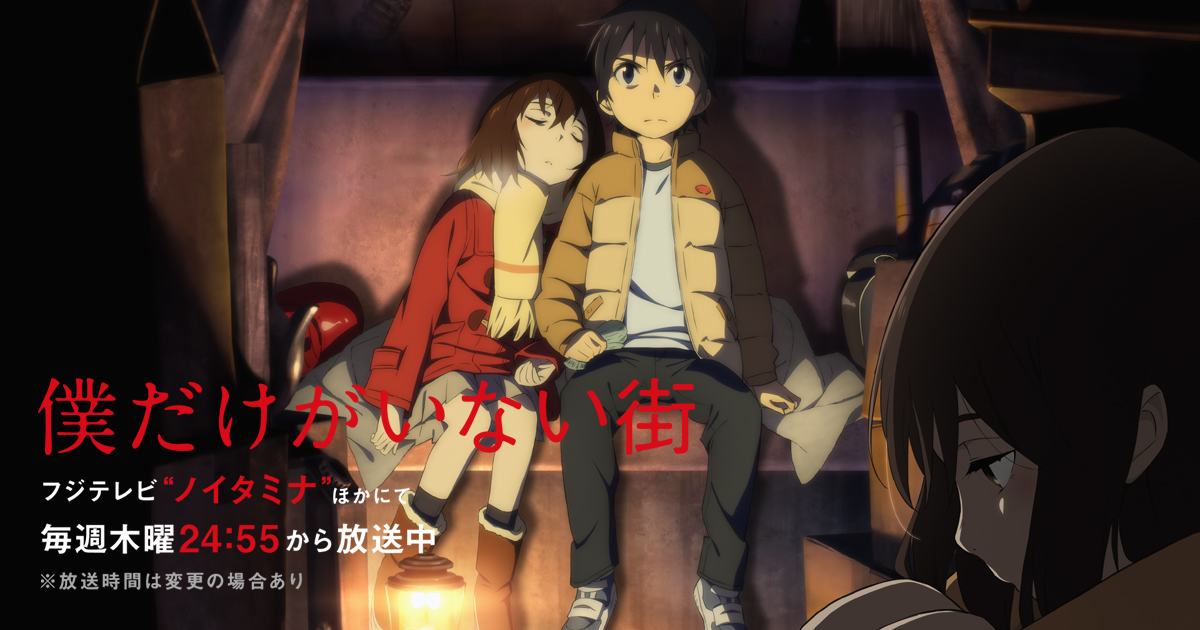
TV Anime "Erased" Official Site
One day, she died. TV Anime "Erased" airs Thursdays 24:55 on Fuji TV noitaminA and more.
bokumachi-anime.comFilms as Entry
Those hesitating on series benefit from films—self-contained completion eases planning. Around 100–120 minutes, roughly 4 TV-episode length, delivering one world and emotional journey complete. "Next episode waiting" anxiety vanishes; psychological lightness increases.
Your Name (2016 theatrical release, director Makoto Shinkai): Original long-form synthesizing romance, drama, SF mechanism cleanly. Unfamiliar viewers find entry smooth here. Summer Wars (2009, 115 minutes): Family drama plus virtual-world incident, compositionally clear. Films aren't "short" but arrive with finish-line visibility, building confidence.
💡 Tip
Those with low serial-viewing habit or prioritizing one-sitting completion feel more stable starting with film. You grasp the world at once, practicing anime grammar effectively as your initial training ground.
Caution: films often swing emotion widely; some days feel weighty. Prioritize lightness, pick slice-of-life; want immersive narrative plunge, pick film. Genre name confusion? Return to "want laughs," "want story drive," or "want to finish one sitting"—you'll narrow cleanly.
Specific Recommendations by Genre & Why Beginner-Friendly
Battle: Demon Slayer / One Punch Man
Battle picks let beginners quickly grasp "what's fun." Enemy opposition, strength growth, and guarding precious things align clearly; spectacle and feeling organize readily. Battle Anime Primer 15 Picks emphasizes pacing and compositional clarity in beginner picks—precisely what first series need. Clear spectacles arrive early; 30 minutes decides continuation easily.
Demon Slayer: Family motivation is utterly transparent; emotional investment arrives clear. You grasp "what does this hero need to overcome?" immediately, so anime-specific lore doesn't disorient unfamiliar viewers. ufotable's visual design makes action legible—technique effects, advantage shifts, all read cleanly from screen. Beginner-friendly depends less on "setting depth" than on "screen clarity." This series excels there.
One Punch Man: Opposite direction, equally accessible. Hero starting maximally strong removes complicated growth arcs. Plus, serious hero-genre language yields punchline comedy—early incongruity works immediately. Series opening spectacle and tone-setting laugh arrive quick, so first-viewing judgment feels smooth. Want intensity without crushing weight? One Punch Man frames it perfectly.
Slice of Life/Comedy: Spy×Family / Teasing Master Takagi-san
Slice-of-life strength: you love character before grasping rules. Chat, expression, spacing—pure joy emerges. This, explained repeatedly in beginner roundups, stabilizes entry because minimal prior knowledge works as ease itself.
Spy×Family: Strong setup (spy/assassin/psychic) with light actual feel—domestic comedy core. Setting-heaviness dissolves into "how does fake family function?"—relationship fun leads. Unfamiliar viewers enter straight on "this kid's cute," "that conversation's funny"—gut response works. Anime-unfamiliarity becomes irrelevant; direct character appeal works as gateway.
Teasing Master Takagi-san: Simpler still. School setting, two-person interplay—understanding barrier drops to nearly zero. Beginner advantage: early-episode magic transmits instantly. Takagi's tease, Nishikata's reaction—the pattern shows immediately; you know what this series does. Major incidents absent, but sustained character air carries you. Intensity-seekers find it undershooting, but mood-preferred viewers find it reliably comforting. Large narrative? Character-focused ease beats that for entry.

Anime Beginner Must-Watch: What Foundational Genres Matter? | Everyone's Handy Reference - Life & Knowledge Portal
Anime beginners essential! Explore standard genres—shounen, slice-of-life, romance, mystery, fantasy, films—with clear explanations and recommendations.
tips.lilium-fairy.comMystery/Drama: Erased / Hyouka
Mystery/drama lure you through "need next answer"—this push powers viewing forward. What matters beginner-wise: mystery hardness less than emotion-line clarity. Suspense alone stalls; mystery tied to character need zooms forward.
Erased: Cliffhanger structure is potent; objectives show emotionally. "Rescue," "connect dots," clarity lands through desperation, not expertise demands. Beginner-friendly because story momentum is emotional, not technical. Early hooks land strong; episode finishes with "must continue" lingering. Story-priority beginners find this exceptionally compatible.
Hyouka: Opposite approach, equal strength. Tiny mysteries on campus beat grand spectacle; Kyoto Animation's visual work—glances, spacing—builds "curious" through observation. What I find beginner-suitable: mystery-pleasure and school-drama balance. Mystery-craving but avoiding intensity? Perfect middle ground. 22 episodes plus OVA—sustained, yet each carries lightness compared to heavy-plot series.
Film Entry: Your Name / Summer Wars
Film entry suits serial-habit-free viewers. One sitting, setup-to-payoff, leaves impression complete. Two-hour standalone beats series-start uncertainty dramatically.
Your Name: Body-swap launches understanding easily; romance, loss, time-slip all ride clearly. Beginner-fit isn't visual beauty alone—feeling rides character desire. "Want to meet," "want to confirm," "can't forget"—emotion carries mystery. Original theatrical release—no prerequisite knowledge; finishing leaves imprint clean. Anime's visual strength without daunting complexity: flagship intro work.
Summer Wars: Family gathering plus virtual-world crisis creates stellar structure—family focus grounds sci-fi elements naturally. 115 minutes delivers laughs, tension, solidarity completely. Design-wise: story center stays "family cooperation," not technical world-explanation. Beginner-fit emerges from relationship groundedness despite large-scale events. Ideal for "one film, capture anime magic" first-timers.
ℹ️ Note
Easy-to-follow series share traits: early laugh/spectacle/emotion-hook plus clear pacing plus accessible entry. These unlock first-episode confidence instantly.
Clear family purpose, emotional investment straightforward. Battle spectacle reads visually clearly; beginners follow "what's happening" effortlessly. Strength is transparent emotion-anchor.
Strongest-hero axis plus early humor create obvious tone. Heroic intensity stays light; beginners judge mood on first try comfortably.
Special-setup surface with family-comedy substance. Relationship transmits before world-complexity matters; zero-knowledge entry works.
School-daily plus two-person banter—understanding barrier minimal. Dialogue pleasure sustains viewing easily.
Strong thriller hook; "must know next" generates. Emotion grounds mystery; story-priority beginners match instantly.
Daily mystery-puzzle approach; mystery without weight. Observation-pleasure leads—calm entry for quiet-series preference.
Complete theatrical package; romance plus drama on clear mechanism. Anime visual-strength without intimidating complexity.
Family-drama-anchored 115 minutes; laughter plus tension within one film. Character-relationship priority despite scale.
Stumbles Beginners Commonly Hit
Beginners stumble less from series difficulty than from entry-choice mismatching viewing-capacity. "Watched a famous series, couldn't finish," or "started episode one, stopped," patterns are common—but failure patterns are predictable. Priority for first series: realistic completion likelihood over "acclaimed status."
Diving Into Long Series
First stumble: launching multi-season franchises. Popular series stack appeal-wise, but beginners feel "far to catching up," creating psychological weight pre-experience. Spectacle before fun lands, interest drops.
Film or 1-cour entry feels massively easier. Your Name or Summer Wars complete in one frame—finish-line visibility removes hesitation. TV series like Erased anchor goal immediately, pulling straight. Masterpiece engagement? Later's fine.
Choosing Overly Complex Settings
Setting-heavy series drain energy unpacking rules before fun lands. Terms flooding, faction diagrams, mechanics-first teaching—engages hard-core but burdens entry.
Beginners stumble similarly avoiding this. Pick daily-world-based instead. Teasing Master Takagi-san's school-base: understanding comes naturally. Spy×Family's family-chaos core: entertainment hits despite spy-framework. Hyouka's ordinary-mystery-focus: you absorb mid-watch. Setting clarity before understanding-struggle—much smoother entry.
Following Buzz Alone
Catching socially-trending series then launching creates pressure-based selection fumbling. Buzz-hot doesn
Related Articles
Найкращі Аніме в жанрі Наукова фантастика | 9 Шедеврів про Близьке Майбутнє та Космос
Найкращі Аніме в жанрі Наукова фантастика | 9 Шедеврів про Близьке Майбутнє та Космос
12 Найкращих Коротких Аніме, Що Варті Вашого Часу | Компактні Шедеври в Одному Курі або Менше
12 Найкращих Коротких Аніме, Що Варті Вашого Часу | Компактні Шедеври в Одному Курі або Менше
12 найкращих аніме в жанрі «повсякденність» | Обирай за настроєм
12 найкращих аніме в жанрі «повсякденність» | Обирай за настроєм
12 Аніме, Від Яких Хочеться Плакати | Порівняльний Гід