
9 Best Sci-Fi Anime Picks, Sorted Into 3 Viewing Styles
9 Best Sci-Fi Anime Picks, Sorted Into 3 Viewing Styles
If you're looking for near-future sci-fi anime, start with titles like Ghost in the Shell, Cyberpunk: Edgerunners, and Planetes that depict both technological progress and societal fractures. This article covers AI, surveillance states, cyberbrains,
When you start browsing sci-fi anime, the range is staggering: space warfare, time loops, AI-human relationships, and everything in between. Figuring out where to begin can feel overwhelming. This article is for both newcomers who want to hit the essentials and seasoned viewers hunting for their next obsession. The organizing principle here is three viewing styles based on what the experience actually feels like. Some titles hook you with clever mechanics, like STEINS;GATE. Others confront you with near-future dilemmas, the way Vivy -Fluorite Eye's Song- does. And then there are shows like Knights of Sidonia that swallow you whole with sheer scale. Sci-fi anime isn't the intimidating genre people sometimes assume. Once you find the right entry point, it opens up fast. With AI and cyberpunk themes drawing massive attention from 2024 onward, picking a style that matches your taste is the most reliable way to avoid a bad first experience.
Choosing by Three Viewing Styles Cuts Down on Misfires
Sci-fi anime looks like a single shelf, but the contents are wildly varied. Time-manipulation stories sit next to AI surveillance dramas, which share space with full-scale space operas and interstellar war epics. Over at Anikore's SF Anime Rankings, the SF tag alone returns 252 titles. At that scale, simply working your way down by popularity isn't a great strategy for finding something that clicks.
So instead of strict genre taxonomy, this article sorts everything by what feels satisfying while you're watching and what mood makes a show easy to get into. Organizing by viewing experience rather than technical setting gives you better odds of nailing that first pick.
Here's the quick version. Time-leap titles like STEINS;GATE and Summer Time Rendering are built around the rush of foreshadowing snapping into place and the thrill of unraveling mysteries. AI & near-future titles like Vivy -Fluorite Eye's Song- and PSYCHO-PASS ask what happens to humanity when technology reshapes society. Space & war titles like Knights of Sidonia, 86 EIGHTY-SIX, and Astra Lost in Space pull you into massive worlds and the human dramas unfolding inside them.
The advantage of this framework is that you're choosing by what hits you, not by difficulty level. If you want to crack puzzles, go time-leap. If you want to chew on big themes, go AI & near-future. If you want to lose yourself in a world, go space & war. Think of it less as a rigid classification and more as a map for finding your entry point. For a broader view across all genres, the genre-by-genre anime recommendations guide helps you see where sci-fi fits in the bigger picture.
From a viewer's perspective, the moment you search "sci-fi" as a blanket term, confusion sets in. Heavyweight social commentary and youth-driven suspense thrillers end up in the same row, and first-timers can't always read the tonal differences. Someone drawn to PSYCHO-PASS might pick a space war epic just because it's also labeled "SF," only to find the appeal doesn't quite match. The reverse happens too: if you're after the adventure spirit of Astra Lost in Space but stumble into a philosophically dense title first, you might put up your guard before the fun arrives.
Here's the thing people overlook: the reason beginners stumble isn't that sci-fi is inherently hard. It's that the type of satisfaction they're expecting doesn't match the show's design. That's exactly why sorting into three styles before diving into individual titles helps you pick from the shelf closest to what you actually want. If you'd like a broader framework for how to approach anime selection in general, the beginner's guide to choosing anime pairs well with this approach.
For a bird's-eye view of what's popular in sci-fi anime, Anikore's SF Anime Rankings gives you a visceral sense of how vast this genre is. What becomes clear is that the "SF" label alone doesn't tell you much about how a show actually feels to watch. The three-style framework here isn't meant to redefine the genre's boundaries. It's a practical tool for navigating a massive catalog and finding the door that's right for you.
Quick-Reference Comparison Table for All Three Styles
The fastest way to grasp the differences is to look at them side by side. This table organizes things not by strict genre definitions but by what sits at the core of the fun. Worth noting: popular picks and personal recommendations aren't the same thing. The selections here are based on three criteria: accessibility, how well each title represents its style, and lasting power that makes it worth discussing today.
| Style | Key Motifs | What to Watch For | Best For | Weight & Accessibility | Episode Count | Top 3 Picks |
|---|---|---|---|---|---|---|
| Time-Leap | Time alteration, loops, causality, do-overs | The rush of foreshadowing paying off, mystery-solving, cathartic moments when everything connects | Viewers who love theorizing, suspense fans, anyone who wants strong hooks per episode | Tense but compelling enough to keep you watching. Density varies by title, but the structural intrigue makes this style easy to get into | Ranges from a single film with The Girl Who Leapt Through Time to 24 episodes with STEINS;GATE and 25 with Summer Time Rendering | STEINS;GATE, Summer Time Rendering, The Girl Who Leapt Through Time |
| AI & Near-Future | AI, human coexistence, surveillance states, cyberbrains, dystopia | Thematic depth, social critique, the question of "what makes us human," striking visual design | Viewers who savor worldbuilding, those who prefer theme-driven stories, cyberpunk and near-future gadget enthusiasts | The most thought-heavy of the three styles. When it clicks, it goes deep. Starting with something not too heavy makes for a smoother on-ramp | Strong short entries like 13-episode Vivy -Fluorite Eye's Song- and 10-episode Cyberpunk: Edgerunners | Vivy -Fluorite Eye's Song-, PSYCHO-PASS, Cyberpunk: Edgerunners |
| Space & War | Space travel, alien life, human survival, nations & military, battlefields | Scale, ensemble casts, survival strategy, immersive worldbuilding | Viewers who want to sink into a grand narrative, fans of team-based or military stories, those who enjoy parallel tracks of lore and drama | Heavier on exposition, but that investment pays off with intense immersion. Best enjoyed when you can settle in for a weekend binge | From the accessible 12-episode Astra Lost in Space to the slower-burn 23-episode 86 EIGHTY-SIX | Astra Lost in Space, Knights of Sidonia, 86 EIGHTY-SIX |
When you're stuck, pick based on your current mood rather than a show's reputation. Want to flex your brain on clever mechanics? Time-leap. Want to sit with questions about society and identity? AI & near-future. Want to disappear into an entire world? Space & war. That's enough to get you started. For your first pick, prioritize shorter episode counts to minimize risk. Vivy -Fluorite Eye's Song- at 13 episodes, Astra Lost in Space at 12, and the film The Girl Who Leapt Through Time are all low-commitment entry points. If you're watching one episode at a time after work, a lighter near-future title or shorter series works well. For a weekend marathon, a loop-driven show like Summer Time Rendering hits a satisfying rhythm. At 25 episodes, that's roughly 10 hours of viewing, making it ideal for a dedicated sit-down session. Once one title lands for you, expanding sideways within the same style is the fastest route to your next hit.
For a broader survey of representative titles, N-Anime's Top 20 Recommended SF Anime is a useful companion. It covers the classic entry points: time machines, AI, space warfare. Cross-referencing it with this comparison table shows you how far each style can stretch.
3 Best Time-Leap Sci-Fi Anime
Time-alteration and loop stories can sound complicated on paper. In practice, though, many of them work as suspense narratives where you're chasing "how did things end up this way?" You don't need to master the mechanics to feel the payoff. What makes this style addictive is the rush of foreshadowing clicking into place, the satisfaction of cause and effect forming a clean line, and the emotional weight that builds through repeated attempts. The real appeal of time-leap stories isn't time travel itself. It's what gets saved and what gets lost in the do-over.
For essential picks, start with STEINS;GATE for its dense, masterfully constructed framework, Summer Time Rendering for its standout pacing as suspense, and The Girl Who Leapt Through Time as a single-film entry point. The prominence of these titles in this style is also visible on Anikore's SF Anime Rankings.
STEINS;GATE
STEINS;GATE runs 24 episodes and is the title that comes up first whenever time-leap sci-fi enters the conversation. The premise follows a group of characters who stumble onto the possibility of time alteration and gradually wade into irreversible territory. What makes the writing so effective is its refusal to lay everything out upfront. The early episodes lean heavily on dialogue, stacking small, unsettling details that don't seem connected yet. The pacing feels slow at first, but the moment those fragments start carrying meaning in the second half, the entire show transforms before your eyes.
This title earns its status as the style's flagship because the time-alteration rules, the escalating stakes, and the foreshadowing payoffs all mesh at an exceptionally high level. A time-leap story fails if the emotions can't keep up with the mechanics, and it also falls flat if the drama is strong but the puzzle is sloppy. STEINS;GATE doesn't drop either ball. The logical scaffolding directly fuels the tension, and that tension amplifies the characters' emotional arcs. The intellectual thrill and the emotional gut-punch arrive simultaneously. It's a moderately dense watch, but far from a cold puzzle box. The story earns its weight by channeling everything through genuine human pain.
This one's for viewers who enjoy theorizing, who love the kind of show that becomes impossible to stop once it hits its stride, and who want a two-cour commitment that fully immerses them. The common claim that "it takes off once you clear the early stretch" is no exaggeration. The disconnected details from the first half start chain-reacting, and the viewing experience itself accelerates. In my experience, the early episodes are about absorbing the characters' dynamics and atmosphere. Once you're through that phase, individual lines and background details suddenly read completely differently. Of all time-leap anime, this is the one that delivers the genre's appeal most purely as structural satisfaction.

想定科学ADV『STEINS;GATE(シュタインズ・ゲート)』Official Website
『STEINS;GATE』は、志倉千代丸企画・原作による、99%の科学と1%のファンタジーをコンセプトに、現実に存在する科学的事象を物語の骨格として組み込んだSFサスペンス「科学アドベンチャーシリーズ」の第2弾として、2009年10月に発売
steinsgate.jpSummer Time Rendering
Summer Time Rendering is a 25-episode, two-cour series that uses loop mechanics but leans harder into suspense, making it one of the most approachable entries in this style. Set on a remote island where an ominous incident kicks things off, the show ties death directly to the restart mechanic, creating brutally strong hooks at the end of every episode. The premise might look complex, but the actual viewing experience is remarkably clear. You always know what's dangerous and what the characters are going to try next. That clarity is exactly why it works for people who are nervous about time-leap stories.
The reason I'd highlight this as a top pick is that the information management around the loops is comparatively easy to follow, even on a first watch. Time-alteration shows live or die by how they reveal information. Get it wrong and the audience is lost. This series nails the sequencing. It holds back enough to keep you guessing but always gives you solid footing at the moments that matter. It works for analytical viewers and for people who just want to ride the plot. On top of that, the action sequences are sharp, so you get both tactical tension and physical intensity running in parallel. Compared to STEINS;GATE, the early acceleration is much faster, and the show's commitment to grabbing you immediately is unmistakable.
Best suited for viewers who prioritize pacing, who want both mystery-solving and action, and who aren't quite ready for the heavier end of cerebral sci-fi. The experience is the kind where finishing one episode triggers "just one more," making it perfect for days when you have a solid block of viewing time. At 25 episodes, a full run takes roughly 10 hours. Settling in over a weekend yields the highest satisfaction. This is the title that makes loop storytelling feel less like a puzzle and more like raw momentum.

TVアニメ『サマータイムレンダ』
「少年ジャンプ+」で連載され、累計閲覧数1億5,000万回以上を誇っている『サマータイムレンダ』(原作:田中靖規 / 集英社ジャンプコミックス刊)がTVアニメ化!大好評!アニメ国内配信中!
summertime-anime.comThe Girl Who Leapt Through Time
The Girl Who Leapt Through Time is a 98-minute anime film from 2006 and one of the best on-ramps to time-leap sci-fi. If you want to taste the genre's appeal in a single movie before committing to a full series, this is a strong match. The story is straightforward: a girl gains the ability to leap through time, and the film follows her daily life and the choices that ability forces on her. Within that simplicity, though, both the joy and the cruelty of being able to redo things are woven in naturally.
The reason this film has maintained its reputation is that the fun of time-leaping and the emotional core of a coming-of-age story connect seamlessly. It's welcoming even for people who feel guarded about sci-fi, because the story leads with emotional flow rather than front-loading the mechanics. It's not the type to meticulously build out time-travel logic, but that restraint lets the universal wish of "what if I could do this over?" land without anything in the way. As the story progresses, what felt like a convenient power begins illuminating irreversible loss and the ache of missed connections. That emotional reversal is beautifully done.
This is for viewers who want a short, self-contained experience first, who prefer entering sci-fi through a coming-of-age emotional lens, and who value the feeling that lingers after the credits over complex mechanics. It's also a perfect fit if you're not ready for a full series but want to test whether time-leap stories are your thing. Even as a warm-up, the satisfaction is high. One film is enough to understand the unique blend of bittersweetness and thrill that time-alteration stories offer. If you're looking for more short-format starting points, the 12 best short anime under one cour is a natural next step.

時をかける少女
日本テレビ「時をかける少女」公式サイトです
www.ntv.co.jp3 Best AI & Near-Future Sci-Fi Anime
AI and near-future sci-fi isn't about admiring shiny future tech. The axis running through it is the question: what does it mean to be human? When society delegates judgment to AI, how does freedom change? When machines develop something resembling emotions, where does the boundary with humans remain? These themes hit hard because they feel like natural extensions of the world we already live in.
Three keywords to keep in mind for navigating this style: surveillance society, AI coexistence, and ethical ambiguity. You'll encounter the word "dystopia" (a suffocating, controlled society) frequently, but you don't need to come armed with theory. Just watching with the question "what are we giving up in exchange for convenience?" sharpens the contours of every show considerably. The sheer breadth of sci-fi is obvious when browsing Anikore's SF Anime Rankings, but the safest starting point is a title that balances thematic ambition with watchability.
Vivy -Fluorite Eye's Song-
Vivy -Fluorite Eye's Song- is one of the most accessible AI & near-future sci-fi titles, wrapping up in just 13 episodes. It centers on AI as a subject, but the viewing experience is driven by drama and action rather than dry exposition. What makes the show so clever is that it doesn't try to explain "what is AI?" through lectures. Instead, it builds understanding through song, missions, encounters, and farewells, delivering its ideas as emotional texture you can feel.
That's exactly why it belongs at the top of this list. AI-focused shows tend to be dense on worldbuilding, which can make them stiff as entry points. Vivy sidesteps that problem by being genuinely easy to watch. The combat choreography is crisp, the time-spanning narrative structure is engaging, and the emotional peaks land clearly. For anyone thinking "near-future sci-fi sounds interesting but I'm not ready for something overly cerebral," this show is built for you. In my experience, the thematic core is unmistakably sci-fi, yet the per-episode hooks are strong enough that narrative momentum overshadows any sense of difficulty. That's why the questions about AI-human distance, and the moments where a being burdened with a mission wavers toward something like emotion, creep up on you after the fact.
Best for viewers who want to power through a short series in one sitting, who are curious about AI stories but want to skip the lecture-hall heaviness, and who care about visual intensity. Thirteen episodes is a sweet spot: manageable even over a weekend. The balance between theme and entertainment is well calibrated, making this a natural first pick for the AI & near-future style. N-Anime's Top 20 Recommended SF Anime also features it as a representative sci-fi title, and the reason is clear: it takes the subject of AI ethics and coexistence and actually makes it compelling to watch.

Vivy -Fluorite Eye’s Song-
オリジナルテレビアニメ「Vivy -Fluorite Eye’s Song-」2021年4月放送決定!
vivy-portal.comPSYCHO-PASS
PSYCHO-PASS is a powerful entry point into surveillance-society sci-fi. The focus isn't simply "AI is scary." It's the classic near-future question of how far technology can go in managing human judgment and freedom. Crime coefficients, aptitude scores, the reduction of people to numbers, and a society that treats those numbers as truth. How much room is left for individual will? That question runs through the entire show.
It earns its place as a representative title because it refuses to keep these themes abstract. They're grounded in the tension of a detective drama. The case-by-case intrigue keeps the plot moving regardless of whether you came for social critique or just a good thriller. At the same time, the show makes you viscerally feel that a system that looks safe and convenient also carries suffocation and violence within it. Even without knowing the word "dystopia," you'll find yourself thinking "this is convenient, sure, but isn't this way too much control?" That gut reaction is the show's beating heart.
This one's for viewers who gravitate toward darker worldbuilding, who want thematically rich storytelling, and who enjoy the taut atmosphere of detective fiction. What stays with you afterward isn't the satisfaction of catching a criminal. It's the question of whether you value convenience or freedom more. A system designed to protect people might end up standardizing them entirely. That fear doesn't feel like distant science fiction. It presses in as something uncomfortably close to the present. The franchise has expanded considerably, but even your first exposure is enough to grasp exactly what AI & near-future sci-fi is equipped to explore.
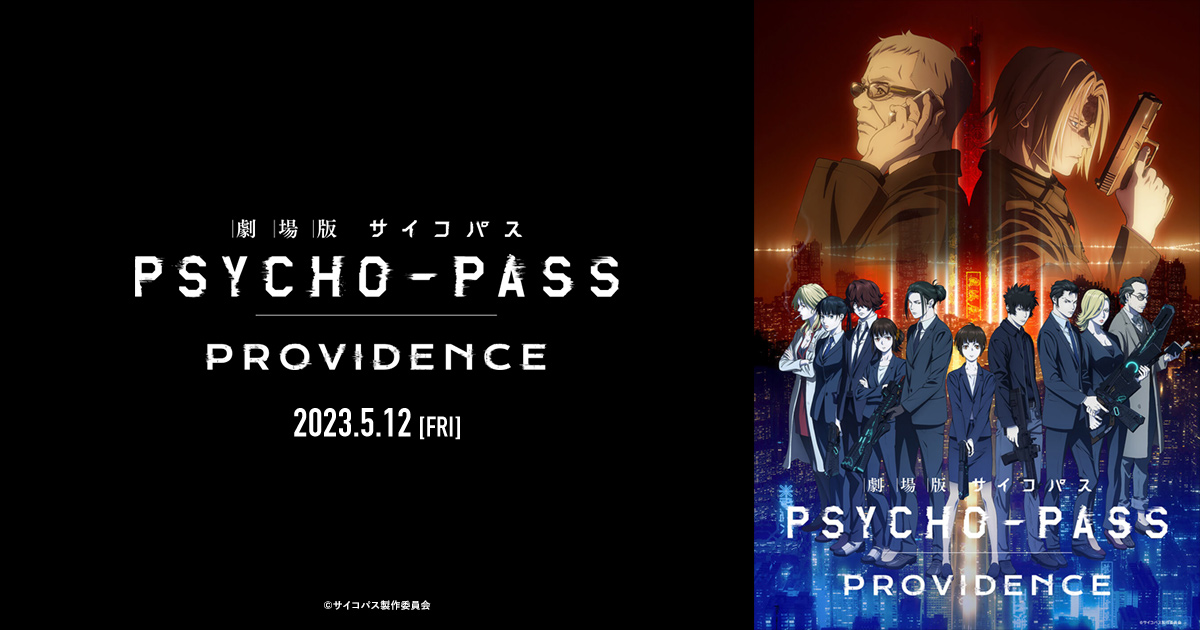
アニメ『PSYCHO-PASS サイコパス』シリーズ公式サイト
2022年10月10周年プロジェクト始動!最新作『劇場版 PSYCHO-PASS サイコパス PROVIDENCE』制作決定!監督:塩谷直義、アニメーション制作:Production I.Gが手掛けるオリジナルSFアニメーション。
psycho-pass.comGhost in the Shell
Ghost in the Shell is the classic and the benchmark for AI & near-future sci-fi. The franchise spans multiple entries, so it's most useful to approach it as the "Ghost in the Shell universe" rather than a single title. What matters is recognizing that this body of work fundamentally shaped the image of near-future sci-fi in anime. Motifs like cyberbrains, prosthetic bodies, and physical augmentation might not seem novel anymore, but that's precisely because they became the foundation for the AI and cyberpunk titles that followed.
What justifies calling it a benchmark is that it depicted a world where technology has penetrated the interior of the human being, not just as action spectacle, but as an existential question. If your body is replaceable, what are you made of? When your memories and consciousness connect to a network, where does the outline of "you" remain? Read the intent behind the direction, and you realize this isn't a future-gadget show. It's a work that destabilizes the very definition of "human." The questions that today's AI-coexistence and information-society stories keep circling back to? This franchise posed them with remarkable sharpness at a far earlier stage.
Best for viewers who like to think carefully while watching, who want to touch the source of cyberpunk, and who value both visual craft and philosophical depth. That said, it's on the harder side for a true beginner's first pick. It pairs best with viewers who've already come through a more accessible entry like Vivy and want to go deeper into near-future sci-fi. Watching it after other titles yields an "ah, so this is where all those AI and near-future shows drew from" revelation. New entries continue to be announced, and the Ghost in the Shell global site's news on the latest project underscores that this franchise remains an active, evolving reference point.
【公式】攻殻機動隊グローバルサイト
士郎正宗原作の漫画『攻殻機動隊』の公式グローバルサイト。漫画のほか、作品を原作とするアニメシリーズ『GHOST IN THE SHELL / 攻殻機動隊』『攻殻機動隊 STAND ALONE COMPLEX』などの情報、ニュース、インタビュ
theghostintheshell.jp3 Best Space & War Sci-Fi Anime
Space and war sci-fi can look intimidating from the outside: the scale seems too vast to get a foothold. But the accessible entry points are clear. How do you survive inside a spacecraft? Who do you trust under extreme pressure? How do people get worn down, and how do they hold their ground, within national or military structures? Approach these shows as stories about relationships and survival, and the distance closes fast.
What makes this style compelling is that alongside classic sci-fi elements like interstellar travel and alien life, you also get nation-scale conflicts, unit-level drama, and life-or-death decision-making running simultaneously. The scale is enormous, but the viewing experience often gravitates toward claustrophobic tension and bonds between comrades. That's why even people who've never watched a space show can find their way in.
Astra Lost in Space
Astra Lost in Space is 12 episodes and one of the most approachable space sci-fi titles available. When people hear "space & war," they tend to picture heavy military epics. This show flips that expectation with a clear, immediate premise: a group of young people stranded in space, trying to find their way home. What's dangerous and what needs to be overcome are apparent right away, so the first few episodes don't leave you behind.
It's an easy recommendation because the balance between sci-fi gimmicks and ensemble drama is expertly handled. Route planning, limited resources, unfamiliar environments: these are satisfying sci-fi elements. But the center of gravity is trust and suspicion among the crew. What looks like straightforward survival reveals character backstories and relationship dynamics that pay off powerfully in the second half. The space setting isn't decoration. It functions as an accelerator for the human drama.
Best for viewers who want a tight, satisfying run, who aren't ready for heavy war stories yet, and who'd like some mystery elements mixed in. At 12 episodes, the pacing is clean, and it's a great weekend binge. It might look like a lightweight adventure before you start, but as it unfolds, you'll find yourself realizing "so that's what that setup was about." Accessible enough for newcomers while delivering genuinely rich payoff. Among space titles, this is one of the friendliest first picks available.
TVアニメ「彼方のアストラ」公式サイト
astra-anime.comKnights of Sidonia
Knights of Sidonia is a survival-heavy space sci-fi that foregrounds humanity's battle against alien life. This isn't a glamorous space adventure. It's about how a civilization teetering on the edge of extinction keeps itself going. The massive ship that serves as the setting is itself a self-contained society, and that claustrophobic quality sustains the tension throughout.
It earns its representative status because the oppressive atmosphere of a closed environment, the distinctive worldbuilding, and the fundamental space-sci-fi question of "what does it mean for humanity to continue?" come through at full intensity. Beyond combat with the enemy, concepts like food supply, reproduction, organizational structure, and cultural succession flow through the world's foundation. While watching, you can never shake the thought: "Can humanity actually survive in this world?" It's not a story about defeating a powerful enemy and calling it a day. Fighting is directly tied to the continuation of the species. That weight is what makes the show's texture distinctive.
Best for viewers who want to be fully absorbed in a world, who enjoy claustrophobic warfare, and who are looking for sci-fi with a texture that diverges from the mainstream. It has some quirks in terms of accessibility, but for the viewers it resonates with, it resonates hard. There are character-driven emotional threads, but the show is fundamentally shouldering "social engineering for survival." That means you get the full density of space sci-fi. This is for anyone who wants to feel scale not through spectacle, but through urgency.
86 EIGHTY-SIX
86 EIGHTY-SIX runs 23 episodes and achieves an exceptional fusion of war sci-fi and human drama. Strictly speaking, the battlefield isn't outer space, but within this article's "space & war" framework, it absolutely functions as an entry point. The reasoning is straightforward: large-scale battlefield dynamics, unit-level attrition, and the way national logic grinds down individuals, the core elements of this style, are all rendered here with striking precision.
What makes it so strong as a representative title is that beyond mecha combat and frontline tension, it portrays the pain of war sci-fi in a contemporary register, incorporating systemic discrimination and accumulated loss. The gulf between those who fight and those who sit in safety. The significance of having your name spoken. The accumulating weight of the dead. These elements resonate beneath the surface of every action sequence. Read the directorial intent, and you see that the focus isn't on depicting the battlefield itself. It's on how people are treated there, and how they're forgotten. That's why, beyond its power as a war story, it's the conversations and the silences that stay with you longest.
Best for viewers who gravitate toward heavier themes, who want an emotionally devastating ensemble drama, and who demand both battlefield intensity and narrative depth. The per-episode emotional toll is distinctly high, but that's exactly why the characters' words, and the spaces where they choose not to speak, leave such deep impressions. For anyone searching for a war sci-fi entry point, this is a title that stays in your memory long after "cool mecha" stops being the point. If you're looking for something that foregrounds the visceral excitement of combat, the curated list of best battle anime offers a complementary perspective that can help clarify what you're after.
How to Get Started If You're New
You can make this decision practically and move on. Sci-fi anime covers such a wide range that picking "the most famous title" as your starting point is less effective than choosing an entry point that's easy for you to actually watch. From personal experience, jumping straight into a sprawling epic works less well than starting with something that has a visible finish line: Vivy -Fluorite Eye's Song- at 13 episodes, Astra Lost in Space at 12, or The Girl Who Leapt Through Time at 98 minutes. When the endpoint is clear, "maybe I'll keep going" happens naturally.
If pacing is your priority and you want a show where each episode makes it nearly impossible to stop, Summer Time Rendering is the frontrunner. Its suspense-driven loop structure pulls you forward instead of asking you to spend time parsing the rules. A strong fallback pick when you can't decide. It's not short at 25 episodes, but it feels dramatically faster than that count suggests. The mystery keeps resetting and escalating, so what starts as "I'll try one episode" often turns into three or four.
If you prefer heavier themes and want sci-fi that carries social weight and emotional pain, PSYCHO-PASS or 86 EIGHTY-SIX are your matches. PSYCHO-PASS brings an uncompromising edge with its interrogation of surveillance society and the foundations of justice. The setting itself poses the questions. 86 EIGHTY-SIX, on the other hand, renders war and discrimination as raw human drama. If you want to think, go PSYCHO-PASS. If you want to be emotionally wrecked, go 86. That split simplifies the choice considerably.
For short-format entry points, Vivy -Fluorite Eye's Song- and Astra Lost in Space stand above the rest. Vivy delivers the best parts of near-future sci-fi in 13 episodes, with strong visuals and an AI premise that's welcoming to first-timers. Astra Lost in Space packs space sci-fi, survival, and mystery into 12 clean episodes, ideal for anyone who wants satisfaction in a single cour. Both keep the completion barrier low and are excellent at creating a successful first experience.
If you want to test the waters with a single film, The Girl Who Leapt Through Time is the safest bet. Ninety-eight minutes gets you a taste of time-based sci-fi with high accessibility as an anime film. It's also useful for gauging whether time-manipulation stories are your thing before committing to a full series. A reliable litmus test before diving into longer fare.
If you want to map out a viewing order, here are three pairs where the first title flows naturally into the second.
- Vivy -Fluorite Eye's Song- then PSYCHO-PASS
Start with an accessible near-future sci-fi, then progress into surveillance society and questions of order. You expand your lens from the AI-human relationship to systemic societal issues.
Begin with an approachable space survival story, then advance into the weight of war sci-fi. Getting comfortable with scale before facing heavier themes makes for a smooth progression.
Get a feel for time-based sci-fi through a film first, then step into the full-scale satisfaction of causality and foreshadowing payoffs. Testing your affinity before committing cuts out potential dead ends.
💡 Tip
If you're overthinking it, the easiest rule is to pick based on watching just one episode tonight. For the strongest single-episode hook, Summer Time Rendering. For a short and completable series, Vivy -Fluorite Eye's Song- or Astra Lost in Space. For a film trial run, The Girl Who Leapt Through Time.
If you're still uncertain about how to pick anime in general, the beginner's guide to choosing anime is a helpful companion. And if completing something short is the priority, the 12 best short anime under one cour is a strong match too.
Sci-Fi Anime Trends: 2024 Through 2026
Looking at the sci-fi anime landscape from 2024 into 2025, the themes drawing the most attention are clearly AI, near-future, cyberpunk, and surveillance society. The lineage running through Vivy -Fluorite Eye's Song-, PSYCHO-PASS, and Ghost in the Shell has always been popular, but in recent years these stories have stopped feeling like generic "futuristic settings." They now connect to lived experience: generative AI, algorithmic curation, quantified reputation scores, always-on connectivity, and the creeping unease of existing permanently on the internet. When interest in sci-fi surges, the focus usually isn't on the technology itself. It's on how that technology reshapes human emotions and social structures. The current wave fits that pattern precisely.
At the same time, shows with a sekai-kei (world-scale personal stakes) sensibility and stories where one person's emotions directly intersect with existential crisis are seeing renewed appreciation. It's not just grand space wars or dense conceptual frameworks getting attention. There's a growing receptiveness to stories where "one person's choice changes the way the world looks" or "you enter through romance or loss and find yourself touching the core of sci-fi." Viewers who are less familiar with the genre tend to find emotionally guided stories more inviting than settings-first ones. This aligns with the three-style framework throughout this article: accessible, emotion-first sci-fi is gaining ground as a preferred entry point, and that represents a significant shift over the past few years.
The breadth of what counts as "sci-fi" shows up clearly in Anime! Anime!'s "Favorite SF Anime 2025 Edition", where Dr.STONE, World Trigger, Legend of the Galactic Heroes, and STEINS;GATE all rank high despite being radically different shows. Science-survival, tactical team combat, grand space opera, and time-alteration classics all sitting on the same "SF" shelf with broad support. This isn't the genre's definition getting blurry. It's more accurate to say that the sheer range of what sci-fi can address is being embraced on its own terms.
Something worth clarifying here: top-ranking titles in popularity polls and the titles this article recommends for beginners or by viewing style operate on different evaluation axes. Rankings reflect name recognition, franchise longevity, source-material popularity, and multigenerational fandom. They're effective for gauging a title's stature and the depth of its fanbase. Recommendations, on the other hand, prioritize "is this easy to start right now?", "will a first-timer stumble?", and "how well does this function as an entry point to its style?"
For example, STEINS;GATE earning high marks is entirely expected, but some viewers will find Vivy -Fluorite Eye's Song- an easier first step into the genre. And while Legend of the Galactic Heroes is a titan, Astra Lost in Space is often a more practical first taste of space sci-fi. Rankings are a map of "titles beloved by many." Recommendations are a map of "finding the right door for you." Keeping these two maps separate makes the selection process much smoother.
On the new-title front heading into 2026, the most notable announcement based on official sources is Ghost in the Shell: THE GHOST IN THE SHELL. News published on the Ghost in the Shell global site has raised anticipation for the new project considerably. Additionally, Animate Times' roundup of anime scheduled for 2026 broadcast and streaming tracks the broader movement, revealing that the classic themes of cyberbrains, network society, and the boundary between body and information are returning with renewed contemporary relevance. When a flagship title like Ghost in the Shell has a new entry in motion, surrounding AI and cyberpunk titles tend to get re-spotlighted as well. That ripple effect is one of the key things to watch in the 2026 window.
Recent sci-fi has moved away from selling itself purely on cool mecha and spaceships. It's increasingly understood as a genre that translates modern anxieties into narrative form. Surveillance cameras, reputation scores, AI touching creative work and employment, the uncanny feeling that a version of you is permanently stored somewhere online. PSYCHO-PASS and Ghost in the Shell sit on the extension of those everyday realities. Widen the emotional entry point slightly, and you arrive at titles like Vivy -Fluorite Eye's Song-.
My own sense is that today's sci-fi anime doesn't feel like "stories about a distant future." It feels like "stories about something already half-underway." That's why even dense, settings-heavy shows don't carry the same barrier to entry they once did. And the trend has been toward titles that lead with a character's pain or desire rather than frontloading worldbuilding exposition. Viewers who want deep analysis can always dive further later. But the first step can be taken on emotion alone. That balance is what defines the 2024-2026 era of sci-fi anime.
Anime! Anime!'s "Favorite SF Anime 2025 Edition" makes it clear that "sci-fi" encompasses time-travel, space epics, science adventure, and near-future action all at once. Layer on the Ghost in the Shell global site's news about upcoming projects signaling developments for 2026 and beyond, plus Animate Times' 2026 broadcast and streaming schedule roundup showing the new-title pipeline, and a clear picture emerges: sci-fi anime will continue centering on AI, cyberbrains, and surveillance society while expanding in a two-layer structure alongside emotion-first entry points. Keeping an eye on both the breadth of popularity and the diversity of entry points gives you a three-dimensional view of where sci-fi anime stands right now.
Your Sci-Fi Anime Starts With This One Pick
If puzzle-solving thrills are what you're after, start with time-leap titles. If you want to think about society and what it means to be human, AI & near-future is your lane. If you want to be absorbed into a world, space & war is the way in. For your first title: newcomers should reach for Vivy -Fluorite Eye's Song- or Astra Lost in Space. If you want to dig into analysis, STEINS;GATE. If you want emotionally heavy drama, 86 EIGHTY-SIX. Streaming availability shifts regularly, so checking each title's official site or your preferred streaming platform before starting is the reliable move. Pick the one style closest to you from the comparison table, then start with the shortest title in that column.
Sci-fi isn't a genre you need to fully understand before stepping in. Once one title clicks, interest cascades from time-based sci-fi to AI stories to space epics, and your horizon expands rapidly.
If you want to explore beyond sci-fi anime into other genres, the genre-by-genre anime recommendations guide has you covered.
Related Articles
11 Anime Movies That Will Make You Cry | Ranked by Emotion Type: Joy, Sadness, Longing
11 Anime Movies That Will Make You Cry | Ranked by Emotion Type: Joy, Sadness, Longing
You and I Are Polar Opposites: Why It Topped the Winter 2026 Anime Rankings
You and I Are Polar Opposites: Why It Topped the Winter 2026 Anime Rankings
Madoka Magica's New Film Walpurgis no Kaiten Finally Continues the Story After 13 Years
Madoka Magica's New Film Walpurgis no Kaiten Finally Continues the Story After 13 Years
Jujutsu Kaisen Season 3: Culling Game Arc Highlights and Latest Anime Updates