
The Best Anime by Genre: A Curated Guide
The Best Anime by Genre: A Curated Guide
When searching for your next anime, the most reliable approach is not chasing popular titles but starting from the genre that fits your taste. A Cross Marketing survey found that the top reason people want to watch a show is because it belongs to a genre they already enjoy. This guide is designed for newcomers and returning viewers alike,
When you sit down to find an anime, the hardest part is rarely figuring out which titles are considered masterpieces. The real sticking point is not knowing what kind of show actually clicks with you. This guide is built for people just getting into anime or those coming back after a long break, organizing recommendations across genres like battle, isekai, slice of life, tearjerkers, and sci-fi so you can zero in on something worth your time.
Streaming has made it easier than ever to jump into a show the moment it catches your eye, and working from a broad genre down to specific shelves cuts way down on false starts. On top of that, anime genres are never locked to a single label. Shows like Frieren: Beyond Journey's End and DAN DA DAN layer multiple appeals on top of each other, which means the entry point you choose can dramatically change your impression of the same series.
What to Know Before Picking Anime by Genre
The first thing worth getting straight when browsing anime by genre is that genres are not rigid boxes. Any given show carries more than one appeal -- battle, coming-of-age, mystery, comedy -- and these often overlap. The tags that streaming services attach to titles (those classification labels describing a show's characteristics) vary in naming and scope from platform to platform. A show filed under "Slice of life" on one service might sit under "Comedy" or "Healing" on another. Rather than worrying about whether a classification is correct, you will get much more mileage out of asking yourself, "What kind of experience do I want right now?"
For newcomers especially, this experience-first approach works well. If you want to feel fired up, lean toward battle or sports. If you want to cry, look at human drama or stories dealing with loss. If you want to laugh, go for gag comedies or dialogue-driven shows. If you want something to chew on, sci-fi or suspense is a solid bet. And if you want to unwind, Slice of life has you covered. Here is the part I really want to stress: choosing based on "what emotion do I want after the credits roll" rather than genre labels alone significantly reduces the chance of picking the wrong show. Matching your current mood to a show's temperature works far better than chasing trending titles, and it is much more sustainable as a viewing habit.
The data backs up the strength of mainstream genres as entry points. A 2026 Japan-focused survey reported by CBR (secondary reporting by CBR; primary source under review) showed Action/Battle at 59%, Adventure/Fantasy at 54.7%, and Slice of life/Heartwarming at 37.7%. Battle and fantasy command the widest audiences, with Slice of life and heartwarming shows following right behind. For a first-timer, starting with mainstream genres makes perfect sense. At the same time, the strong showing for Slice of life confirms that plenty of people want something gentler when flashy action starts to feel exhausting.
Changes in how people watch have also made genre exploration easier. The same survey found that subscription streaming services had a usage rate of 67.7%, while recorded TV sat at 12.3% and physical media like DVDs at 0.3%. Trying out a new genre is now as simple as switching tabs. Meanwhile, Teikoku Databank's 2025 anime production market report puts the 2024 anime production market at a record 362.1 billion yen (~$2.4B USD), and GEM Standard's market analysis highlights growth in both the overall Japanese anime industry and subscription streaming markets. For viewers, this means more shows and easier access than ever. That is exactly why having one clear entry point matters more than memorizing fine-grained genre breakdowns.
From personal experience, trying a single Slice of life episode on a tired evening beats forcing yourself into whatever is trending on social media. Hyped shows carry a lot of energy, and when that energy clashes with your current state, you are more likely to drop it midway. Shows built around conversational rhythm and atmosphere, on the other hand, require almost no mental ramp-up, making them great for people returning to anime after time away. Once you feel like you want a bit more intensity, you can shift toward battle titles; if you want to dig into settings, sci-fi is right there. Genres are not commitments. Think of them as aisles you walk through depending on your mood.
If you tend to stall at "I don't even know how to describe what I like," the approach covered in our beginner's guide to choosing anime -- where you roughly map your preferences -- pairs well with what follows. The genre-by-genre recommendations below are not meant as a strict taxonomy. Read them as "the aisle closest to how I feel right now," and the right entry point will surface faster.
Start Here: A Quick-Reference Table of 8 Major Anime Genres
Before diving into sub-genres, here is a map of eight broad categories. Anime routinely spans multiple genres in a single title, but as a starting point, sorting by "what do I want to feel" makes picking far easier. Whenever someone asks me for a recommendation, I have found that asking "what is your mood right now?" lands better than leading with a title. Whether you want intensity, emotional impact, or a break from reality -- that single variable already narrows the shelf.
| Genre | What Defines It | Best When You Want To... | How to Spot It (for Beginners) | Barrier to Entry |
|---|---|---|---|---|
| Battle / Action | Fights, training arcs, powers, showdowns. Fast-paced with clear highlights. | Feel fired up, get a rush, experience catharsis | Key visuals and trailers emphasize weapons, powers, or confrontation? This is the shelf. | Low. Strong hooks from episode 1. |
| Romance / Romantic Comedy | Shifts in feelings, the push-and-pull of closeness, misunderstandings, conversational warmth. Many titles lean heavily comedic. | Watch emotions shift, feel butterflies, enjoy relationship dynamics | If the central question is "who gets closer to whom" rather than "who wins," it is romance. | Low to Medium. Less spectacle, more dialogue and relationship payoff. |
| Isekai / Fantasy | Alternate worlds, magic, adventure, world-building through races, systems, and lore. | Escape reality, get immersed, explore a vast world | Heavy early-episode world-building, maps, job classes, or magic systems point here. | Low to Medium. Straightforward entries are very accessible; lore-heavy ones take a bit more focus. |
| Slice of Life / Comedy | No grand conflicts. The fun comes from conversation, atmosphere, school or workplace routines, comedic timing. | Decompress, laugh, feel soothed, watch something low-stakes | If the appeal is "whose company feels good" rather than "what happens next," you are in Slice of life territory. | Low. A single episode is enough to gauge the vibe. |
| Sci-Fi | Science, technology, future societies, AI, space, time, the mechanics of how a world works. | Think hard, savor world-building, be surprised by ideas | Mechs, research facilities, futuristic cities, dense terminology, societal systems -- that is sci-fi. | Medium. Understanding the setting directly fuels the enjoyment. |
| Mystery | Puzzles, revelations, foreshadowing payoff. The craft lies in how information is planted and resolved. | Theorize, piece things together, get quietly drawn in | If the structure revolves around "why did this happen" or "who did it," it is a mystery. | Medium. Rewards attentive viewing. |
| Suspense / Thriller | Crises, pursuits, psychological games, betrayals. Sustained tension is the draw. | Feel on edge, crave a can't-stop-watching experience | When the hook is "what happens next" more than "what is the answer," it leans suspense. | Medium to High. Demands focus; better suited for days when you can commit. |
| Sports / Coming-of-Age / Human Drama | Growth, setbacks, teammates, effort, talent, life choices. Stories that depict personal change head-on. | Feel uplifted, cry, cheer someone on | Even if there are matches or club activities, when the core is "how a person grows," this is the shelf. | Low to Medium. You can follow the emotional arc without knowing the sport's rules. |
How to Use This Table in Five Seconds
This table works better as a buffet than a textbook. Skim for the column that matches your current mood. If you are stuck, try this quick shortcut:
- Need intensity -- Battle / Action
- Want emotional ups and downs -- Romance / Romantic Comedy
- Craving immersion and escapism -- Isekai / Fantasy
- Too tired for anything heavy -- Slice of Life / Comedy
- In the mood to think -- Sci-Fi or Mystery
- Want relentless tension -- Suspense / Thriller
- Looking for effort and growth -- Sports / Coming-of-Age / Human Drama
One important thing to keep in mind: these eight categories are entry points, not destinations. Frieren: Beyond Journey's End can hit you as a fantasy adventure and still cut deep as a human drama. DAN DA DAN fires off action, comedy, and occult thrills all at once. Instead of locking a show into one box, think about which facet of it you want to experience first.
The sections that follow group related shelves together so you can navigate by broader interest. If you want to cross-reference more granularly, our genre-by-genre curated list works well as a companion read for figuring out which aisle to explore next.

アニメ『葬送のフリーレン』公式サイト
TVアニメ第2期2026年1月より日本テレビ系で放送決定!原作:山田鐘人・アベツカサ(小学館「週刊少年サンデー」連載)、勇者とそのパーティーによって魔王が倒された“その後”の世界を舞台に、 勇者と共に魔王を打倒した千年以上生きる魔法使い・フ
frieren-anime.jpBest Battle / Action Anime
Battle and action anime stand out as one of the strongest entry points into the medium. The reasons are clear: fast pacing, easy-to-grasp stakes, and powerful catharsis tend to come as a package. You know early on what the protagonist wants to defeat, protect, or reach, so jumping in from episode 1 feels natural. And when the climax hits, it is not just the fight itself that lands -- every bit of training, growth, and camaraderie built up to that point pays off at once. The satisfaction runs deep. Battle does not mean mindless fighting, and that is a big part of why this shelf stays compelling.
This genre suits people who love high-energy payoffs, want shows with a strong first-episode hook, and crave a sense of accomplishment from watching. On the flip side, if you prefer quiet dialogue or breathing room in your stories, the sheer density of emotion and information in battle anime can feel intense. When I recommend battle titles, I pay more attention to whether the protagonist's desire is visible in episode 1 than to how flashy the fight choreography is. From a storytelling perspective, shows that clearly establish a goal and an obstacle early on are the ones that pull viewers through most effectively.
For newcomers, the selection criteria are straightforward: the world should be easy to grasp, the first episode should deliver something worth watching, the show should not lean too heavily on sequel context, and you should be able to gauge the intensity level upfront. Nail those four, and you are unlikely to stumble on your first pick. Some titles have graphic violence, some throw specialized vocabulary at you from the start, and some run at a relentless pace -- being aware of those factors while you browse makes it much easier to find the right fit.
ℹ️ Note
Battle and action anime thrive on momentum, but some titles feature heavy blood and violence. Shows with rapid shifts between dialogue and combat, or with dense terminology from the opening scenes, can also tire out viewers who are not yet used to the rhythm.
Gateway Pick: Demon Slayer: Kimetsu no Yaiba
A fantastic starting point is Demon Slayer: Kimetsu no Yaiba. The world-building is straightforward, and protagonist Tanjiro Kamado's goal is crystal clear: a boy whose family was taken from him fights to turn his sister back into a human. That emotional core is established in the first episode, so there is zero ambiguity about what you are watching. The ally-versus-enemy dynamics are clean and the emotional anchor is always easy to locate.
What makes this show resonate goes beyond flashy combat. The protagonist's kindness and effort directly fuel the intensity of every battle. Training arcs pay off when it counts, so victories feel earned. Visually, the breathing technique effects are intuitive enough to communicate the "rules are fun" aspect of battle anime even to first-timers. There is blood, but the emotional throughline is strong enough that it never feels gratuitous.

TVアニメ「鬼滅の刃」公式サイト
「週刊少年ジャンプ」の大人気漫画『鬼滅の刃』コミックス最終23巻絶賛発売中!
kimetsu.comEssential Pick: Jujutsu Kaisen
For a title that captures where battle anime stands right now, Jujutsu Kaisen is hard to skip. The modern-day Japan setting keeps the on-ramp relatively simple, but once a fight begins, the layered power systems, tactical back-and-forth, and razor-sharp direction take over. It has that classic shonen battle satisfaction, yet the moral lines between heroes and villains stay blurry enough to add real weight.
From episode 1, protagonist Yuji Itadori's choice carries serious consequences, and the show's tone hits immediately. The appeal of allies and mentors comes through early, making it accessible even if you are not used to long-running series. That said, the violence is sharper than Demon Slayer, and the pacing runs faster. If you want not just well-animated fights but the clash of ideologies between characters, this is the one.

TVアニメ「呪術廻戦」公式サイト
TVアニメ『呪術廻戦』第3期「死滅回游 前編」2026年1月8日(木)より毎週木曜深夜0時26分~MBS/TBS系28局スーパーアニメイズム TURBO枠にて全国同時放送開始!『劇場版 呪術廻戦「渋谷事変 特別編集版」×「死滅回游 先行上映
jujutsukaisen.jpGoing Deeper: DAN DA DAN
If you are ready for something with more edge and genre-blending energy, DAN DA DAN is a wild entry point. This is not a straightforward battle series -- occult elements, romantic comedy, gag humor, and coming-of-age intensity all pile on at full speed. The pacing is aggressive, but the show makes its intentions obvious from the jump, so when it clicks, it clicks hard.
The reason this sits in the "going deeper" slot is that it is a genre-crossing show where the battle highs still land with full force. The supernatural confrontations have a distinct rhythm, and the visual flair leans heavily into theatricality -- that willingness to go big and not hold back. The information density is a notch higher than the previous two picks, so watching it after you have already enjoyed one straightforward battle title helps you appreciate how wide this shelf actually gets.
For your first pick in this genre: if you want an emotional core that makes you cry, go with Demon Slayer. For the modern battle anime benchmark, Jujutsu Kaisen is the call. If you want genre-blending chaos and raw momentum, DAN DA DAN delivers. For a wider look across this shelf, our curated battle anime picks with comparisons gives you a broader sense of how tastes diverge within the genre.
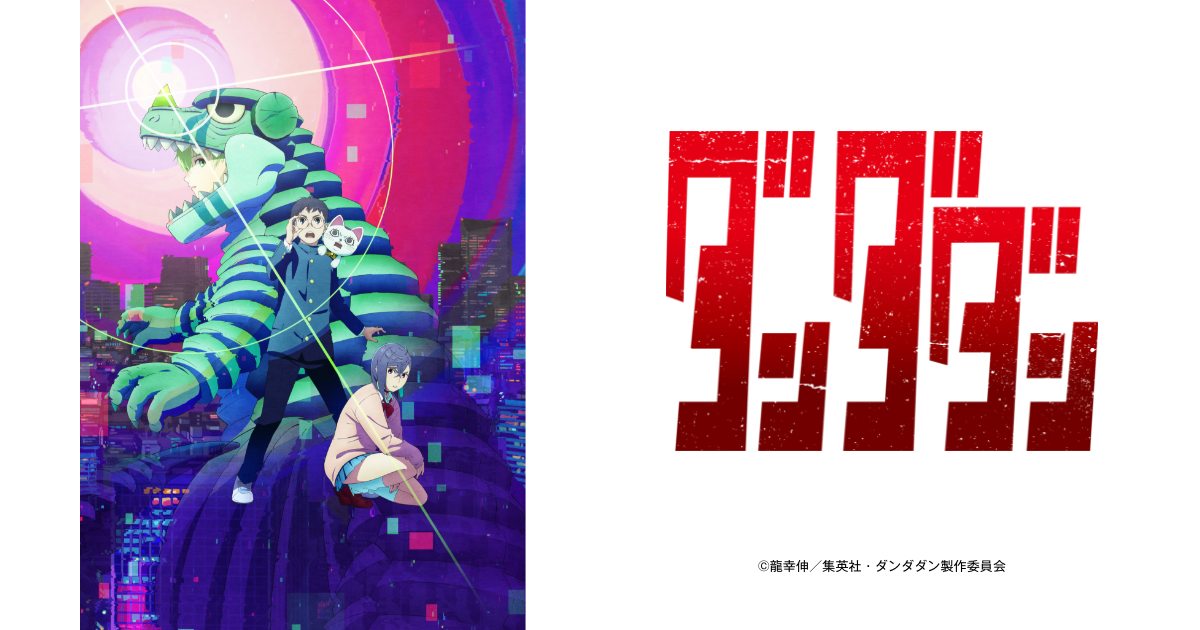
TVアニメ『ダンダダン』
TVアニメ『ダンダダン』2024年10月3日 MBS/TBS系全国28局にて放送決定!
anime-dandadan.comBest Romance / Romantic Comedy Anime
Even within "shows where love drives the story," the experience shifts dramatically depending on whether you watch for butterflies or for human drama. Butterfly-driven shows center on conversational timing, closing distance, charming misunderstandings, and the thrill of small gestures. Drama-driven ones dig into what it means to understand another person and how a changing relationship reshapes your sense of self. Romantic comedies tend to revolve around humor and shifting dynamics, while romance dramas foreground emotional stakes and turning points. Drawing that line makes it much easier to browse the shelf.
This genre clicks for people who get invested through empathy, enjoy tracking how relationships evolve, and want a show where you keep watching even without any fights. When choosing beginner-friendly titles, the criteria are fairly clear: relationship changes should be easy to read, you should be able to tell within the first few episodes whether the show leans comedic or dramatic, and the barrier to entry should not be too high. Hit all three and early drop-off becomes unlikely. In romance anime, it is not flashy premises but chemistry between characters that determines whether someone sticks around. Personally, I have found that whether the conversational rhythm and atmosphere suit you matters more than which couple ends up together when it comes to actually finishing a series.
A simple mental model helps: want to laugh first? Romantic comedy. Want a bittersweet ache? Coming-of-age romance. Want heavy emotions? Drama-leaning romance. Split the shelf into these three and navigating becomes much simpler.
💡 Tip
Romance anime hooks you through "conversational temperature differences" more often than through big plot events. If you can pinpoint what grabbed you in episode 1 -- the suspense of a confession, the rhythm of the banter, or the sting of an emotion -- you are already mapping your own taste.
Gateway Pick: Monthly Girls' Nozaki-kun
An easy first step is Monthly Girls' Nozaki-kun. This is a textbook romantic comedy where genuine feelings exist but never follow a straight line. Misunderstandings and perfectly offbeat dialogue carry the show. Protagonist Chiyo Sakura's feelings keep misfiring, yet it never gets painful to watch -- a major strength for anyone not yet comfortable with romance anime. The pacing stays light throughout.
What makes it such a strong gateway is that the comedic structure is crystal clear and the relationship dynamics are simple to follow. Nozaki's obliviousness as a shoujo manga artist doubles as a running gag, while the supporting cast adds its own layers of entertaining distance play. You get to enjoy the banter before worrying about romantic progress, which keeps the viewing barrier notably low.

ガンガンONLINE
完全無料で連載中! ガンガンONLINE/月刊少女野崎くん(椿いづみ)/無骨な男子高校生「野崎梅太郎」。彼に恋をした女子高生「佐倉千代」は勇気を振り絞って告白するものの、何故か恋人ではなく少女漫画家のアシスタントになったのでした…。男子高校
www.ganganonline.comEssential Pick: Kaguya-sama: Love Is War
The genre's quintessential modern title is Kaguya-sama: Love Is War. It distills the romantic comedy formula into something razor-sharp: two people who clearly like each other refuse to confess first because "the one who confesses loses." That rule is established immediately, so even a newcomer knows exactly what to enjoy.
The real pull is that it does not stay a gag-fest. Pride and awkwardness gradually melt into genuine warmth. The dynamic between the student council president and Kaguya Shinomiya anchors everything, but the surrounding cast sets the show's overall temperature, weaving real emotional accumulation into the comedy. It works as a romantic comedy and as a coming-of-age story, making it a strong pick for anyone who wants a single "just start here" recommendation.

『かぐや様は告らせたい~天才たちの恋愛頭脳戦~』原作公式サイト
天才たちが繰り広げる新感覚“頭脳戦”ラブコメ!『かぐや様は告らせたい~天才たちの恋愛頭脳戦~』原作公式サイト
youngjump.jpGoing Deeper: Bloom Into You
For something with more dramatic weight, Bloom Into You leaves a lasting impression. Heartwarming moments are not absent, but the focus is on carefully untangling what it means to fall in love. Yuu Koito, who cannot quite grasp her own feelings, and Touko Nanami, who appears perfect but harbors deep uncertainty, develop their relationship through quiet, accumulated conversations.
This title earns its spot as the drama-leaning representative because it treats romance not as an event but as a shift in self-awareness. Instead of building to dramatic set pieces, the show places meaning in silence, glances, and words held back. Because emotions are never spelled out loudly, the camera work and shot composition themselves become psychological storytelling. For anyone who wants density in the dialogue-driven side of romance anime, this is the one.
Lining up all three highlights the range. For easy laughs, Monthly Girls' Nozaki-kun. For a polished, high-caliber romantic comedy, Kaguya-sama: Love Is War. For emotional depth and self-discovery, Bloom Into You. If you want to expand further into shows where heartbreak and tears carry more weight, cross-referencing with our 12 best tearjerker anime picks will sharpen your sense of where your drama-leaning preferences land.
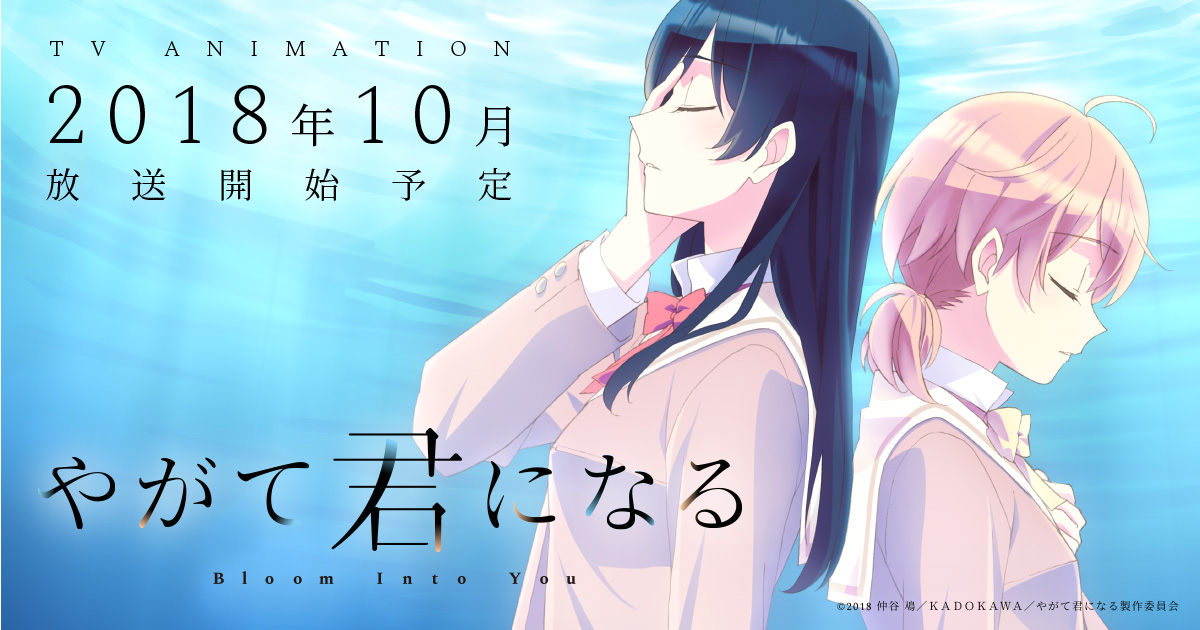
TVアニメ「やがて君になる」公式サイト
誰にも言えない、ふたりの特別 累計70万部突破の人気恋愛漫画が待望のアニメ化決定!「やがて君になる」2018年10月5日よりTVアニメ放送開始!
yagakimi.comBest Isekai / Fantasy Anime
Isekai and fantasy make up one of anime's largest shelves, and because many titles share surface-level aesthetics, newcomers often struggle to tell them apart. Splitting the category into classic adventure, reincarnation (isekai), and world-building immersion clears things up quickly. This genre suits people who want to escape into another world, enjoy savoring settings and lore, or are looking for a long-running series they can stick with.
The selection criteria here are also well-defined. First, the setting should be organized enough for a newcomer to follow. Second, the difference between isekai and fantasy should be easy to spot. Isekai typically starts with a character moving from the real world to another one -- the protagonist doubles as the viewer's guide. Fantasy, on the other hand, includes stories set entirely within their own world from the start. In other words, whether the main character is "an outsider who arrived" or "someone who has always lived there" changes the viewing experience. Beyond that, the picks here are chosen not for power-fantasy appeal alone but for shows where growth, journey, and setting each stand on their own.
A useful framework for telling similar-looking titles apart: do you want to watch the protagonist grow, follow the journey, or absorb the setting? If training and battles driving the protagonist's development excite you, classic adventure is the pick. If modern knowledge or past-life memories as a story engine sounds fun, reincarnation fits. If you want to soak in geography, history, culture, and magic systems, world-building immersion is where you belong. Looking at trends from 2024 onward, shows that deliver a genuine sense of "living in that world" tend to sustain buzz better than ones relying purely on spectacle.
💡 Tip
Isekai shows often pack a lot of information into episode 1. I have found the most comfortable approach is to ignore the details at first and just lock onto what the protagonist is trying to accomplish. You do not need to memorize job classes or terminology -- once the goal is clear, everything else follows.
Classic Adventure
Classic adventure is the most straightforward entry into the isekai/fantasy shelf. Enemies, companions, the slow expansion of a world through travel -- the structure is intuitive enough that information overload rarely becomes a problem. The appeal goes beyond boss fights. Moving from town to town, encountering different cultures and dangers, watching party roles evolve -- whether a show has that "texture of the journey" or not makes a huge difference in depth.
A standout gateway here is Frieren: Beyond Journey's End. The clever twist of starting after the Demon King's defeat means it tells the "aftermath" of a standard adventure while gradually revealing the world's scale and the weight of passing time. Action is present and well-executed, but the heart of the show is rediscovering a journey. Settings like magic, races, and differing lifespans feed directly into drama rather than being dumped through exposition. Whether you come in expecting flashy battles or quiet emotional resonance, this show delivers on both fronts.
For something that foregrounds adventure and growth more directly, Delicious in Dungeon is another highly readable pick. It is set in a fantasy world, but the core is dungeon crawling paired with a tangible sense of daily life. The characters do not just defeat monsters -- the question of "how do you live in this world" is explored in concrete detail, right down to food culture doubling as world-building. It looks like a comedy on the surface, but the setting is rigorously constructed. Racial differences, monster ecology, and dungeon rules are all systematically built, so adventure and world comprehension advance hand in hand.
Reincarnation (Isekai)
Reincarnation-style isekai offers the clearest on-ramp in the genre. A protagonist carrying real-world memories and values enters a new world, which means the viewer learns alongside them. Why a rule is surprising, why an ability is useful -- the protagonist explains it for you. That said, the spectrum within reincarnation anime is wide. Some titles lean into raw power; others focus on restructuring social systems and relationships.
A defining title here is That Time I Got Reincarnated as a Slime. It embodies what makes reincarnation isekai broadly appealing: the protagonist acquires new abilities, but the story scales beyond individual strength into community-building and nation-building. Rather than stopping at the rush of being overpowered, it keeps expanding -- gaining allies, earning a position, influencing the geopolitical map -- so the viewer always has a "what opens up next" thread to follow. The core satisfaction of a reincarnation story is not just becoming strong; it is understanding the rules of a new world and carving out a place in it. That feeling comes through clearly here.
Not all reincarnation anime are built the same, though. Some put more weight on leveraging past-life knowledge than on the protagonist's growth. Others use the reincarnation premise purely as an entry point before shifting into heavy drama. The distinguishing question is: does this show derive its fun from the protagonist's power, or from their adaptation to a new environment? The former tends to be breezy viewing; the latter rewards patience through evolving relationships and social structures. Selecting by the reincarnation label alone can lead you astray -- look at what the protagonist actually uses to drive the story forward, and things become much clearer.

【公式】「転生したらスライムだった件」ポータルサイト
「転生したらスライムだった件」の公式ポータルサイト。アニメ、ノベル、コミックス、グッズやイベントの最新情報を本サイトから発信します。
www.ten-sura.comWorld-Building Immersion
World-building immersion titles are the ones where the draw lies beyond flashy combat or reincarnation hooks -- the systems, cultures, and rules of the world itself become the experience. Geography, religion, history, how magic is regulated, social hierarchies, linguistic nuance -- all of it feeds into the appeal. These shows often do not explain everything in the first episode, but when they hook you, the impact lasts.
The title I want to highlight here is Made in Abyss. It is not technically a transported-to-another-world story, but the sensation of descending into the unknown, encountering distinct ecosystems at each layer, and facing rules that exact a brutal physical and mental toll exemplifies what immersion-focused fantasy does best. The contrast between the charming character designs and the world's unforgiving mechanics is stark -- this is not a setting content to just look beautiful. The lore does not serve as decoration; it directly raises the stakes of every expedition and every choice. That is what gives this show its edge.
This shelf appeals to people drawn less to the thrill of growing stronger and more to what the world is hiding and what it means to live there. Classic adventure excels at the joy of the journey itself, reincarnation at accessibility, and world-building immersion at "the deeper you understand, the better it gets." Even if the first episode feels information-dense, there is often a moment when the world's logic clicks into place and completely reframes how you see the show.
Comparing the three categories makes choosing easier. For protagonist-driven growth, That Time I Got Reincarnated as a Slime. For the classic adventure journey and its emotional afterglow, Frieren: Beyond Journey's End or Delicious in Dungeon. For deep-dive setting immersion, Made in Abyss. To dig further within this genre, our top 10 isekai anime picks with selection tips pairs well for pinpointing exactly where your preferences sit.
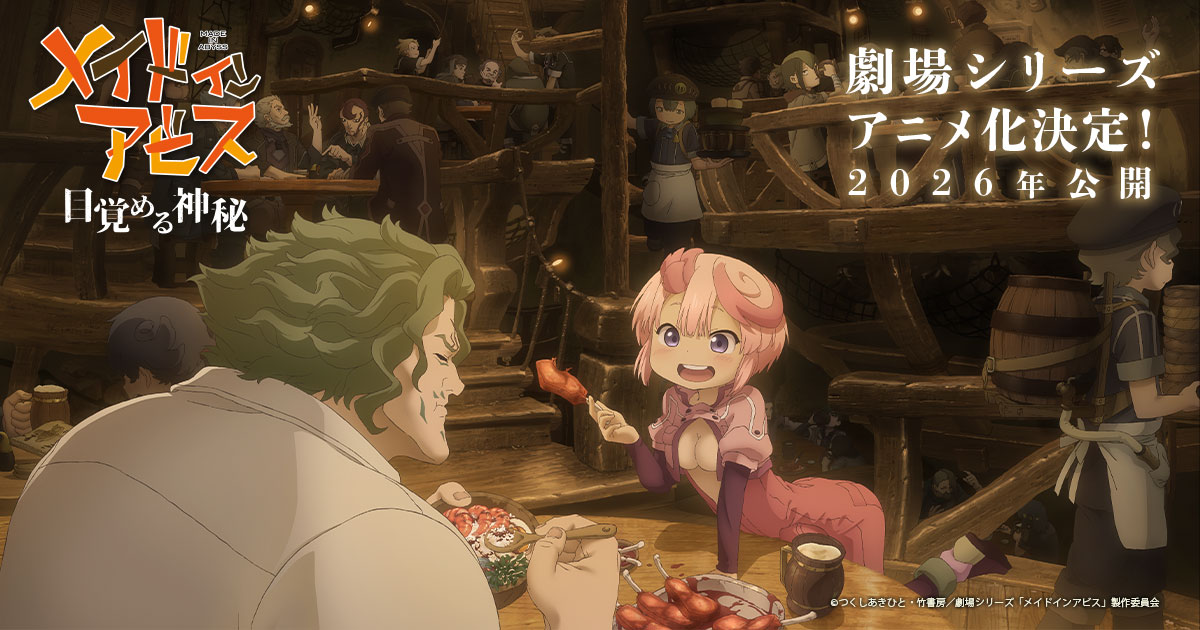
「メイドインアビス」目覚める神秘 | 公式サイト
miabyss.comBest Slice of Life / Comedy Anime
The charm of the Slice of life and comedy shelf is that compelling "I want to keep watching" energy can exist without any major incident or antagonist in sight. The driving force here is not plot or mystery but the interplay between characters and the atmosphere that surrounds them. A classroom, a club room, a cafe, an ordinary neighborhood -- in these familiar spaces, who says what, how someone responds, the subtle temperature gap and comedic timing are enough to make you laugh or feel strangely at ease. The absence of big events does not mean the genre is thin. When nothing dramatic happens and the show is still entertaining, that means the writing and direction had to be precise -- which is exactly what makes this genre tick.
Slice of life excels on exhausting days because it rarely demands high-tension focus from the viewer. After work or school, when a heavy story feels like too much but you still want to watch something, this shelf delivers. The emotional range stays gentle -- a small laugh, a moment of warmth, the feeling of spending time with characters you like. That low-stress quality makes it easy to start. Personally, my completion rate for Slice of life goes up noticeably during busy stretches. Each episode carries a light footprint, and you can jump back in without needing to remember every detail from last time. On the flip side, if a show's conversational rhythm does not match yours, you can bounce off Slice of life surprisingly fast. Without spectacle to carry you, whether you vibe with the characters' atmosphere becomes the single biggest factor.
The criteria for picking a good one are clear. First, the characters should be likable early. Second, the dialogue should be entertaining even on its own. Third, you should be able to enter the story even when you are tired. Slice of life does not sell itself through complex premises, so "I want to spend more time with these people" is the reaction that determines your first impression. If you go in expecting world-building or heavy foreshadowing, you will be looking in the wrong direction.
Background-watching compatibility also varies within the genre. Dialogue-driven shows with a mellow pace that you can follow by audio alone tend to work for multitasking. But titles that derive their charm from subtle facial acting, well-timed silences, shifts in gaze, or careful camera placement reward focused viewing. Slice of life is often called "easy watching," yet the more a show relies on nuanced direction, the more you actually lose by splitting your attention. Whether the humor lives in the words themselves or in the performance and timing tells you which viewing style fits.
Healing / Relaxation
The standout title for healing-oriented Slice of life is ARIA. The hook is not a dramatic event but the act of working, living, and feeling the seasons in a city on water. The scenery, music, and softness of the conversations merge into a viewing experience that genuinely calms you down. Character relationships lean into gentle closeness rather than conflict or competition, making it easy to settle into even on rough days. Background-watching is technically possible, but this show's background art and quiet pacing reward focused viewing -- the experience stretches further when you give it your full attention.
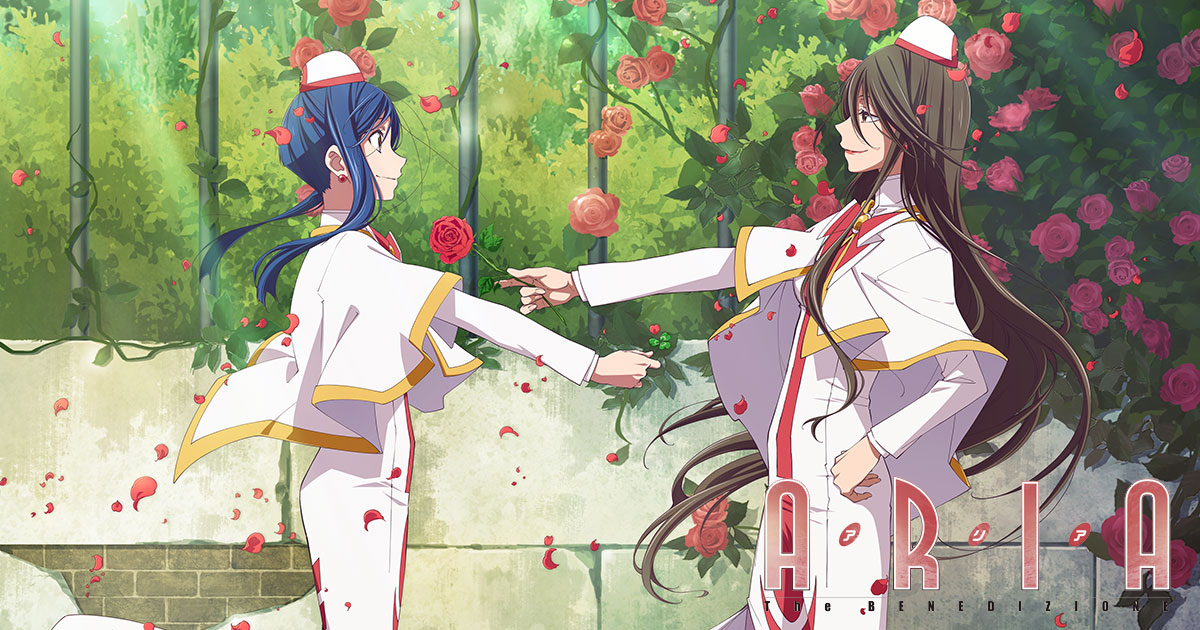
『ARIA The BENEDIZIONE』公式サイト
『ARIA The BENEDIZIONE』公式サイト – 8月24日(水)Blu-ray発売|TVアニメ放送開始15周年記念作品 蒼のカーテンコール 最終章
ariacompany.netGag-Driven Comedy
For gag-heavy comedy, Nichijou (My Ordinary Life) is the benchmark. The title sounds calm, but the content is anything but -- think "daily life wearing the mask of high-octane absurdist comedy." Mundane conversations launch into wildly exaggerated direction, and the gap between setup and punchline is enormous. Character dynamics click early, and while some scenes land through dialogue alone, the exaggerated expressions, physical comedy, and expert timing mean focused viewing is significantly funnier. Calling this a "nothing-happens" show might seem contradictory, but at its core, it is about taking tiny everyday misalignments and going absolutely all-in on the comedy.
「日常」オフィシャルサイト
shinonome-lab.comDialogue-Driven Comedy
For a dialogue-centered entry, Wasteful Days of High School Girls is a strong pick. There is no overarching plot advancing episode to episode. Instead, the characters' nicknames, group dynamics, and slightly off-kilter social positioning are the show itself. You pick up who plays what role quickly, and the rapid-fire banter carries the pacing. Since the humor is primarily verbal, this one is relatively friendly for background-watching. That said, if the conversational tempo does not click with you, it drops off quickly -- even within Slice of life, "whether the rhythm fits" decides whether you stay.
Slice of life does not hook you the way battle or mystery does with "I need to see what happens next." Instead, whether you want to keep soaking in these characters' atmosphere is the entire verdict. For soothing calm, ARIA. For explosive laughs, Nichijou. For banter-driven fun, Wasteful Days of High School Girls. If you want to explore this shelf further by mood, our 12 best Slice of life anime sorted by vibe and our short anime picks under one cour both connect well.
TVアニメ「女子高生の無駄づかい」公式サイト
jyoshimuda.comBest Sci-Fi / Mystery / Suspense Anime
These three genres seem similar at a glance, but the satisfaction they deliver is quite different. Sci-Fi is about ideas -- the technology, the premise, and how the world holds together. Mystery centers on the pleasure of scattered information snapping into place, the thrill of the puzzle. Suspense draws its power from unbroken tension, the feeling that something is off and you cannot look away. All three get lumped together as "smart shows," but the entry points are distinct. If you enjoy theorizing, love foreshadowing payoffs, or want thematically rich stories, splitting these three sharpens your search considerably.
This cluster often gets tagged as "hard" or "confusing," but titles that work well as entry points share a few traits: their appeal is describable without spoilers, even complex settings give the viewer solid footing, and newcomers are unlikely to feel lost in the opening stretch. Across everything I watch in a year, what separates the shows that retain viewers from those that do not in this genre is less about the volume of lore and more about whether episode 1 makes it obvious what you are supposed to find interesting. Titles that are said to "get good after a few episodes" can still grab you from the start if they plant a sense of unease or curiosity in the world right away.
No spoilers ahead. This section focuses strictly on what makes each show a good entry point. With that ground rule, here are picks across the three sub-shelves: world-building-focused sci-fi, puzzle-focused mystery, and tension-focused suspense.
Sci-Fi Entry Point
The first sci-fi pick is PSYCHO-PASS. The premise -- a society that preemptively judges and punishes criminals -- hits hard, and by episode 1 the question "is this system a safeguard or a threat?" is already on the table. The strength of this entry point is not the density of its jargon but how the show embeds its theme -- what happens when an institution decides how to see people -- directly into its drama. It works as a futuristic police thriller and as a meditation on surveillance society. If you want a setting-driven show but find exposition-heavy openings off-putting, this is a strong fit.
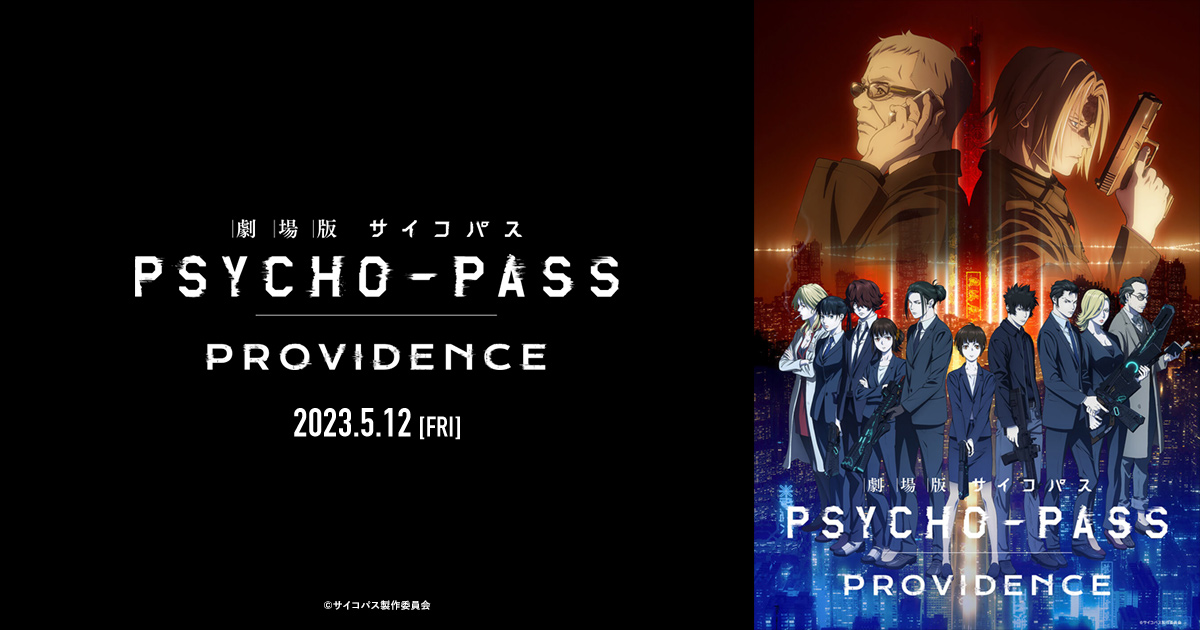
アニメ『PSYCHO-PASS サイコパス』シリーズ公式サイト
2022年10月10周年プロジェクト始動!最新作『劇場版 PSYCHO-PASS サイコパス PROVIDENCE』制作決定!監督:塩谷直義、アニメーション制作:Production I.Gが手掛けるオリジナルSFアニメーション。
psycho-pass.comMystery Mainstay
For the mystery shelf, Hyouka earns its spot. This is not a murder-mystery type. It starts from small, everyday questions and uses observation and deduction to bring them into focus. That lower-stakes approach makes it remarkably newcomer-friendly. The mysteries are modest in scale but the precision of how clues are placed and resolved delivers a clean "everything just clicked" payoff. Visually, the show communicates what a character is fixated on through composition and gaze rather than exposition, avoiding the trap of telling instead of showing. If you want to dip into analysis-driven viewing without jumping straight into a heavy crime series, this is an excellent on-ramp.

京都アニメーションホームページ
京都アニメーションホームページへようこそ。アニメ作品情報、オリジナルグッズなどの情報満載です。スタッフコンテンツもお楽しみに!
www.kyotoanimation.co.jpSuspense Deep Dive
For a suspense title that pulls you in further, The Promised Neverland has an immediately gripping structure. Something is clearly wrong from the opening minutes, and the tension of piecing together the characters' situation makes it nearly impossible to stop watching. The appeal is not just an eerie atmosphere -- it is the constant calculation of who knows what and how far anyone can act that keeps every episode taut. Mystery elements are present, but the center of gravity is "the next move" rather than "the final answer." If you want a show where unease never lets up and quiet psychological maneuvering hooks you forward, this is a natural fit.
Line up the three and the differences become vivid. PSYCHO-PASS delivers the thrill of questioning how a world works. Hyouka offers the satisfaction of a puzzle snapping together. The Promised Neverland provides the momentum of tension that never breaks. All three have complexity, but each establishes where the viewer's attention should go early enough that newcomers are not left behind. When browsing this cluster, pick by what kind of engagement sounds appealing, not by perceived difficulty, and you will avoid the biggest missteps.
For more picks in this zone, our 9 best sci-fi anime organized by 3 sub-types connects directly.
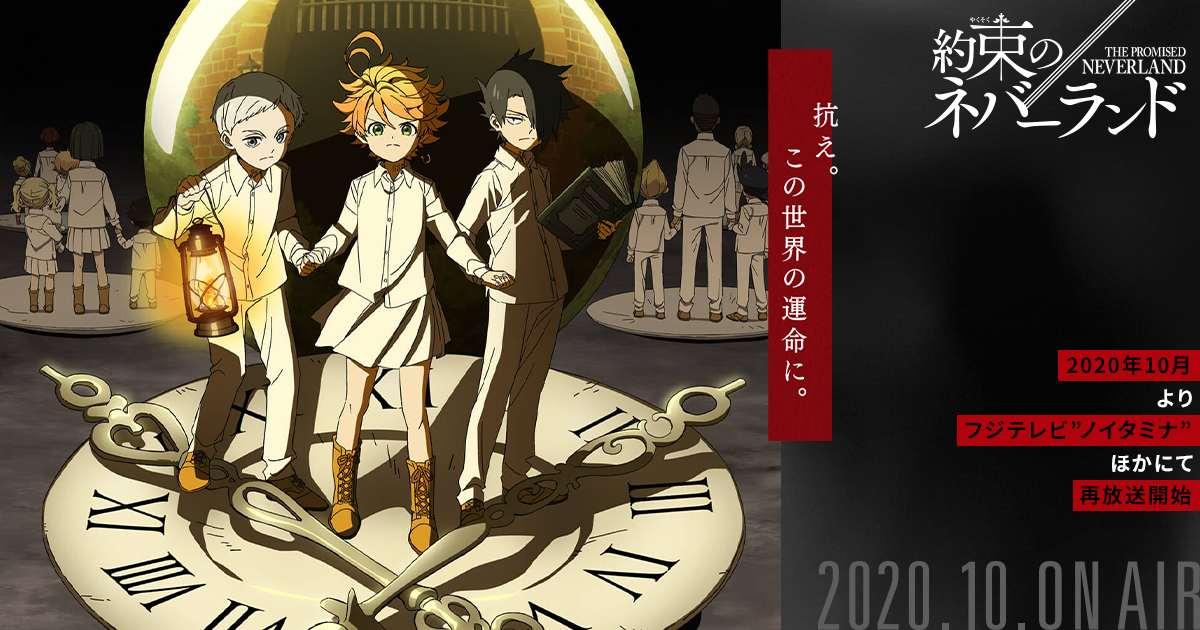
TVアニメ「約束のネバーランド」公式サイト
2020年10月より フジテレビ”ノイタミナ”ほかにて放送開始
neverland-anime.comBest Sports / Coming-of-Age / Human Drama Anime
The name says "sports," but the real draw in this genre goes well beyond the competition itself. The strongest titles here are built on how effort accumulates, how defeat is processed, and how bonds with teammates and rivals reshape over time. This shelf fits people who want intensity and emotional depth, who enjoy stories about clubs or teams, and who find meaning in watching someone inch closer to a goal over time. If the journey to a result moves you more than the result itself, you are in the right aisle.
Accessible titles in this genre share a few traits. The first is that you can follow the emotional arc without knowing the sport's rules. If technical terms are tied to a character's frustration, confidence, or decision-making, you will not get left behind. The second is visible growth. What could the character not do before? What did they overcome? What are they aiming for now? When these are clear, even an unfamiliar sport becomes surprisingly easy to read. The third, and arguably most important, is that the show works as a coming-of-age story, not just a sports narrative. When the show captures after-school conversations, awkward silences, and the anxiety of choosing a future path alongside the matches, the audience widens dramatically.
This is also where the line between "sports" and "emotional" shows matters. Tearjerker anime often center on loss or a shattering event as the emotional core. In sports, coming-of-age, and human drama, the goal is not to make you cry -- it is to let the accumulated effort eventually reach your emotions. A single pass, a single performance, a single rally carries the weight of every hour spent building up to it. The tears come from process, not from incident, and that is the defining trait of this shelf.
A few more specifics on what makes a sports show work for someone who has never played the sport. First, rule explanations should feel natural. If they come off as forced, viewers bail before the sport's appeal even registers. Shows that use a beginner character, weave rules into practice or strategy meetings, or reveal rules through a character's mistake handle this well. Second, the protagonist's goal should be easy to read. Making nationals, beating a personal record, just not quitting -- any of these work. Once the goal is visible, rooting interest forms even if you do not understand every play. Add everyday scenes outside of competition and the characters come alive, raising the emotional stakes of every match. In my experience, the shows that hook newcomers hardest are the ones where the pre-match tension or a brief exchange on the bench is enough to pull you in. Those few seconds of silence or a single meaningful look tell you everything about a relationship -- and that makes for an excellent entry point regardless of athletic background.
Team Sport Entry Point
For a team sport, Haikyu!! is the strongest pick. It is a volleyball series, but the core appeal is not technical breakdowns -- it is watching players with different roles figure out how to work as a unit. Who scores is only part of the equation; who shifts momentum, who provides support, who takes a leap of faith -- all of it is laid out clearly, and the joy of team sports translates directly into human drama. The direction connects the speed of rallies to each player's inner perspective effectively, making it easy to understand why a given point mattered. The club-life atmosphere is rich too -- practice, away games, the dynamics between upperclassmen and underclassmen all contribute to a coming-of-age story with real polish.
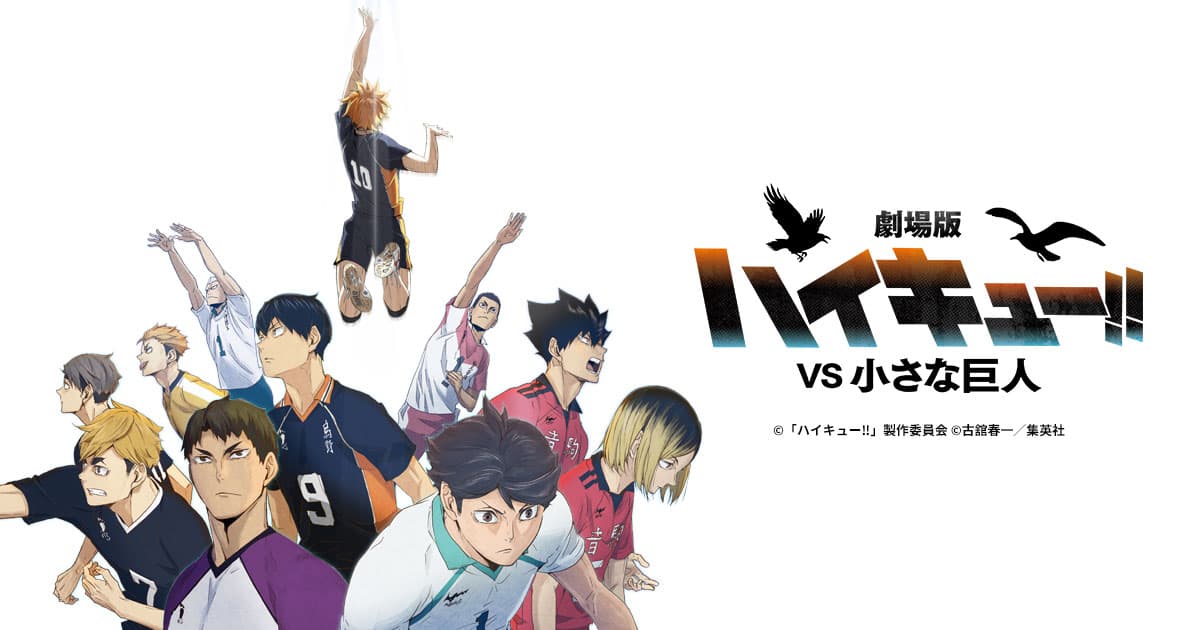
アニメ『ハイキュー!!』公式サイト
『劇場版ハイキュー!! VS 小さな巨人』・スペシャルアニメ「ハイキュー!! バケモノたちの行くところ」制作決定!
haikyu.jpIndividual Sport Mainstay
For an individual sport, Run with the Wind is the pick. It follows a university team aiming for the Hakone Ekiden relay marathon, but the brilliance is in how the members -- who vary wildly in running experience -- each carry a different reason for running. That diversity turns an individual sport into a genuine ensemble drama. Long-distance running is not a visually flashy sport, which means the show leans into breath, stride, gaze, and the moment a body hits its limit. Rather than showcasing speed, it explores how running connects to life choices, making it fully accessible to people with zero athletic background.

TVアニメ「風が強く吹いている」公式サイト
TVアニメ「風が強く吹いている」公式サイト 2018年10月より日本テレビ、BS日テレ、読売テレビほかにて放送開始
kazetsuyo-anime.comComing-of-Age Drama Deep Dive
For a deeper cut on the drama side, Blue Period offers a compelling entry. It is not technically a sports anime, but it belongs on this shelf because the structure of confronting your own talent and limits while chasing a goal overlaps directly with the satisfaction this genre delivers. Through the lens of art school entrance exams, the show portrays the gap between passion and skill, the uncertainty of where to direct effort, and the raw vulnerability of seeing someone else's talent. Even without a scoreboard, the feeling of "accumulated work finally landing" is pure sports/coming-of-age territory. As both a youth story and a character study, it runs dense, and anyone who connects with the atmosphere of club life or exam season will find it hard to put down.
These three titles map the shelf's range well. Haikyu!! is about team chemistry and the heat of competing together. Run with the Wind captures individual limits and the strength of mutual support. Blue Period digs into the growing pains of effort and self-awareness during adolescence. What they share is a commitment to showing not just competition or achievement, but the immaturity, anxiety, and hours of work behind it. If you want to feel fired up but find shows that run on momentum alone unsatisfying, this genre will keep you engaged for a long time.

映画『ブルーピリオド』公式サイト
2024.12.11 ブルーレイ&DVDリリース!「マンガ大賞2020」受賞!国内外で絶賛された傑作漫画が、今最も輝く若手俳優陣で実写映画化!【眞栄田郷敦×高橋文哉×板垣李光人×桜田ひより】
wwws.warnerbros.co.jpHow to Pick Anime by Genre Without False Starts
Browsing a list and picking something because "it looks popular" will work some days and miss others. The selection method that minimizes false starts for newcomers is not title-first but mood-first. Anime genres can be sliced incredibly thin, but at the entry level, you do not need that precision. Boil it down to five feelings: "fired up," "want to cry," "want to laugh," "want to think," "want to relax." Fired up points to battle/action; wanting to cry points to coming-of-age and human drama; wanting to laugh points to Slice of life and comedy; wanting to think points to sci-fi or mystery; wanting to relax points to Slice of life and healing shows. At the newcomer stage, "am I in the mood to think today?" is a much stronger decision input than "do I like sci-fi?"
The next critical move is judging by the first episode. There is a longstanding piece of advice that says "give it three episodes," but in an era where the next show is one click away on a streaming service, I do not think that rule should be treated as law. Late bloomers exist, sure. But when you are still finding your first few shows, checking whether episode 1 makes you want "a little more of this atmosphere" is far more practical. Pacing, character voices, screen brightness, conversational warmth, what the show is trying to entertain you with -- all of this is visible in episode 1. Production teams also front-load their first episodes with the show's core intent. Episode 1 is not just a prologue; it is where a show's promise comes through most clearly.
If episode 1 leaves you thinking "this is well-regarded but heavy" or "not bad, just not landing today," try switching the entire shelf rather than jumping to another title in the same genre. This has nothing to do with the show's quality -- often it just means the genre's temperature is out of sync with how you feel right now. I regularly bounce off critically acclaimed shows, and on those days, shifting from suspense to Slice of life or from heavy drama to comedy actually makes it easier to come back to the original show later. Not attributing a mismatch to the show itself is one of the best habits you can build for reducing "bad picks."
When browsing on streaming platforms, understanding tags helps. Labels like "school," "isekai," "tearjerker," "gag," or "dark" are useful as rough atmosphere indicators. For newcomers, the advantage is that you can reach a shelf without knowing formal genre names. Tags are navigational tools, though -- they do not represent a show's center of gravity. A "school" tag might lead to a romance-centric title or a mystery-heavy one; a "healing" tag might precede a show that emotionally devastates you in the second half. Think of tags as signposts for the entrance; use episode 1 for the actual compatibility check. That sequence keeps tags from steering you wrong.
💡 Tip
Rather than relying on a single tag, look at where two tags overlap -- "Comedy x School" or "Sci-Fi x Suspense," for example. The intersection gives you a much sharper read on what a show actually feels like.
Sequels and multi-season series need a brief note as well. Rankings and recommendation lists tend to surface high-profile continuations, but for newcomers, whether a show assumes prior viewing makes a big difference in accessibility. Some sequels handle world-building generously enough that you can jump in solo. Others run on accumulated character relationships and emotional context from earlier seasons, making episode 1 disorienting if you start there. When you see "Season 2," "Part 2," or "Final Arc" in a title, shift your focus from "is this show good on its own" to "where am I supposed to start" -- that adjustment alone prevents a lot of confusion.
In practice, keeping the decision simple is the whole game. Pick one feeling, find the closest genre on the reference table, and watch one episode of the gateway pick. If it does not land, skip sideways to a different genre instead of drilling deeper into the same one -- that is more likely to produce a hit. The most common stumbling block for newcomers is thinking "if this show did not work, maybe anime is not for me." The reality is almost always simpler: the shelf was wrong, not the medium. That distinction matters more than any recommendation list.
For a broader look at how to approach choosing your first anime, our beginner's guide to picking anime covers the same philosophy in more detail. Genre selection is not about getting it right -- it is about finding the entrance that matches your viewing temperature. That is really all there is to it.
When All Else Fails: 3 Genre-Spanning Gateway Anime
If you have read this far and still cannot decide, the best move is to narrow it down to three. The selection criteria are simple: broad genre appeal, a strong first-episode hook, easy world-building for newcomers, and no prerequisite knowledge. To cover your bases, pick one each from "mainstream intensity," "emotional resonance," and "atmospheric world" -- that trio covers enough ground to prevent blind spots.
The titles I have recommended to newcomers that consistently get the best reactions are not necessarily the easiest to explain. They are the ones that make it easy to say something after episode 1. "I wanted to root for the protagonist." "That scene was beautiful." "I need to know what happens next." If even a single feeling moves, it connects to the next show. Strong gateway titles are built for exactly that.
For Testing the Waters With One Episode
Demon Slayer: Kimetsu no Yaiba. It has the clarity of a mainstream battle title, but the universal hooks -- family loss, a sibling bond, training and growth -- make the story accessible without any anime background. By the end of episode 1, you know exactly what the protagonist is fighting for, and the visual impact drives home what anime can do at its best. A good gateway title needs emotional clarity over setting complexity, and Demon Slayer is engineered for that.
This fits anyone who wants to start with a proven hit, prefers strong pacing, or wants to experience anime-level intensity for the first time. It may run a touch hot for people who prefer quiet conversation-driven entries, but as a show that demonstrates "this is the kind of rush anime delivers," it is hard to beat. From here, branching into battle titles, shonen growth stories, and darker ability-driven shows all feel natural.
For Emotional Immersion
Violet Evergarden. A protagonist who cannot name her own emotions takes a job writing letters for others, and through that work, gradually comes to understand both the people around her and herself. No prerequisite knowledge required -- the story is built around an absence, and following that absence pulls you in. The visuals catch the eye first, but the foundation is straightforward human drama. That combination means newcomers are unlikely to feel lost, even though the emotional impact can run deep.
This suits people searching for tearjerker-level shows, those who want to watch a character's inner world change in careful detail, and anyone drawn to relationships over combat. If you want something emotionally moving but not exclusively romance, this is a natural fit. From here, you can branch into coming-of-age drama, tearjerker anime, or quieter shows that find emotional weight in everyday life.

『ヴァイオレット・エヴァーガーデン』公式サイト - KAエスマ文庫
KAエスマ文庫『ヴァイオレット・エヴァーガーデン』上巻・下巻・外伝・エバーアフター 好評発売中!
www.kyotoanimation.co.jpFor Losing Yourself in a World
Frieren: Beyond Journey's End. Among fantasy titles, this one teaches you its world not through dense lore dumps but through travel, the passage of time, and the rhythm of farewells and reunions. The "setting comprehension homework" that trips up newcomers in many fantasy shows simply is not there. Episode 1 hooks hard by opening with a hero party's "after" -- the aftermath of a great adventure -- instantly communicating both the weight of time and the scope of the world. Read the intent behind that structure, and you see a show that captures the audience through the sensation of existing in a world rather than through dramatic incident.
This works for people interested in isekai or fantasy but wary of terminology overload, those who want a show with a quiet emotional afterglow, and anyone who likes to soak in scenery and atmosphere as part of the experience. Battle elements keep it from feeling too subdued, and the emotional drama is strong, so the reach is remarkably wide. From here, classic fantasy, travel stories, and even more literary sci-fi or isekai all become natural next steps.
These three titles each open a different door. For momentum, Demon Slayer. For emotion, Violet Evergarden. For atmosphere and world, Frieren: Beyond Journey's End. Rather than agonizing over the "perfect" first show, ask yourself what kind of reaction you are most likely to have after one episode. That answer will guide you not just to a title but to the genre you explore next.
Wrapping Up
Choosing a genre is not about getting the right answer -- it is about finding the right entrance for you. When in doubt, prioritize how you feel right now over ratings or popularity, and pick just one shelf from the five options. Fired up? Battle. Want immersion? Isekai/fantasy. Want laughs? Slice of life. Want to feel something? Human drama. Want to think? Sci-fi or mystery. Then watch just one episode of whatever catches your eye. That small step is the fastest way to discover which genre pulls you in next.
If you want to drill deeper, our curated battle anime picks with comparisons, 12 best Slice of life anime sorted by vibe, and top 10 isekai anime picks with selection tips are all good next reads.
Related Articles
11 Anime Movies That Will Make You Cry | Ranked by Emotion Type: Joy, Sadness, Longing
11 Anime Movies That Will Make You Cry | Ranked by Emotion Type: Joy, Sadness, Longing
You and I Are Polar Opposites: Why It Topped the Winter 2026 Anime Rankings
You and I Are Polar Opposites: Why It Topped the Winter 2026 Anime Rankings
Madoka Magica's New Film Walpurgis no Kaiten Finally Continues the Story After 13 Years
Madoka Magica's New Film Walpurgis no Kaiten Finally Continues the Story After 13 Years
Jujutsu Kaisen Season 3: Culling Game Arc Highlights and Latest Anime Updates