
12 Anime That Will Make You Cry | A Side-by-Side Guide
12 Anime That Will Make You Cry | A Side-by-Side Guide
When searching for anime that will make you cry, the same titles keep appearing everywhere: Violet Evergarden, Anohana, Your Lie in April, CLANNAD AFTER STORY, and A Place Further Than the Universe.
Searching for anime that will make you cry can feel overwhelming when so many titles exist and you just want to know which ones actually deliver. This article is for people ready to dive into emotional anime, or anyone looking for something that hits hard without being too short or crushingly heavy. We compare well-known classics alongside recent standouts so you can find the right fit.
Rather than relying on fleeting ranking positions, we focus on titles that have earned consistent praise across multiple platforms: Violet Evergarden, Anohana: The Flower We Saw That Day, Your Lie in April, and A Place Further Than the Universe. What makes these anime cry-worthy isn't just sadness. It's the careful construction of empathy, loss, renewal, and emotions you carry back into your own life. Once you see those differences clearly, picking the right show for you becomes much easier.
12 Tear-Jerking Anime Recommendations | Start with the Comparison Table
How to Read the Table
If you want to narrow things down quickly, forget name recognition. Focus on aftertaste and episode count first. Decide tonight whether you want to sit in quiet reflection afterward or walk away feeling uplifted, then match that to a single-cour or longer series. This approach beats picking something just because it's famous. Aligning the emotional direction and time commitment through the comparison table reduces those "this wasn't what I expected" moments.
The table organizes type of tears along axes like loss, renewal, friendship, family, effort, and romance. Emotional anime aren't all the same experience. The kind that sinks you into sadness is fundamentally different from the kind where accumulated effort finally pays off and your chest tightens. Violet Evergarden hits through loss and renewal. Haikyu!! and Medalist run on effort and arrival. Same label of "tear-jerker," very different emotional temperatures.
Aftertaste is categorized as "reflective," "uplifting," "refreshing," or "heavy." These aren't quality judgments. They indicate the direction your mood takes after the credits roll. After a long day at work or school, something on the refreshing side tends to pair well. For a weekend when you want your emotions genuinely shaken, heavy or reflective anime land harder. Episode count lists total episodes, or the first season's length for ongoing series. A single-cour show generally runs about 4.5 to 5 hours in total. A 24-episode series runs roughly 9 to 10 hours. Knowing this helps you plan your viewing.
The beginner-friendliness rating reflects how easy the story is to enter, the emotional weight of the episode count, and how accessible the feelings are. Streaming availability shifts constantly, so rather than listing specific platforms, check each show's page on your preferred service for the latest. The staying power of these classics is easy to confirm through sources like Anime! Anime!'s 2025 reader poll and similar features. Our lineup prioritizes that kind of sustained recognition.

『ヴァイオレット・エヴァーガーデン』公式サイト - KAエスマ文庫
KAエスマ文庫『ヴァイオレット・エヴァーガーデン』上巻・下巻・外伝・エバーアフター 好評発売中!
www.kyotoanimation.co.jpComparison Table: 12 Titles
If you want to pick one tonight, start with the aftertaste and episode count columns. For a short, sharp cry, lean toward single-cour titles. For deep emotional investment, look at two-cour or longer series. If you want to explore more shorter options, our guide to the 12 best short anime under one cour pairs well here. And if you'd rather start from accessibility, our anime beginner's guide can help narrow things down further.
| Title | Genre | Episode Count | Type of Tears | Aftertaste | Beginner-Friendly | Best For |
|---|---|---|---|---|---|---|
| Violet Evergarden | Human drama | Single cour | Loss, renewal, letters | Reflective + uplifting | High | Those who want to cry quietly and deeply |
| Anohana: The Flower We Saw That Day | Youth ensemble | Single cour | Parting, regret, friendship | Bittersweet | High | Those who cry over the ache of youth |
| A Place Further Than the Universe | Youth, adventure | 13 episodes | Friendship, family, challenge | Refreshing + uplifting | High | Those who want encouragement too |
| Your Lie in April | Youth, music | Two-cour | Romance, loss, comeback | Reflective | High | Those who want to linger in beautiful afterglow |
| Natsume's Book of Friends | Yokai, human drama | Long-running series | Gentleness, loneliness, family | Gentle | High | Those who prefer healing tears over intensity |
| Fruits Basket (2019) | Human drama, romance | Multi-season | Family, renewal, romance | Uplifting | Medium-High | Those undone by relationships slowly mending |
| Angel Beats! | School, ensemble, sci-fi | Short series | Parting, regret, friendship | Leaning uplifting | High | Those who want to cry at a good pace |
| CLANNAD AFTER STORY | Family, life drama | Long-form | Family, loss, renewal | Heavy + renewal | Medium | Those who want deep emotional investment |
| March Comes in Like a Lion | Youth, shogi, human drama | Multi-season | Loneliness, family, recovery | Reflective + uplifting | Medium-High | Those who want to watch a heart mend |
| Haikyu!! | Sports | Long-running series | Effort, camaraderie, defeat | Passionate + refreshing | High | Those who want their chest to burn with bittersweet grit |
| Astra Lost in Space | Sci-fi, survival | 12 episodes | Friendship, trust, revelation | Refreshing | High | Those who want to binge and feel satisfied |
| Medalist | Sports, growth | Season 1: 13 episodes | Effort, mentorship, arrival | Uplifting | High | Those who want a current, powerful emotional ride |
Violet Evergarden excels through its structure: a protagonist who couldn't convert emotions into words gradually reaches other people's hearts by writing letters, discovering her own feelings along the way. What makes it cry-worthy isn't simple tragedy. It's the accumulation, episode by episode, of moments where someone's feelings are received and understood anew. The animation quality and color design are remarkably dense. What I don't want you to miss is how the tear-inducing direction aims not for melodrama but for "quiet understanding." This one resonates with people who'd rather cry over the weight of words than flashy plot twists. The viewing barrier is low at single-cour length, and it accommodates a wide range of emotional sensibilities. In one line: the definitive gentle tearjerker, unfolding emotion through letters.
Anohana: The Flower We Saw That Day remains powerful as a youth ensemble about facing time that stopped. The distances between childhood friends, unspoken regrets, lingering awkwardness — it's all uncomfortably real, and that realism fuels the emotional explosion in the final stretch. The tears come not from loss itself but from feelings that were buried slowly rising to the surface. If you have any memory of the messy, painful side of adolescent relationships, this one cuts deep. Single-cour and easy to complete, though the concentration of heartache runs high. In one line: the standard-bearer for turning the wounds of youth directly into tears.
A Place Further Than the Universe follows girls aiming for Antarctica, but what genuinely moves you isn't the scale of the adventure — it's the accumulated will to push forward. Accessible as a friendship story on the surface, it quietly delivers on family grief, processing loss, and what it means to take on a challenge. Here's what I don't want you to overlook: this show doesn't try to make you cry. It builds emotion during the journey, and at a certain moment everything spills over at once. It connects with people who dislike stories that end on pure sadness and want to feel their back straightened afterward. All 13 episodes form a tight package, and it pairs perfectly with binge-watching. In one line: a refreshing tearjerker where forward momentum and crying coexist.
Your Lie in April layers the brilliance of a music anime with a story about a young person rebuilding from inner wounds. The performance scenes function as emotional amplifiers — the music itself speaks what words cannot. The tears come not just from romantic heartache but from a throughline about how to live alongside talent, expectation, and memories of loss. It might look like melodrama, but the design as a story of "starting over" is remarkably strong. This one is for people who want to cry fully wrapped in beautiful visuals and music. At two-cour length it requires some commitment, but the emotional return on that investment is substantial. In one line: a bittersweet youth drama where music becomes the conduit for tears.
Natsume's Book of Friends doesn't make you cry through dramatic tragedy. Small misunderstandings between humans and spirits, the gentleness of keeping company with loneliness, quiet moments of accepting farewells — these things turn into tears before you realize it. The mostly episodic structure keeps each installment easy to watch. It doesn't feel heavy, yet it stays with you. What makes it tear-worthy is its focus not on saving the day through grand events but on how precious it is simply to be understood. This suits people who want soft afterglow rather than intense emotional stimulation. It's a long-running series, but the episodic format makes it welcoming even for newcomers. In one line: a gentle masterpiece that draws tears through kindness rather than spectacle.
Fruits Basket (2019) tells the story of wounded people recovering bit by bit through their relationships with others. It carries themes of family, romance, self-rejection, and belonging, yet it never devolves into a catalog of misfortune. Instead, it moves your emotions through how relationships shift and evolve. The tears come from watching characters finally face pain they couldn't touch alone, because someone was there to catch them. If stories about tangled human bonds carefully untying themselves are your weakness, this one lands. The series runs long, making it more of a companion journey than a binge, though the entry point itself is gentle. In one line: a long-form drama about wounded hearts regenerating through human connection.
Angel Beats! stands out for holding breezy school comedy and genuine emotional weight in the same story. Fast-paced dialogue and action keep the entry barrier low, but as the narrative progresses, the lingering regrets and wishes each character carries become visible. The swing between laughter and tears hits hard. Reading the intent behind the direction, the everyday liveliness is placed first precisely to make the moments of farewell land harder. This connects with people who want to avoid heavy openings but still cry properly by the end. Single-cour and accessible, with emotional beats that are easy to follow. In one line: a high-density emotional ride from a pop entrance to a poignant farewell.
CLANNAD AFTER STORY is hard to leave off any tearjerker conversation, but its power isn't about "sad things happen." It's that the story depicts entire phases of life. It moves past school days into becoming a family, protecting what matters, and continuing to live after devastating loss. The emotional range is vast. What earns the tears is how the weight of daily life accumulates, so that change and rupture carry the gravity of real experience. This one resonates with people who want to spend time with characters and then be shaken deeply. The viewing barrier is moderate, since earlier context builds the foundation. In one line: the heavyweight that cuts deep on the theme of family, then reaches for redemption.
March Comes in Like a Lion uses shogi as its setting, but the core is a story about someone finding a place to belong while recovering from isolation. The protagonist's inner heaviness is drawn carefully, while interactions with the Kawamoto family and opponents gradually reshape how he sees the world. What makes it cry-worthy isn't a dramatic reversal or a devastating goodbye. It's the feeling of frozen emotions thawing, slowly and honestly. On a tough day, this show understands your exhaustion before offering even the slightest push forward. That sequencing is masterful. It resonates especially with adults who favor the gentle, slow-burn type of emotional storytelling. The viewing barrier isn't the lowest, but shogi knowledge isn't central — the human drama is. In one line: a quiet regeneration drama to savor over time.
Haikyu!! is a sports anime, but its tear-worthy moments extend far beyond the thrill of victory. Defeat, retirement, frustration that didn't reach — it's in these moments, where paths cross between those who continue and those who stop, that the strongest emotions live. The match pacing is sharp and the direction runs hot, yet it never drops the accumulated effort of each player. That's why it hits whether the effort pays off or not. This connects with people who tear up not over romance or loss but over what happens after giving everything. It's a long-running series, but sports anime are easy to get into and the beginner-friendliness is high. In one line: a passionate tearjerker that embraces the bitterness of defeat.
Astra Lost in Space grabs you with its sci-fi survival premise and carries you through 12 tightly constructed episodes. This is a show best entered with minimal prior knowledge. What deserves attention from an emotional standpoint is how trust is tested under extreme conditions, and how the story's texture shifts each time a crew member's background is revealed. The tears come because the shared experience of overcoming hardship together makes certain moments of solidarity and choice hit with real force. If you find pure sentimentality unsatisfying, the mystery elements here provide additional engagement. At 12 episodes, it's weekend-friendly — you can finish it in roughly half a day. In one line: a binge-worthy sci-fi friendship tearjerker with excellent density.
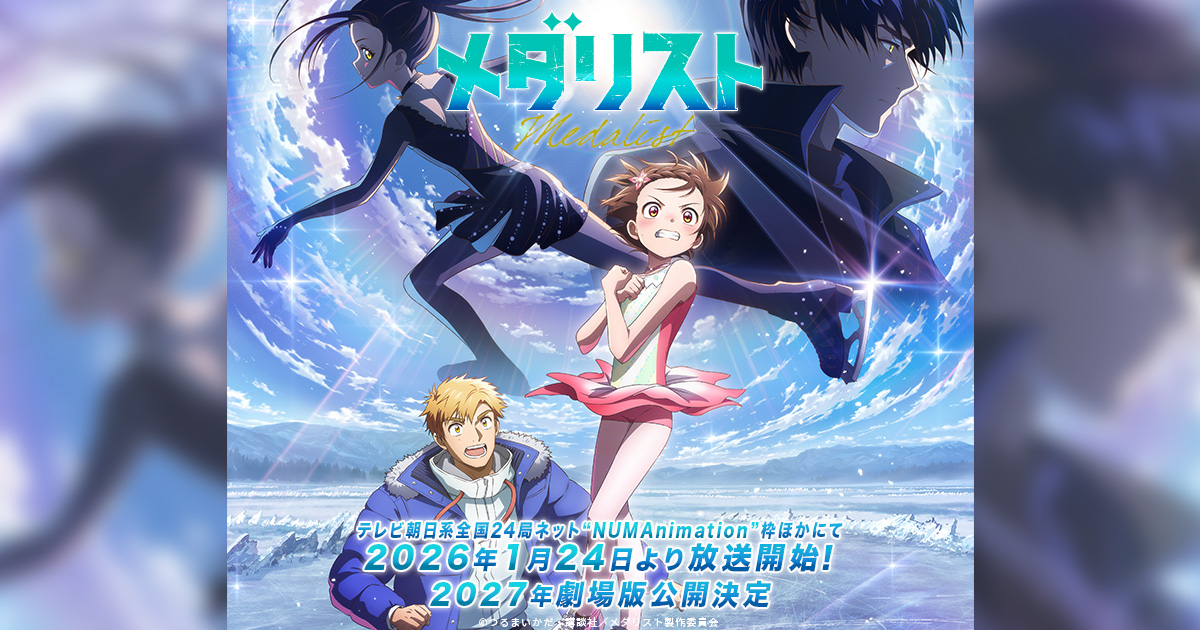
Medalist is a newer title, but the reasons it's already drawing attention as an emotional powerhouse are clear. Set in the world of figure skating, the focus isn't just whether someone has talent. It's about the anxiety of starting late, the relentlessness of both teacher and student, and the sheer weight of the moment when something impossible becomes possible. The tears come because the effort depicted isn't abstract willpower — it has specificity in both the technical walls and the emotional ones. The mentor-student trust builds step by step, so the growth never feels like a shortcut. Season 1 runs 13 episodes and is easy to follow. For anyone wanting a current, momentum-driven emotional experience, this is a strong pick. In one line: a modern sports anime that earns its tears through effort and mentorship.
What Sets Tear-Jerking Anime Apart? Three Axes for Choosing by How You Cry
Before scanning the comparison table, here's something worth keeping in mind: tearjerker anime aren't a contest to see which one is the saddest. What actually resonates isn't the magnitude of tragedy. It's the specific emotional pathway that brings you to tears. Some shows sink you into quiet reflection. Others make your eyes well up at the moment something hard-won finally lands. And some break you with nothing more than two characters closing a small gap between them. Holding these three axes in mind makes the comparison table far more readable — not as a popularity ranking, but as a map of the kind of tears you're looking for.
The Loss and Farewell Type
People who respond strongly to this axis are moved less by what was lost and more by thoughts that can never reach their destination or words left forever unsaid. It's not the story's big event that triggers the tears — it's the space left by "if only I'd said it then." This type of crying tends to linger. Scenes and lines resurface unexpectedly well after the credits end.
Violet Evergarden is the defining example. Loss isn't presented as pure tragedy. Through the medium of letters, the show explores how those left behind re-receive and reinterpret words, letting sadness and renewal work simultaneously. Anohana foregrounds adolescent regret and farewell. Emotions that stayed frozen suddenly lurch into motion, and the resulting force is devastating. Your Lie in April amplifies loss through romance and musical performance. Rather than a single emotional release, it accumulates feeling gradually and breaks the dam in the final act.
What stays with you from this category isn't exhilaration. It's a reflective stillness as you return to real life. These are for people who want to cry deeply and quietly, savoring the aftertaste as part of the experience.
The Effort and Renewal Type
Here, the tears come not from sadness but from watching someone push through suffering to take even one step forward. Frustration, failure, self-doubt — and then the moment they manage to move again. The tears lean forward. You don't walk away feeling drained; you walk away feeling like you could stand up a little taller yourself.
A Place Further Than the Universe fits this axis cleanly as a youth story about finding meaning in the act of challenging yourself. Friendship and family feelings are woven in, but the emotional core is "the will to go somewhere you couldn't reach before." Medalist depicts the process of turning inability into ability with real specificity, so the effort never becomes abstract. As the mentor-student trust accumulates, each success converts directly into tears. Haikyu!! earns its emotional weight not just from victories but from carefully honoring the frustration of defeat and retirement. That's what makes the triumphant moments burn so hot. March Comes in Like a Lion belongs here in a broader sense as well. There's no dramatic comeback. The gradual recovery of a wounded heart functions as its own form of renewal.
The tears in this category feel close to crying because something was earned, or crying from watching someone try to stand again. If you want an emotionally demanding experience that doesn't leave you sunken afterward, this axis is a strong match.
宇宙よりも遠い場所
yorimoi.utyututuji.jpThe Thawing Relationships Type
This type responds to the process of bonds slowly untangling — family, teammates, mentors, friends working through friction and misunderstanding. Grand events matter less than quiet accumulation: a casual conversation, the atmosphere at a dinner table, the subtle shift in when someone calls your name. These shows build their emotional foundation through everything that comes before the signature scene.
Natsume's Book of Friends portrays interactions between humans and spirits while tracing a once-lonely protagonist gradually shrinking the distance between himself and the world. Nothing explosive happens, yet the kindness seeps in and takes hold. Fruits Basket (2019) centers on wounded people learning to accept themselves through their connections with others. Beyond romance, it's the pain and renewal within families that form the emotional core. CLANNAD AFTER STORY confronts the weight and value of family head-on, with the meaning of relationships shifting as life stages progress. Angel Beats! looks like a lively ensemble piece, but read it as a story about reconnecting with others and it hits differently. The farewell isn't the only tearful moment — being understood is.
This category draws tears through the moment a relationship's temperature changes. The opening may feel quiet, but as emotional investment deepens, the impact arrives like a surprise. These are the shows whose reputation grows the further you get into them.

アニメ『夏目友人帳』公式サイト
アニメ『夏目友人帳』公式サイトです。『夏目友人帳 漆』2024年秋 TVアニメ放送開始!アニメ情報やグッズなど、最新情報をお届けします!
www.natsume-anime.jpA Brief Psychological Perspective on Why Emotional Anime Hit So Hard
The reason tear-jerking anime resonate isn't simply that they contain sad scenes. Research on anime viewing experiences published on J-STAGE breaks viewing into several psychological components. Two stand out as especially relevant: empathic response and real-life connection and transfer.
Empathic response means receiving a character's emotions as if they were your own. When someone on screen is holding back words they can never say to someone important, you feel that constriction in your own chest. Real-life connection means the losses and struggles in a story link to your own memories and experiences. An old friend, a miscommunication with family, a period when nothing went right — the moment those connect, the story stops being about someone else. When a show overlaps with your own past, the tears reach a deeper layer.
💡 Tip
Music, color design, and pacing silently amplify your emotions. Beyond the narrative itself, how the BGM enters, the color of light in a scene, and the length of a silence all serve as auxiliary triggers for emotional release. This is widely noted in both audiovisual research and viewer accounts.
So tear-jerking anime aren't "just sad shows." They differ in which emotional pathway they use to connect to your memories and empathy. Keep these three axes in mind, and the comparison table transforms from a popularity list into a tool for asking, "What kind of tears am I actually looking for?"

アニメ視聴による心理学的体験の構造化
本研究では、アニメーション療法の基礎研究として、アニメ視聴によって視聴者に生じた心理学的体験とその影響を実証的に分析、分類することを目的とし、アニメ視聴による心理学的体験と影響の構造化を行った。その結果、アニメ視聴による心理学的体験は【気持
www.jstage.jst.go.jpThe 12 Anime That Will Make You Cry
From here, we continue without core spoilers, covering enough to convey what makes each title emotionally powerful. These aren't ranked. They're arranged so the types of tears vary across the list. Comparing them through the lens of "I want to sink into something heavy" versus "I want uplifting tears" versus "I want something that quietly seeps in" will help you find the right match.
Violet Evergarden
Violet Evergarden follows a protagonist who struggles to verbalize emotions as she takes on letter-writing work that brings her into contact with other people's hearts — and gradually her own. Structurally, its strength is carrying one overarching thread of loss and renewal while giving each episode its own self-contained emotional story. That means you can be genuinely moved on an episode-by-episode basis before even finishing the series. The hit rate is remarkably high.
The tears don't come from sad events themselves but from the moments when feelings that were never communicated finally reach someone through a letter. The delicate animation quality, the way the music enters, the warmth in the voice acting — they function as a single unit. Rather than forcing emotion, the show lets it build and then gently converts it into tears. Certain letter-focused episodes are especially effective watched at night with headphones, where the breathing in the dialogue and the lingering score feel close enough to touch. Easy to recommend to newcomers, though it resonates most with people who value a lingering, gentle aftertaste over intense stimulation. The quiet tone sustains throughout, so viewers who prioritize fast pacing may need to adjust expectations. In a word: a show with an unusually high emotional hit rate, episode by episode.
Anohana: The Flower We Saw That Day
Anohana is a youth ensemble about childhood friends who restart the clock on a time that froze. The entrance looks like a lively reunion story, but regrets and lingering discomfort surface gradually beneath that exterior. The gap between surface lightness and interior pain is wide.
What earns the tears is how every character's suppressed "things I couldn't say" and "things I couldn't face" are emotionally collected as the story moves toward its conclusion. Lines that seemed casual early on take on new weight as you watch further. That shift is what hits. Single-cour and concentrated, it suits anyone who wants their emotions seized quickly. It connects with people who are vulnerable to youth stories, childhood friend dynamics, and narratives about regret. The viewing barrier isn't high, though the awkwardness and emotional collisions in the middle can sting. In a word: the kind where adolescent knots unravel all at once in the finale.
あの日見た花の名前を僕達はまだ知らない。| アニメ公式サイト
www.anohana.jpA Place Further Than the Universe
A Place Further Than the Universe chronicles a group of girls journeying toward Antarctica, but it's no simple adventure story. A forward-driving desire to change something and an emotional thread tied to family pain run in parallel, and when both lines converge, the show produces a kind of crying that's uniquely its own. Brightness and earnestness share the same space.
What drives the tears isn't the force of tragedy but the way the act of challenging yourself becomes an act of carrying someone else's feelings forward. Some moments swell your chest through the heat of friendship. Others shift the quality of your tears entirely as they touch on family memory. This isn't a sad show — it's the kind that leaves your posture a little straighter afterward. It connects with people who want tears from friendship and challenge, and who want to face forward when the credits roll. All 13 episodes fit together tightly, and the aftertaste is clean, making it approachable even for people new to emotional anime. In a word: a cathartic tearjerker powered by the drive to move forward.
Your Lie in April
Your Lie in April runs music, romance, and the radiance of youth simultaneously. The performance scenes aren't just showcase moments. They function as emotional expression for the characters, conveying what dialogue alone cannot. The brilliance of youth is depicted so vividly that the loss and pain beneath it resonates all the harder.
What draws the tears is how the performance scenes synchronize with the characters' emotional states. The direction layers musical crescendos over emotional release with real skill. Beauty enters through both eyes and ears. Headphones bring out the dynamics of each performance — the force, the hesitation, the silence between notes — increasing the emotional density. This suits people looking for emotional stories with a romantic element, and anyone who gravitates toward works with wide emotional swings. The viewing barrier is reasonable, though the intensity of youthful brilliance can feel almost too bright depending on your mood. In a word: a bittersweet youth drama where sound amplifies every emotion.
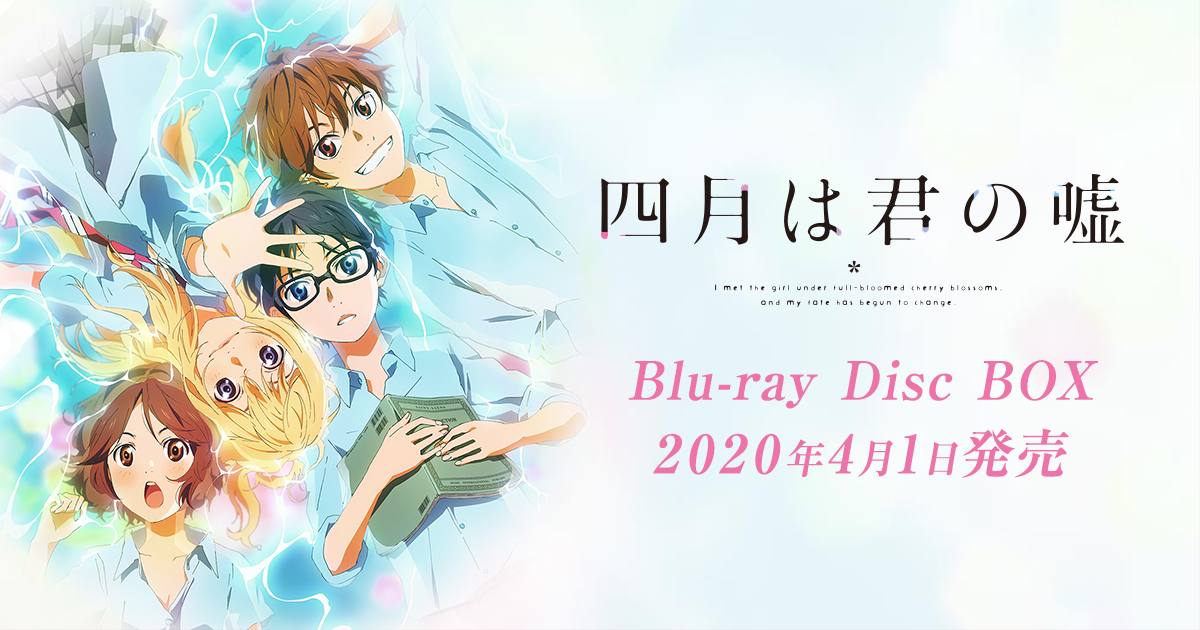
TVアニメ「四月は君の嘘」オフィシャルサイト
TVアニメ「四月は君の嘘」TOKYO MX・GyaOにて2019年11月4日19:00~スタート!Blu-ray Disc BOX 2020年4月1日発売!
www.kimiuso.jpNatsume's Book of Friends
Natsume's Book of Friends traces a once-lonely protagonist whose world expands little by little through encounters and farewells with spirits. The mostly episodic format leaves a small, distinct afterglow with each installment. There are no massive events engineered to make you cry. Instead, quiet kindness and gazes directed at irretrievable time accumulate until, without warning, they become tears.
What makes it effective is the focus not on heroic rescues but on how precious the simple experience of being understood can be. Since it doesn't rush your emotions, the show enters your awareness gradually, settling into a deeper place. Watching a single episode after a long day doesn't shake you violently. It's more like your frayed emotions settle, and in that process, a tear slips out. This connects with people who prefer the gentle, slow-seeping type over dramatic sobbing, and with anyone looking for comfort rather than intensity when they're tired. The viewing barrier is low. Even as a long-running series, the episodic structure makes any entry point comfortable. In a word: a show that draws tears through the afterglow of gentleness, not dramatic force.
Fruits Basket (2019)
Fruits Basket (2019) is a human drama that patiently builds across family, trauma, romance, and redemption over a long runtime. First impressions are relatively soft, but as the story progresses, the depth of each character's wounds and the difficulty of re-weaving human bonds become clear. Its length is a genuine asset — by not rushing the evolution of relationships, the emotional payoff in the later arcs hits with real weight.
The tears come from watching wounded people accepted by others, or finding a way to forgive themselves, and slowly re-stitching the fabric of their connections. The show looks different at the start and the end. Interactions that seemed lighthearted early on reveal a different gravity in retrospect. This resonates with people who are vulnerable to family dramas, redemption arcs, and stories about human bonds being carefully repaired. The viewing barrier involves the commitment of length, but the payoff justifies it. In a word: a slow-build redemption drama that pays off through accumulation.
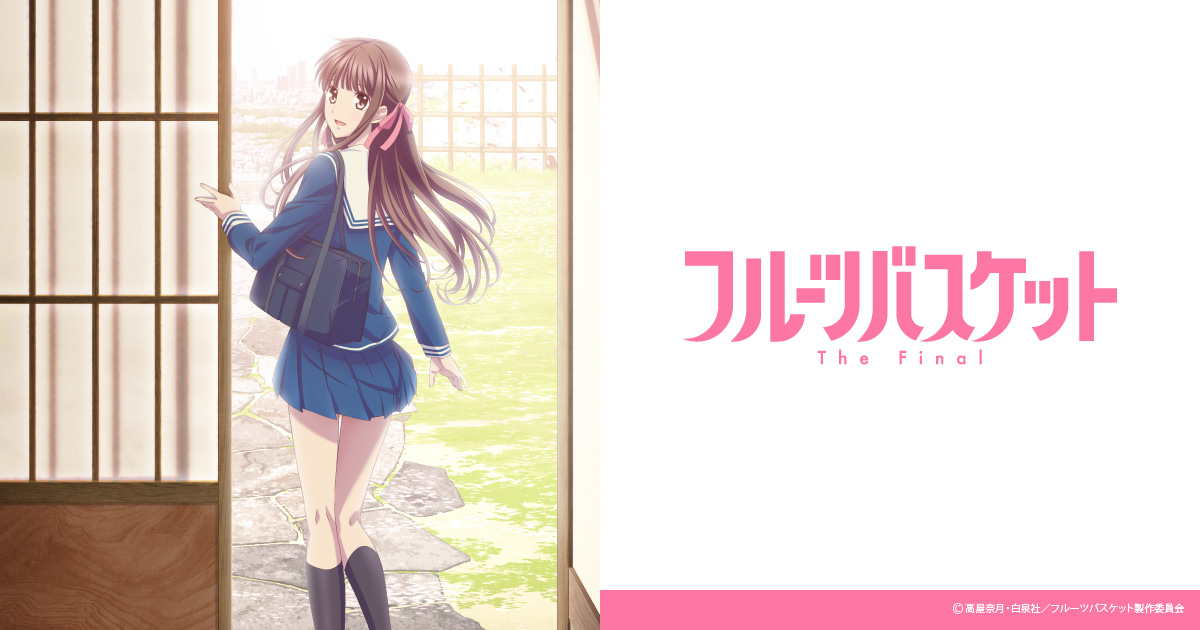
TVアニメ「フルーツバスケット」公式サイト
全世界コミックス発行累計3000万部!世界中の人々のこころをつかんだ「フルーツバスケット」が全編アニメ化!原作:高屋奈月、監督:井端義秀、シリーズ構成:岸本 卓、キャラクターデザイン:進藤 優、アニメーション制作:トムス・エンタテインメント
fruba.jpAngel Beats!
Angel Beats! uses school-setting energy, comedic pacing, and a sci-fi premise as its entry point, then properly collects on the emotional investment in its second half. On first watch, it reads as a lively ensemble piece. But the laughter narrows the distance between viewer and character, so when each person's lingering regrets and backstories emerge, the shift in tone lands harder.
What earns the tears is precisely this gap in design. You start riding on momentum, and then you begin to see what all that brightness was protecting. Even the throwaway jokes start carrying different meaning. Binge-watching pairs well here because the temperature shift between comedy and emotion hits more sharply in continuous viewing. This connects with people who find heavy openings off-putting but still want to cry genuinely by the end. The fast pace may split opinions, but when it clicks, the emotional collection is powerful. In a word: an energetic youth ensemble that cashes in its emotional buildup.
Angel Beats! 公式サイト
www.angelbeats.jpCLANNAD AFTER STORY
CLANNAD AFTER STORY is a family drama frequently cited in any tearjerker conversation. Its power doesn't come from sad events occurring. It comes from depicting the progression of life itself. Beyond school days, it moves into the territory of becoming a family, shouldering responsibility, and continuing to live even after devastating loss. The emotional reach is long. How this show lands can shift dramatically depending on whether you watch it as a student or as a working adult.
The tears aren't triggered by a single tragic incident. They come from daily life itself gaining emotional mass, so that when change or rupture arrives, it carries the weight of lived reality. What seemed like a school romance and its natural extension becomes, for adult viewers, something charged with the tangible texture of responsibility and daily life. That kind of re-watchability is rare. This resonates with people who want to invest deeply in characters and be profoundly moved by what follows. The viewing barrier is moderate — earlier context matters. In a word: the definitive family-themed tearjerker that earns its devastation through accumulated daily life.
March Comes in Like a Lion
March Comes in Like a Lion is nominally about shogi, but its essence becomes clearest when viewed as a story about acquiring a place to belong. The protagonist's inner world carries real weight, yet the series never lets darkness dominate. The warmth of the Kawamoto household and quiet exchanges with opponents gradually build something resembling home. Even without major events, the simple sense that someone can exist safely in a space becomes a form of salvation.
What draws the tears isn't dramatic reversal or spectacular farewell. It's the feeling of something frozen inside gently beginning to thaw. On a hard day, this show meets your exhaustion before offering encouragement — it understands first, then gives the smallest push. That ordering is what makes it work so well. It resonates especially with adults and with people who value the slow, quiet type of emotional storytelling. The viewing barrier isn't the lowest, but shogi knowledge isn't the point; the human drama is. In a word: a gentle chronicle of a frozen heart slowly thawing.
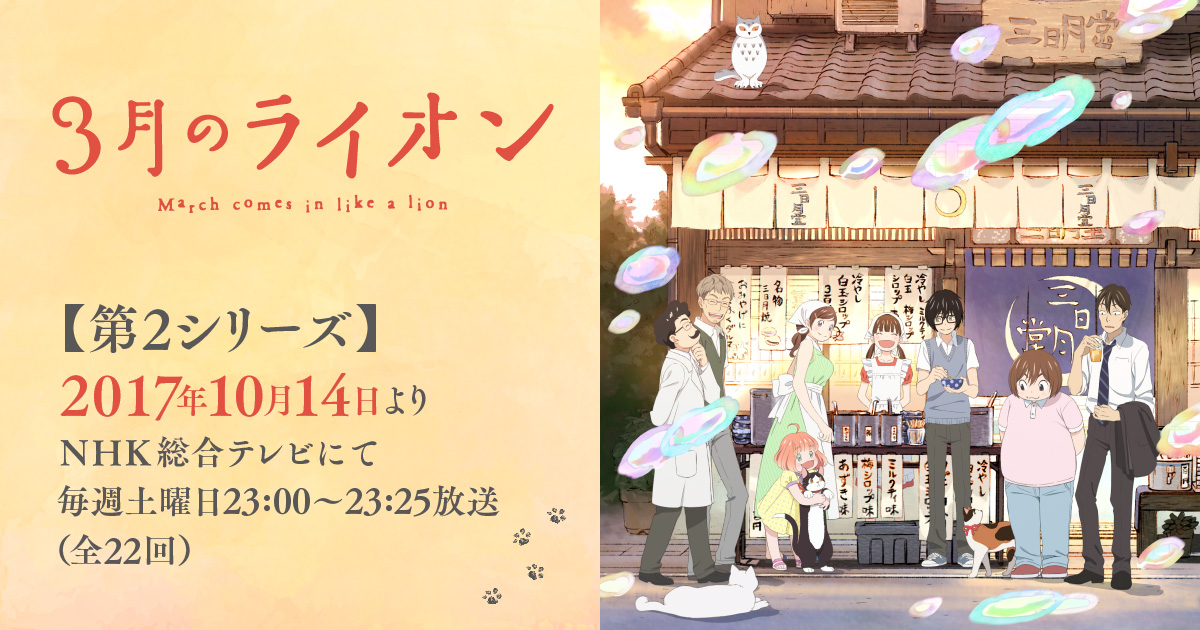
TVアニメ「3月のライオン」公式サイト
第2シリーズ2017年10月14日よりNHK総合テレビにて毎週土曜23:00〜放送。Blu-ray&DVD5〜8巻発売決定!
3lion-anime.comHaikyu!!
Haikyu!! is a sports anime whose emotional impact extends well beyond the rush of winning. Practice, teamwork, and hitting walls are all here in classic form, but the show also captures the frustration of defeat, the weight of retirement, and the silence after a match ends with remarkable clarity. Tears often come not during the match itself but in its aftermath.
What makes it cry-worthy is its refusal to stop at celebrating effort that pays off. It honors the time of those whose effort didn't pay off with equal care. You're more likely to break at a defeated player's expression or a single quiet sentence than at a victory scene. That's what prevents this from being simply hot-blooded — it leaves a residue of bittersweet frustration that amplifies the next emotional high. This connects with people who cry not over romance or loss but over the sanctity of going all-in. The viewing barrier is the series length, but emotional investment in the characters comes naturally. In a word: a sports tearjerker fueled by both passion and the sting of falling short.
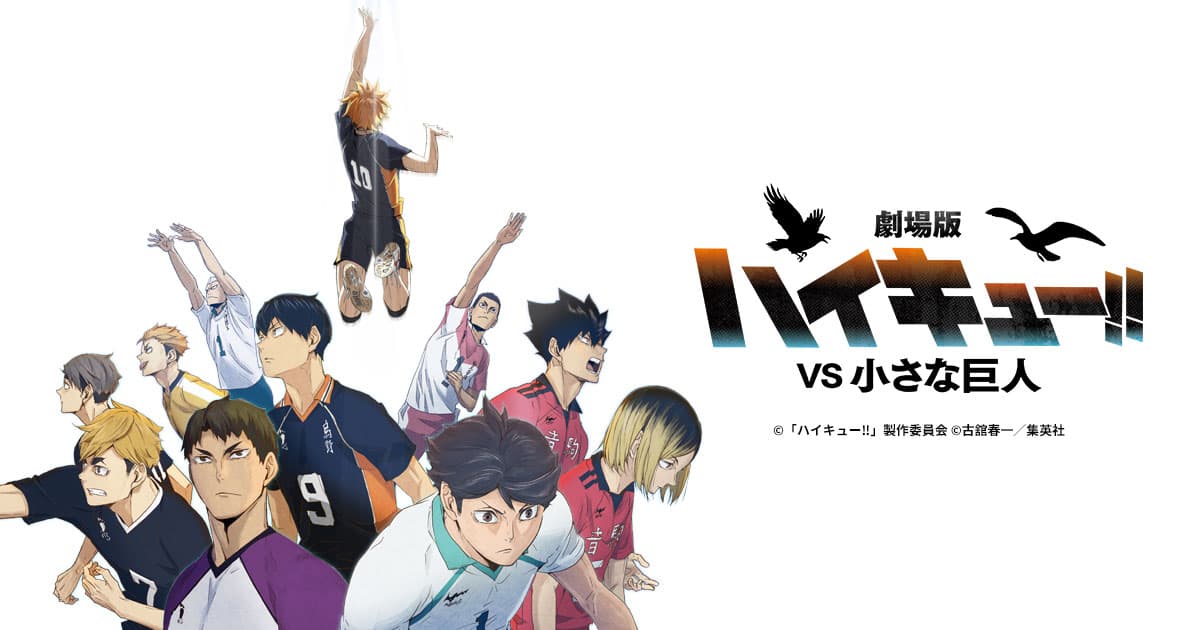
アニメ『ハイキュー!!』公式サイト
『劇場版ハイキュー!! VS 小さな巨人』・スペシャルアニメ「ハイキュー!! バケモノたちの行くところ」制作決定!
haikyu.jpAstra Lost in Space
Astra Lost in Space is a friendship-driven sci-fi with a strong hook and 12 episodes of tightly constructed storytelling. Entering with as little prior knowledge as possible maximizes the experience, so spoiler avoidance is recommended. From an emotional perspective, what stands out is how trust is tested in survival conditions and how the story's feel changes each time a crew member's background comes to light.
The tears come because the real, shared experience of surviving together gives certain moments of solidarity and choice genuine weight. The mystery dimension means it offers more than just sentimentality, which suits people who'd find pure tearjerkers insufficient. All 12 episodes fit comfortably into a weekend — roughly half a day at a steady pace. Weeknight viewing at two episodes per session keeps things manageable too, since the emotional thread holds well over that span. This connects with people who want high completion in a short package and enjoy both friendship and sci-fi. In a word: a compact, binge-worthy emotional ride with sci-fi depth.
TVアニメ「彼方のアストラ」公式サイト
astra-anime.comMedalist
Medalist is a relatively recent entry, but the reasons it's already commanding attention as an emotional powerhouse are unmistakable. Set in figure skating, the story focuses not just on whether talent exists but on the anxiety of a late start, the tenacity of both coach and skater, and the gravity of the moment when the impossible becomes possible.
The tears are earned because effort here isn't depicted as vague determination. There's specificity in both the technical barriers and the emotional ones. Neither side is glossed over. The mentor-student trust develops incrementally, so growth never looks like a narrative shortcut. Personally, I find the way the mentorship distance closes to be especially well handled — the feeling of rooting for someone converts naturally into tears. Season 1 runs 13 episodes and is easy to pick up. For anyone wanting a current emotional title with strong momentum, this is a reliable choice. The viewing barrier is low, welcoming even people who haven't watched a sports anime in a while. In a word: a contemporary sports anime that earns every tear through effort and mentorship.
TVアニメ「メダリスト」公式サイト
「アフタヌーン」(講談社刊)連載の漫画『メダリスト』が、TVアニメ化決定——!「次にくるマンガ大賞2022」コミックス部門1位を受賞した話題のフィギュアスケート漫画。
medalist-pr.comHonorable Mentions: Shows That Didn't Make the 12 but May Hit Harder for Some
Two titles deserve a mention outside the main list: Toradora! and Looking Up at the Half-Moon. Both have strong, lasting fanbases as tearjerkers, but since the 12-title selection prioritized spreading the types of tears as widely as possible, they ended up outside the main lineup. That said, depending on your preferences, these may actually resonate more deeply.
Toradora! runs on the emotional turbulence of romance — the shifts in relationships, the clumsiness of feelings. If you want to deepen emotion along the trajectory of a romantic comedy rather than a youth ensemble, it's a strong candidate. Looking Up at the Half-Moon is only 6 episodes, making it accessible even when you lack the energy for a longer series. It delivers a concentrated dose of romantic heartache and mortality. If the main 12 are "safe bets and representative titles for comparison," these two function well as your next watch after finishing the essentials. If you want more romantic intensity, go with Toradora!. If you want something short that cuts quickly, try Looking Up at the Half-Moon.
とらドラ!15周年記念特設ページ | とらドラ! | 特設ページ | 電撃文庫・電撃の新文芸公式サイト
@charset "UTF-8"; * { -webkit-box-sizing: border-box; -moz-box-sizing: border-box; -o-box-sizing: border-box;
dengekibunko.jpChoosing by Beginner-Friendliness, Short Length, or Adult Resonance
If You're Picking Just One
When the comparison table still leaves you undecided, prioritize reliability. My pick for a single starting point is Violet Evergarden. The reason is straightforward: it balances accessibility, overall quality, and post-viewing aftertaste better than almost anything else here.
This show isn't strong only in the scenes designed to make you cry. Each episode has a clearly organized emotional focus, making it hard to lose your way even on a first watch. The careful pairing of visuals and sound carries you naturally into the emotional current. It handles heavy subject matter while managing not to leave you in a downward spiral afterward — a design that makes it approachable even for people unfamiliar with emotional anime.
My runner-up is A Place Further Than the Universe. This one leans less toward quiet reflection and more toward forward energy. If you want to cry but also walk away with some renewed vitality, it might actually suit you better. For a quiet, deep experience: Violet Evergarden. For something that includes the exhilaration of achievement: A Place Further Than the Universe. That distinction should make the decision easier.
If You Want 6 to 13 Episodes
Shorter picks are easy to commit to. A standard TV anime cour runs around 12 episodes, so even watching two per night on weekdays keeps things manageable. From experience, this length holds the emotional thread well without demanding too much during busy periods.
Three strong candidates:
12 episodes, with an impressive balance of brevity and narrative completeness. Works as both a friendship story and a sci-fi tale, and pairs extremely well with binge-watching. The emotional core runs on trust and the accumulation of a shared journey, not romance.
13 episodes, delivering both emotional impact and a sense of forward motion. Tearful yet never oppressively heavy. Among shorter titles, it's the most versatile.
Season 1 at 13 episodes, and a strong option for anyone who wants a current emotional title with momentum. The mentor-student relationship and steady buildup of effort form the backbone, producing tears that grow warmer with each episode.
One supplementary pick: Looking Up at the Half-Moon at just 6 episodes, for when you want something even shorter. It concentrates romantic heartache and themes of mortality into a compact package. However, for overall accessibility and balance, the three above take priority.
Shows That Hit Harder the Older You Get
The anime that resonate most with adults aren't necessarily the heaviest. They're the ones where life and work experience make the weight of words and the shifts in relationships more tangible. Through that lens, the top picks are CLANNAD AFTER STORY, March Comes in Like a Lion, and Violet Evergarden.
Family, daily life, and responsibility take center stage, so its impact shifts with your own life stage. Scenes that register as events when you're a student start carrying the weight of everyday reality when you're an adult.
A show that finds value in the process of solitude and recovery rather than dramatic spectacle. It resonates most powerfully when you know firsthand how hard it can be to work, to keep distance from people, and to slowly build a place where you belong.
The work of delivering words to others and the circumstances of those receiving them are depicted with care that becomes more visible after you've entered working life. The weight lies in the process of converting emotion into language, not in shouting feelings raw.
ℹ️ Note
"Best for adults" doesn't mean inaccessible. The emotional entry points are clear. It's the relational subtleties beyond them that deepen with age.
If You Want to Cry Without Romance
When searching for emotional anime outside the romance lane, the reliable switches are effort, friendship, renewal, and gentleness. The strongest picks here are Haikyu!!, A Place Further Than the Universe, Medalist, and Natsume's Book of Friends.
The tears come from accumulated effort and the sting of defeat, not romantic heartache. What hits hardest is the sanctity of time spent going all-in.
Friendship and challenge drive the emotion, and the tears lean uplifting. More a story about moving forward on your own feet than about falling for someone.
High emotional intensity as a mentor-student story. Empathy with both the one coaching and the one striving happens naturally. If detailed depictions of effort bring you to tears, this is a match.
No dramatic incidents — just the slow dissolution of loneliness and the gentle accumulation of small kindnesses. When you want comfort-weighted tears rather than stimulation, this is the one.
When your mood is low, shows that move toward renewal tend to be easier to receive than ones built on heavy tragedy. Personally, on days when I'm running on empty, I reach for A Place Further Than the Universe or Natsume's Book of Friends — shows where crying leaves your breathing a little steadier. Deeply somber works aren't worse; it's more that these are easier to absorb given whatever emotional reserves you have that day.
If you're looking for non-romance tearjerkers among shorter series specifically, our guide to the 12 best short anime under one cour pairs well. For a broader genre-based comparison, our recommended anime by genre roundup provides a useful cross-referencing tool.
Tips for Making Tear-Jerking Anime Hit Even Harder
A little preparation before you press play can dramatically change how an emotional anime lands. The show's inherent quality matters, of course. But what time of day you watch, how focused you are, and what pace you set all alter the experience of the same title. Emotional anime rely on direction — the timing of pauses, the entrance of music, where your eyes are guided — and adjusting your viewing environment even slightly can raise satisfaction noticeably.
Binge or Watch 1-2 Episodes at a Time?
Emotional anime split into two types: those that hit harder when you ride the momentum continuously and those that land better when you leave space for the afterglow between episodes. Matching this before you start reduces the chances of a mismatch.
Binge-watching pairs well with titles that have clear narrative momentum, like Anohana, Astra Lost in Space, and Angel Beats!. Astra Lost in Space runs 12 episodes — roughly 4.6 hours straight through by standard TV anime length. Even with breaks, half a day covers it comfortably. The foreshadowing and emotional payoffs arrive in sequence, so uninterrupted viewing strengthens the impact. Anohana and Angel Beats! similarly build emotional pressure toward the finale, making a weekend session the ideal format.
On the other hand, Natsume's Book of Friends and March Comes in Like a Lion suit a 1-2 episode pace. Neither pushes through on event scale alone. The way characters' expressions land, the placement of a line — these things seep in gradually. Watching one episode and letting it sit allows the gentleness or the ache to linger in your daily life. From experience, rushing through this type tends to flatten good scenes into information rather than feeling.
For emotionally intense shows, deliberately inserting breaks helps. When tear-worthy scenes come back to back, watching without pause can saturate your emotions and dull the impact of the later, more important peaks. Even ten minutes of breathing room after a heavy episode changes how the next scene enters. Continuous viewing isn't always the right answer. Matching the rhythm the show asks for is the better approach.
Watch at Night and Set Up Your Audio
Shows that cry through music and atmosphere perform strongest at night, with sustained focus. Your Lie in April and Violet Evergarden are textbook examples. It's not the dialogue alone but the entrance of the BGM, the placement of silence, and the texture of a breath that push the emotional current higher. Nighttime — when notifications and conversations are scarce — lets you receive directorial details that daytime gaps would miss.
Audio setup directly affects whether a show makes you cry. Headphones or earbuds bring subtle ambient sounds and vocal nuance to the foreground, raising emotional density by a full level. The performance scenes in Your Lie in April benefit obviously, but even the quiet dialogue scenes in Violet Evergarden gain depth when you can hear the space in the audio. Some scenes advance a character's emotional state through sound alone while the visual barely moves.
💡 Tip
Watching on your phone while multitasking puts emotional anime at a disadvantage. The more tear-worthy a show is, the more it relies on a fleeting expression, the exact length of a pause, the precise moment BGM cuts out. Directing both your eyes and ears toward the screen lets these small directorial choices do their work.
None of this requires an elaborate home theater setup. Dimming the lights a little, silencing notifications, and making sure you can actually hear properly is enough. Think of it as creating conditions where you can read directorial intent clearly.
Avoid Spoilers Whenever Possible
Emotional anime can still work when you know the ending, but certain shows are disproportionately powerful on first watch. Astra Lost in Space is the clearest example. The less you know about its structure and twists, the more cleanly the surprise and the emotional wave connect.
The biggest risk is searching social media before watching. Typing a title into a search bar can instantly surface one-line reactions or thumbnails that reveal critical information. For shows where the emotional core partly depends on "what happens," that single glance costs you something irreplaceable. Social media is better saved for after you finish — reading other people's reactions then extends the afterglow rather than diminishing the experience.
Trailers and clip compilations carry risk too. Memorable lines and peak emotional moments increasingly get cut into short-form content, but those scenes were designed to arrive after careful buildup. Seeing them out of order disrupts the directorial sequence. Personally, for emotional anime I cap myself at a minimal synopsis and one official PV at most. Preserving room to receive is more valuable than accumulating information in this genre.
How to Choose Your Next Watch After Finishing One
When watching emotional anime back to back, shifting the type of tears slightly prevents fatigue. Watching something reflective and then diving into another heavy loss story risks emotional overlap. Pivoting instead to the refreshing energy of A Place Further Than the Universe or the effort-driven warmth of Medalist keeps each show's qualities distinct. Stacking heavy titles dilutes the individual impact, so deliberately varying the emotional temperature is a worthwhile strategy.
A practical habit: instead of committing to a single next title, keep about three shows on a watchlist. That way, you can choose based on the day's mood — "I want to sit in quiet emotion tonight" or "I want something that leaves me energized." Placing Natsume's Book of Friends after Violet Evergarden versus placing Haikyu!! after it creates completely different recovery trajectories.
If you want to organize your selection process from a broader perspective, our anime beginner's guide offers a useful framework. For cross-genre browsing when you want to vary the emotional temperature, our recommended anime by genre roundup works well as a return point.
Emotional anime are experiences that extend through the afterglow. Choosing the next title not by asking "what will make me cry more" but by asking "how do I want to process what I'm feeling right now" tends to produce higher satisfaction in the long run.
Summary | When in Doubt, Choose by Type of Tears and Aftertaste
When you can't decide, the criteria ultimately reduce to two questions: what kind of tears are you looking for, and what mood do you want to carry when the show ends? For a quiet, deep immersion, start with Violet Evergarden. If you also want a charge of forward energy, A Place Further Than the Universe. For a fast, satisfying ride that wraps up cleanly, Astra Lost in Space. These three each hold a distinct type of tear and aftertaste, which is precisely why they're hard to go wrong with as a starting point.
Feeling paralyzed by the sheer volume of options is natural. But when scanning the comparison table, deciding on just one priority condition makes things manageable. Whether that's "I want quiet, reflective tears," "I want something refreshing too," or "I need binge-friendliness" — anchoring on a single criterion narrows the field quickly. With over 200 TV anime produced annually in Japan, defining your own emotional entry point before casting a wide net prevents the biggest misses.
From there, adding about three titles to a watchlist keeps things flexible. Rather than locking in a single choice, having options for "tonight I want something quiet" or "tonight I want a boost" lets emotional anime meet you where you are. Starting with single-cour titles also keeps the commitment light. A standard cour is around 12 episodes, which translates to under a week at two episodes per night, or roughly half a day in a single sitting.
Finding the right tearjerker isn't about cataloging every acclaimed title. It's about knowing which type of tears you're most susceptible to. Loss and renewal? Friendship and challenge? Forward-leaning energy rather than lingering sadness? Once that becomes clear, the next title practically chooses itself.
Frequently Asked Questions About Tear-Jerking Anime
Are there anime that make you cry but leave a good aftertaste?
Absolutely. If you don't want to feel drained afterward, A Place Further Than the Universe, Violet Evergarden, and Medalist are strong options. A Place Further Than the Universe builds tears from friendship and challenge, leaving you wanting to push forward. Violet Evergarden carries a reflective aftertaste but is designed to move from loss toward renewal rather than staying in grief. Medalist generates warmth through the mentor-student bond and the culmination of effort, leaning toward uplifting intensity rather than heaviness.
What are some easy-to-watch tearjerkers in a single cour?
For shorter commitments, Anohana, Astra Lost in Space, A Place Further Than the Universe, and Medalist are the candidates. A standard TV anime cour is around 12 episodes, making them manageable as either a slow weeknight watch or a concentrated weekend session. For concentrated heartache, Anohana. For binge satisfaction, the 12-episode Astra Lost in Space. For refreshing tears, A Place Further Than the Universe. For a current emotional title with momentum, the 13-episode first season of Medalist.
Can anime make you cry without romance?
Without question. Tearjerker anime go well beyond romantic storylines. Haikyu!! draws tears from the frustration of effort that falls short and the weight of time spent with teammates, not from love stories. Natsume's Book of Friends trades emotional intensity for loneliness and gentleness that quietly seeps in. March Comes in Like a Lion is powerful as a recovery narrative. A Place Further Than the Universe runs on thick emotional threads of friendship and family. When the accumulation of relationships is depicted with care, romance becomes entirely optional for producing genuine tears.
Which shows are best for anime beginners?
For accessibility, Violet Evergarden, A Place Further Than the Universe, and Astra Lost in Space are reliable picks. All three offer clear emotional entry points and narratives that are easy to follow. Violet Evergarden has a well-defined emotional landing in each episode, and its visual beauty enhances immersion. A Place Further Than the Universe has breezy conversational pacing that welcomes even people unfamiliar with youth drama. Astra Lost in Space has a strong "what happens next" pull, so even people who assume tearjerkers are heavy will find themselves watching episode after episode.
What short anime pack an emotional punch?
When you don't have the energy for a long series, Astra Lost in Space and Looking Up at the Half-Moon are well suited. Astra Lost in Space covers 12 episodes and delivers both emotional weight and mystery in a single binge. Looking Up at the Half-Moon runs just 6 episodes, making it ideal for a day when you want to cry but can't commit to anything long. The trick is deciding what you want to cry about even within a short format. For achievement and trust, go with Astra Lost in Space. For denser heartache with a sharper edge, Looking Up at the Half-Moon. Choosing by the quality of tears keeps even short-form picks on target.
ON AIR|TVアニメ「彼方のアストラ」公式サイト
astra-anime.comRelated Articles
11 Anime Movies That Will Make You Cry | Ranked by Emotion Type: Joy, Sadness, Longing
11 Anime Movies That Will Make You Cry | Ranked by Emotion Type: Joy, Sadness, Longing
You and I Are Polar Opposites: Why It Topped the Winter 2026 Anime Rankings
You and I Are Polar Opposites: Why It Topped the Winter 2026 Anime Rankings
Madoka Magica's New Film Walpurgis no Kaiten Finally Continues the Story After 13 Years
Madoka Magica's New Film Walpurgis no Kaiten Finally Continues the Story After 13 Years
Jujutsu Kaisen Season 3: Culling Game Arc Highlights and Latest Anime Updates