
10 Best Isekai Anime to Watch | A Selection Guide
10 Best Isekai Anime to Watch | A Selection Guide
With so many isekai anime out there spanning reincarnation, transportation, and summoning subgenres, picking where to start can feel overwhelming. This guide breaks down the key differences and walks you through the best titles to match your taste.
Once you start looking into isekai anime, you quickly realize the sheer range can be paralyzing. Reincarnation, transportation, summoning -- each entry point creates a completely different feel, and that is before you factor in subgenres like slow life, villainess, and banishment stories. The genre branches in so many directions that choosing a starting point takes real effort.
This guide is for people who want to get into isekai but do not know where to begin, as well as those who have seen the big titles and want to make sure their next pick actually lands. Shows like That Time I Got Reincarnated as a Slime, Re:ZERO -Starting Life in Another World-, and KONOSUBA -God's Blessing on This Wonderful World!- dominate the conversation for good reason, but the real appeal of isekai today is less about chasing popular titles and more about finding the flavor that fits your mood. With a constant stream of strong new entries running alongside established classics, the smartest first step is getting a mental map of the genre -- that is what leads you to a show you will actually enjoy.
10 Best Isekai Anime | Starting With How to Choose
If you had to sum up what makes isekai appealing in one line, it would be: a world with different rules where you get to experience fresh starts, adventure, and rising through the ranks all at once. A reincarnation setup means the protagonist dies and is reborn in another world with their old knowledge intact. Transportation drops someone into another world alive and unprepared. Summoning means the other world actively pulls a person in for a specific role. Each entry point shifts the story's perspective, and layered on top of that, recent years have added slow life, villainess, and banishment subgenres -- making the genre both richer and harder to navigate.
The sheer number of options drives this home. Curated features like N-Anime's 54 Recommended Isekai already present a big pool, and when you factor in lists from eeo Media's Isekai Anime Feature, narrowing things down becomes a genuine challenge. Then Minna no Ranking's Isekai Anime list extends to 334 entries, which makes clear that once you know a handful of famous titles, picking the next one is actually the hard part. Isekai also continues to perform strongly on streaming platforms -- ABEMA's cumulative series viewership rankings show major isekai titles maintaining a dominant presence, with the numbers backing up what reputation already suggests.
So here is the core thesis up front. Isekai anime gets much easier to choose when you filter by three things: entry setup, tone, and accessibility. Do you prefer reincarnation, transportation, or summoning? Are you in the mood for comedy or heavy drama? How approachable is each episode on its own? Lining up these three factors is enough to cut a list of hundreds down to about ten strong candidates.
That Time I Got Reincarnated as a Slime stands apart even among the well-known titles. Widely categorized as a reincarnation story, its biggest strengths are the satisfaction of recruiting allies and building out a world piece by piece -- which makes it one of the most stable entry points for isekai newcomers. Topping ABEMA's Isekai Anime Grand Rankings (per ABEMA's data) feels well-earned; the show delivers a power-fantasy thrill while expanding into geopolitics and inter-species diplomacy that give it genuine scale. It suits anyone looking for a feel-good ride with clear forward momentum. The one caveat: viewers who crave constant tension may find things move a little too smoothly. If you have been hesitant about isekai, though, this is the type of show that dissolves that hesitation fast.
Re:ZERO -Starting Life in Another World- hits completely different notes. Classified as a transportation story, its core structure forces the protagonist through repeated failures as he searches for a way forward. The emotional swings are intense -- the pain itself becomes what keeps you watching. For anyone drawn to drama-heavy isekai, it delivers. The reason it belongs here is straightforward: no other show has taken isekai's "do-over" concept and made it hurt this much. It suits people who want weighty storytelling and psychological stakes. The tradeoff is that very weight -- this is not a show for nights when you just want to unwind. For newcomers, it is the title that demonstrates isekai is not all lighthearted power fantasies, and understanding that opens up the genre's full depth.
KONOSUBA -God's Blessing on This Wonderful World!- takes the standard isekai setup and rebuilds it as pure comedy. The reincarnation framework is there, but instead of battles and grand quests, the show runs on banter between a cast of lovably dysfunctional characters. Even viewers with little isekai experience find it easy to enjoy because you do not need to memorize any world-building to have a good time. It suits anyone who gravitates toward snappy dialogue and comedy. Viewers who prioritize serious drama may find it too light. For first-timers, few shows communicate their vibe as quickly as this one does -- a single episode is all it takes.
Overlord is essential for anyone interested in isekai from the dark fantasy angle. Rather than a hero fighting uphill, the protagonist sits at the top -- an overwhelmingly powerful being surveying a world from above. The appeal is less about cheering someone on and more about watching how the power map shifts. Often categorized as a transportation story, it thrives on the dynamics between factions and the political maneuvering of the protagonist's subordinates. It suits those who enjoy cold strategy and morally gray storytelling. Viewers who want to root for a conventional hero may feel distanced. Think of it less as "supporting the main character" and more as "observing how the world reacts to an apex predator."
Mushoku Tensei: Jobless Reincarnation represents isekai reincarnation taken to its most earnest extreme. The backbone is a story about second chances, but the real draw is the density of the journey itself -- the background art, the sense of travel, the way each region carries its own cultural weight. This is not just a success story; it is built around what it genuinely feels like to live a life over again. The animation quality alone sets a high-water mark for the genre, making it clear that isekai can deliver something with the weight of a life-spanning saga. It suits viewers who value visual craftsmanship and character-driven drama. Opinions divide sharply on the protagonist, especially early on. For newcomers, this is a title that hits some people profoundly while bouncing off others -- knowing that split exists going in helps set expectations.
Ascendance of a Bookworm is one to highlight especially for viewers drawn to culture and systems over combat. The protagonist's goal is not world domination or leveling up -- it is reading books, and then figuring out how to create them in a world where paper and printing barely exist. From there, the story unfolds into social structures, trade, education, and class systems with impressive patience. The reason it earns a spot is its demonstration that isekai can be about building a life, not conquering enemies. It suits anyone who enjoys world-building details and incremental progress. Viewers expecting flashy action may find the pace quiet. The anime has aired across multiple seasons since 2019, with a fourth season, "Daughter of the Domain Lord," scheduled for spring 2026.
Saga of Tanya the Evil brings a hard-edged military tone that is rare in isekai. Despite the misleading character design, the content is all strategy, organizational politics, and battlefield decisions. There is almost no lightness here -- conversations carry tension, and every tactical choice has weight. What the show is really doing is compressing a war drama into an isekai framework, and that coldness is precisely the draw. It suits fans of military tactics and tightly wound storytelling. The density of terminology and overall seriousness may be too sharp for casual viewing. The first season ran in 2017 at approximately 12 episodes (~4.8 hours), making it realistic to finish in a single weekend (episode counts may vary slightly by broadcast source).
Campfire Cooking in Another World with My Absurd Skill captures the strength of the recent slow life wave. The summoned protagonist carves out a niche not through combat but through cooking and comfortable travel, making the show a prime example of isekai comfort food -- in both senses. The reason it belongs on this list is that it expanded what isekai could be. It proved a show could sustain itself on the pleasures of meals and journeys rather than life-or-death battles. It suits viewers who want low-stress entertainment. Those looking for high-stakes drama will find it too gentle. Season 1 runs 12 episodes, so even watching it over weekday evenings feels manageable.
How a Realist Hero Rebuilt the Kingdom foregrounds politics, economics, and governance within a summoning framework. Forget swords and sorcery adventures -- the appeal here is fiscal policy, institutional reform, and strategic staffing for a struggling kingdom. The reason it works is that it channels the "given a role" aspect of summoning stories into nation-building, making the genre's premise feel genuinely productive. It suits fans of strategy, debate-driven plots, and organizational problem-solving. Viewers expecting frequent action may find the dialogue-heavy structure slow. At 26 episodes (~10.4 hours total), it rewards viewers who settle in for the long haul.
Delicious in Dungeon does not fit the strict reincarnation-transportation-summoning template -- some outlets classify it differently. Still, as an isekai fantasy recommendation, it is too strong to leave out. The premise of cooking dungeon monsters creates a framework where food, ecology, and adventure are inseparable. Reading the show's design intent, it becomes clear this is not a gimmick series but a thoughtful exploration of what survival actually looks like in a fantasy world, communicated through the tangible act of eating. It suits those who enjoy intricate world-building and creative premises. Viewers expecting a standard isekai formula may find it a different animal. The 24-episode run (~9.6 hours) splits well across two weekends.
Mapping these ten titles by entry type gives a useful overview. Slime, Mushoku Tensei, KONOSUBA, Bookworm, and Tanya the Evil fall on the reincarnation side with varying degrees of accessibility. Re:ZERO and Overlord represent transportation stories with very different emotional temperatures. Realist Hero is the clearest example of summoning-driven purpose. Layer tone on top and the picture sharpens further: comedy points to KONOSUBA, heavy drama to Re:ZERO, and relaxation to Campfire Cooking.
When recommending isekai to someone new, offering the three-way split of "funny," "heavy," and "relaxing" before listing ten titles tends to get better results. KONOSUBA, Re:ZERO, and Campfire Cooking in Another World are all popular -- but the headspace you need going in could not be more different. Sharing the emotional temperature first, before debating entry setups, makes it much harder to misfire on a first pick.
For someone who rarely watches anime, Slime or KONOSUBA require the least preamble. Viewers who value dramatic weight will remember Re:ZERO or Mushoku Tensei far more vividly. And for people who are too drained after work to absorb something heavy, shows like Campfire Cooking or Bookworm offer natural breathing room episode to episode. My honest take: satisfaction with isekai jumps sharply when you match the show to your current mood rather than chasing the question of which title is objectively the best.
💡 Tip
Not sure where to start? Use these three as your compass: Funny = KONOSUBA -God's Blessing on This Wonderful World!-, Heavy = Re:ZERO -Starting Life in Another World-, Relaxing = Campfire Cooking in Another World with My Absurd Skill. Once you know where you fall among these, picking the rest gets much easier.
To get a sense of how wide the candidate pool really is, comparing N-Anime's 54 Recommended Isekai with eeo Media's Isekai Feature paints a clear picture. The former highlights the depth of established classics, while the latter captures recent expansion into slow life, villainess, and adjacent subgenres. By this point, the idea that isekai is a single flavor dissolves -- it is a genre with multiple distinct entry points.
For gauging popularity trends and streaming momentum, the scale of Minna no Ranking's Isekai list alongside ABEMA's Isekai Anime Grand Ranking press release offers useful reference points. Rather than taking any single ranking at face value, the better approach is spotting which names keep surfacing. The titles that appear repeatedly -- That Time I Got Reincarnated as a Slime, Re:ZERO, KONOSUBA, Overlord, Mushoku Tensei -- stay strong not just because of name recognition but because their tones are distinct enough that they do not cannibalize each other.
How to Choose an Isekai Anime | Three Criteria for Newcomers
Filtering by entry setup, tone, and episode count -- in that order -- makes isekai anime dramatically easier to navigate. At first glance, everything blends into a single "isekai" label, but separating where the story begins, what kind of experience it offers, and how much of a time commitment it requires lets you zero in on something that actually fits. Getting the terminology straight here also makes the title breakdowns ahead much smoother to follow.
Understanding the Difference Between Reincarnation, Transportation, and Summoning
The most fundamental distinction is how the protagonist enters the other world. Reincarnation typically means dying and being reborn in a new world. Transportation means being moved there alive, with no preparation. Summoning means being called over by the other world's inhabitants for a purpose. Sources like Minna no Ranking's Isekai list, Wikipedia's entry on isekai as a genre, and Animate Times' isekai recommendation roundup all use this three-part framework as their baseline.
From a newcomer's perspective, reincarnation stories feel the most intuitive -- the "starting over with your old knowledge" hook is immediately graspable. That Time I Got Reincarnated as a Slime and Mushoku Tensei: Jobless Reincarnation both build growth and fresh-start drama around this setup. Transportation stories throw a modern person into an unfamiliar world as-is, which means the survival and exploration kick in right away. Summoning stories like How a Realist Hero Rebuilt the Kingdom front-load the question of "why was I brought here?" and "what am I supposed to accomplish?" -- a strong fit for viewers who like mission-driven narratives.
The entry setup shapes everything downstream. Reincarnation tends to center on "how do I build a new life?" Transportation puts "how do I survive what is right in front of me?" at the forefront. Summoning gravitates toward "how do I fulfill the expectations placed on me?" Newcomers often overlook these differences, but the actual viewing experience changes significantly depending on which one you are watching.
Worth noting: some titles like Sword Art Online get grouped with isekai in broader discussions, but are also classified separately as virtual-world stories depending on the source. Genre boundaries are not clean-cut and shift depending on which outlet you consult. Treating the categories as orientation tools -- "which entry type appeals to me most?" -- is more practical than trying to enforce rigid definitions.

【人気投票 1~334位】異世界アニメランキング!異世界転生・転移でおすすめの作品は?
ranking.netChoosing by Tone: Battle, Comedy, Slow Life, Political Drama
After entry setup, the next most effective filter is what kind of mood you want from a show. Even within isekai, the experience changes drastically depending on whether you are after tension every episode, easy laughs, or a slow burn through an intricate world.
For heavy battles and dark drama, Re:ZERO -Starting Life in Another World- and Overlord both deliver -- but in very different ways. Re:ZERO runs on raw emotional swings, depicting the protagonist's pain and recovery head-on. Overlord maintains a cooler distance, building unease through the perspective of an all-powerful ruler. Both feature strong protagonists in another world, but neither settles for simple power-fantasy thrills. They demand your full attention rather than casual background viewing.
For comedy, KONOSUBA -God's Blessing on This Wonderful World!- is the easiest on-ramp. Familiarity with isekai tropes makes the jokes land harder, but even without that background, the comedic timing alone carries the show. Its strength for newcomers is that character chemistry does the heavy lifting -- no lore homework required.
If cultural systems and incremental progress appeal to you, Ascendance of a Bookworm offers an unusually satisfying path. Starting from one person's desire to read, the story expands into class structures, trade networks, and educational reform with a craftsman's patience. Flashy fights are not the point -- instead, you get the pleasure of watching an unfamiliar society come into focus piece by piece. For viewers who enjoy "reading" a world rather than watching battles, it stands out sharply.
For pure comfort, Campfire Cooking in Another World with My Absurd Skill is rock-solid. Food drives the story forward, so each episode delivers a clear, satisfying payoff without requiring much emotional investment. This is the kind of show that works perfectly as a single episode before bed. By contrast, Re:ZERO benefits from weekend binge sessions where you can ride the emotional arcs without interruption. My sense is that isekai anime is best matched not to genre preferences but to viewing context -- the time and energy you have when you press play.

TVアニメ『Re:ゼロから始める異世界生活』オフィシャルサイト
TVアニメ『Re:ゼロから始める異世界生活』4th season 2026年4月8日(水)23:00〜よりTOKYO MX、AT-Xほかにて放送開始
re-zero-anime.jpChoosing by Episode Count and Accessibility
Another important factor is length. Shorter shows -- around one cour (a single broadcast season, typically 12-13 episodes) -- are easy to sample, and moving on is painless if the fit is not right. Longer series reward commitment with deeper immersion, the kind where you find yourself thinking about the next episode during your commute. Neither format is inherently better; they simply set different expectations for how you engage.
Campfire Cooking in Another World with My Absurd Skill season 1 runs 12 episodes (~4.8 hours total). Watching one episode per weeknight works well, and a weekend marathon never feels heavy. Delicious in Dungeon at 24 episodes (~9.6 hours) hits a denser sweet spot -- splitting it across two weekends keeps the rhythm comfortable. How a Realist Hero Rebuilt the Kingdom at 26 episodes (~10.4 hours) suits the kind of viewer who wants to settle in with a show's world and let the relationships and systems develop around them. Length directly maps to the relationship you build with a series.
For a first pick, overthinking is unnecessary. Does episode one hook you? Do you naturally want to see what happens next? Does the show's emotional weight match where you are right now? Those three questions are enough. Isekai shows in particular tend to front-load world-building explanations in episode one, so if that first episode loses you, the motivation to continue often evaporates.
Visual quality can also be a deciding factor. Animation studio and directorial approach are things I weigh fairly heavily, and shows with consistent production values lower the barrier to continued viewing in ways that go beyond story alone. TRIGGER's work on Delicious in Dungeon handles the food-and-adventure information flow with exceptional clarity, while MAPPA's Campfire Cooking sells every dish through steam, gloss, and texture. Whether a show's visual style clicks with you matters as much as narrative preference for staying engaged.
One-cour shows are easy to test over a weekend, and switching costs are low if things do not click. Longer series, once they grab you, have a way of weaving into your daily routine -- you catch yourself speculating about plot threads on the train. That difference in how a show occupies your headspace is bigger than it sounds, which makes episode count a legitimate axis for choosing. For viewers who want to sample broadly before committing, shorter anime recommendations covering single-cour standouts can help sharpen your sense for what works before diving into isekai specifically.
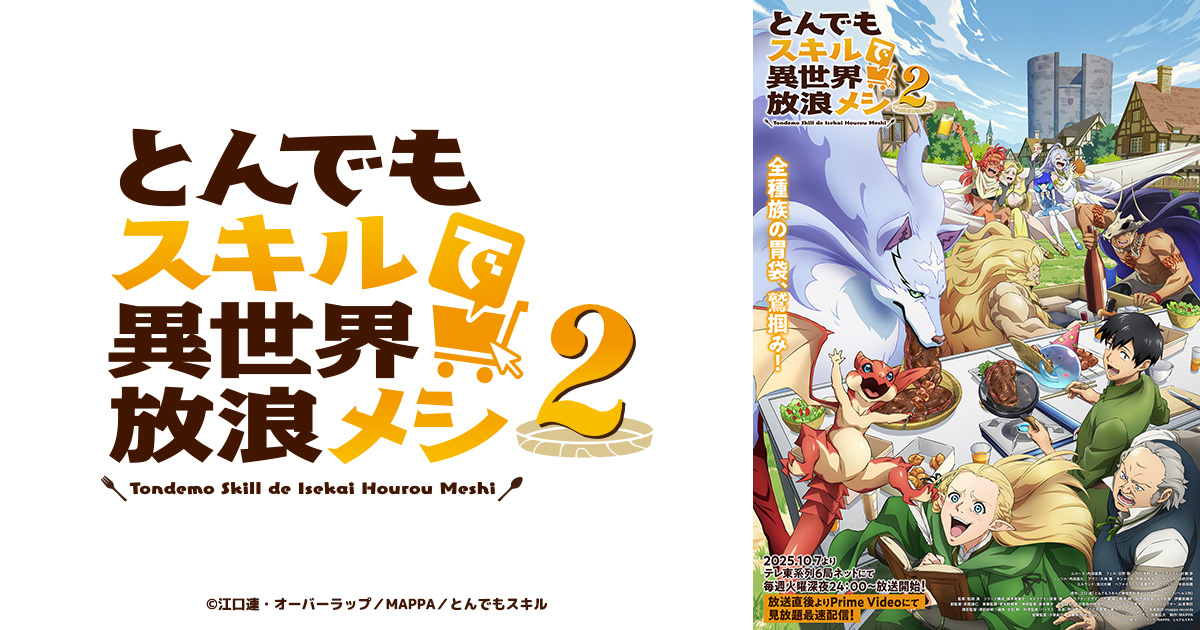
TVアニメ「とんでもスキルで異世界放浪メシ2」公式サイト
2025年10月7日より、毎週火曜深夜24:00~テレ東系列6局ネットにて放送開始!ある日突然異世界へと召喚された普通のサラリーマン、向田剛志。彼は固有スキル『ネットスーパー』で取り寄せた現代の調味料で料理を作って食べて、伝説の魔獣フェル・
tondemoskill-anime.com10 Recommended Isekai Anime
These ten titles were selected based on accessibility for newcomers, consistent presence across major features and rankings, and enough tonal diversity to serve as springboards toward further exploration. Looking at broad pools like N-Anime's isekai feature, the candidates are enormous -- but rather than ranking them, the goal here is to assemble ten titles that are hard to go wrong with as entry points. The spread covers action, comedy, dark fantasy, cultural drama, cooking, and political strategy, so there is a clear anchor for most tastes.
That Time I Got Reincarnated as a Slime
That Time I Got Reincarnated as a Slime is one of the most balanced entry points into isekai anime. The reincarnation setup is immediately clear, and the show stacks satisfying layers -- Rimuru's overwhelming abilities, the joy of gathering allies, and a nation-building arc that steadily widens the scope. It is a power-fantasy story, yes, but it avoids feeling like mindless dominance because the show keeps introducing new questions: which faction to align with next, how far the territory can expand, what diplomacy looks like between species.
The selection logic is simple: when a newcomer touches isekai for the first time, this show covers the most ground with the least friction. ABEMA's Isekai Anime Grand Rankings (per ABEMA's data) placed it at number one, which aligns with how broadly it appeals. Episode one hooks you intuitively, and each new arc expands the world in a way that turns curiosity into momentum.
This is the right pick for anyone paralyzed by choice, and for viewers who want an overpowered protagonist without anxiety. It offers a reliable sampling of what makes isekai enjoyable, which makes it a natural branching point toward more specialized titles afterward. The one scenario where it may not land is when a viewer specifically wants high-stakes tension -- the protagonist's strength can feel too comfortable in those terms. Even so, as a first recommendation, this is the safest bet on the list.

【公式】「転生したらスライムだった件」ポータルサイト
「転生したらスライムだった件」の公式ポータルサイト。アニメ、ノベル、コミックス、グッズやイベントの最新情報を本サイトから発信します。
www.ten-sura.comKONOSUBA -God's Blessing on This Wonderful World!-
KONOSUBA -God's Blessing on This Wonderful World!- is that rare comedy that gets funnier the more isekai you have seen -- and still works perfectly if you have seen none at all. It takes the reincarnation template and deliberately subverts it, replacing epic quests with a hopelessly flawed party whose bickering drives every episode. Rather than playing isekai tropes straight, the show turns those tropes into punchlines, which means it doubles as a palate cleanser after heavier titles.
The reason it earned a spot is tonal balance across the full list. Isekai skews serious in many of its best entries, and starting with something heavy can burn people out before they explore further. KONOSUBA sidesteps that entirely -- character dynamics pull you in before you even think about world-building. On tired weeknights, pressing play on one episode often turns into three because the comedic rhythm is that strong.
It suits anyone who wants to laugh first and explore later, and newcomers who find lore-heavy shows intimidating. The flip side: viewers who prioritize dramatic payoff or grand narrative arcs may find the tone too loose. Big emotional crescendos and weighty character development are not the priority here. Still, as a way to understand the range isekai offers, it is remarkably effective -- few shows make their case for existence as quickly as this one does.

アニメ「この素晴らしい世界に祝福を!」公式サイト
アニメ「この素晴らしい世界に祝福を!」シリーズ公式ポータルサイト TVアニメ『この素晴らしい世界に祝福を!4』制作決定!
konosuba.comRe:ZERO -Starting Life in Another World-
Re:ZERO -Starting Life in Another World- weaponizes its "return by death" mechanic to push isekai into territory most shows in the genre avoid. Every failed loop compounds the protagonist's psychological burden, and the interplay of suspense, emotional devastation, and slow-burn mystery creates an unusually dense viewing experience. This is not a show about overcoming obstacles through power -- it is about being broken down and clawing back inch by inch.
It belongs on this list because no other isekai captures the "can't stop watching" feeling quite this aggressively. The narrative hooks are relentless, and the character work pushes into extremes that linger well past the credits. Binge-watching amplifies the emotional highs and lows considerably -- it is not background viewing by any measure, but the tradeoff is a show that stays with you in a way lighter fare cannot. Reading the show's structural intent, the suffering itself serves as narrative fuel, which is why it never feels like misery for its own sake.
It suits anyone hungry for intense drama, psychological depth, and gripping cliffhangers. Where it divides people is obvious: the emotional weight is substantial, and there are stretches that are genuinely difficult to sit through. When you need comfort, this is not the one to reach for. For newcomers, think of it as the title that proves isekai can be grueling and addictive at the same time. If you want to understand the genre beyond lighthearted power trips, this is non-negotiable.
Mushoku Tensei: Jobless Reincarnation
Mushoku Tensei: Jobless Reincarnation treats the isekai reincarnation premise with uncommon sincerity. The frame is a second chance at life, but the show's real strength is in the texture of the journey -- breathtaking background art, a palpable sense of distance as characters travel, and cultures that shift convincingly from region to region. Combat spectacle takes a back seat to the feeling of genuinely living in another world, day by day.
It made the list because it demonstrates just how much narrative weight isekai can carry. The landscapes and road sequences are not filler -- they build the sense that these characters are truly crossing a world, and that tangible feeling of travel gives the coming-of-age story underneath a rare kind of credibility. As an example of what the genre can achieve at its most ambitious visually, it is in a class of its own.
This show is for viewers who care about animation quality, atmospheric storytelling, and journey-driven narratives. The clear dividing line is the protagonist: early behavior polarizes audiences, and whether you can accept that shapes the entire experience. For newcomers, this is one that affects some viewers deeply and bounces off others entirely -- knowing that going in helps you gauge your own reaction more honestly. It is less an easygoing crowd-pleaser and more a title that rewards the right audience with something they will not forget.

TVアニメ「無職転生 ~異世界行ったら本気だす~」公式サイト
「無職転生」第3期制作決定!第2期各種配信サービスで好評配信中!34歳の無職・ニートの男が剣と魔法の異世界に転生。「ルーデウス・グレイラット」として、前世の経験と後悔を糧に今度こそ本気で生きていく、壮大な大河ファンタジー!
mushokutensei.jpOverlord
Overlord occupies a unique space among overpowered-protagonist isekai. The main character is not a scrappy underdog or a reluctant hero -- he is an absolute ruler surveying his domain from the top. The result is a dark fantasy where narrative tension comes not from whether the protagonist can win, but from how the world around him responds to an entity operating on a completely different level.
Including it alongside That Time I Got Reincarnated as a Slime was intentional -- both feature powerful protagonists, but the viewing experience is fundamentally different. Overlord asks you to observe rather than cheer. Factional misunderstandings, the spread of fear, and the cold logic of the protagonist's subordinates generate the drama. The perspective sits higher and colder, which gives the show a distinctive flavor within isekai.
It suits fans of dark tones, strategic maneuvering, and stories that explore power from the top down. The sticking point for some viewers is the cruelty and emotional distance -- if you need someone to root for in a conventional sense, the fit may feel off. For newcomers, approach it as a show about watching a world react to an overwhelming force, rather than a hero's journey -- that framing unlocks what makes it compelling.

オーバーロード初のスマホゲーム「MASS FOR THE DEAD」(オバマス)公式サイト
小説・TVアニメで人気を博した『オーバーロード』初のスマホ向けゲーム「MASS FOR THE DEAD」(オバマス)の公式サイトです。Vtuberスライム子やゲームに関する情報を発信しますので、オバロファンは要チェック!
overlord-game.comAscendance of a Bookworm
Ascendance of a Bookworm is the standout pick for viewers who would rather explore a world's culture and institutions than its battlefields. The protagonist wants one thing: to read. In a society where paper and printing are neither cheap nor accessible, that simple desire pulls her into the realities of materials science, trade, class structure, and education. The show is not built on dramatic showdowns -- it is built on the slow, satisfying process of changing a world's infrastructure from the inside.
It earned its place because it proves isekai does not need combat to be compelling. The craftsmanship lies in making world-building details the source of drama: every material limitation, every social barrier becomes an obstacle with real stakes. You find yourself pressing "next episode" not because of a cliffhanger, but because the gradual progress is genuinely absorbing.
It suits readers-at-heart, fans of incremental progress, and anyone who enjoys watching systems work. Viewers expecting fast-paced action may feel the tempo is too restrained. The anime has spanned multiple seasons since 2019, with a fourth season -- "Daughter of the Domain Lord" -- scheduled for spring 2026. For newcomers, this is the title that shows isekai's range extends far beyond swords and sorcery.

本好きの下剋上 領主の養女【TVアニメ】
「本がなければ作ればいい!」ひとりの少女の情熱が世界を動かす――『本好きの下剋上』TVアニメ公式サイト。2026年4月4日(土)夕方5:30放送開始!
booklove-anime.jpSaga of Tanya the Evil
Saga of Tanya the Evil ranks among the hardest-edged entries in isekai anime. The character design suggests one thing; the content delivers something entirely different -- military strategy, organizational hierarchy, and battlefield command decisions layered with unrelenting tension. Conversations crackle with pressure, and every tactical call carries consequence. What this show accomplishes is the compression of a full-scale war drama into an isekai shell, and its chilling detachment is precisely the point.
It makes the list because it shatters the assumption that isekai means adventure stories. Tactical maneuvering and institutional logic sit at the center, and the protagonist's individual power matters less than how that power functions within a military apparatus. This is a show that rewards focused viewing -- the informational density of dialogue maps directly onto the tension you feel.
It fits viewers who enjoy military fiction, political maneuvering, and high-pressure atmospheres. The heavy use of military terminology and relentless seriousness can be too much for casual viewing. Season 1 aired in 2017 at approximately 12 episodes (~4.8 hours), making a weekend watch entirely feasible (exact episode counts may differ slightly by broadcast source). For newcomers, the gap between the cute exterior and the ruthless interior is the first thing to know -- setting that expectation correctly prevents any mismatch.

TVアニメ「幼女戦記Ⅱ」公式サイト
其れは、幼女の皮をかぶった化物ーー。KADOKAWAより刊行中、シリーズ累計300万部突破の大人気戦記ファンタジー、TVアニメ第2期2026年放送決定!
youjo-senki.jpCampfire Cooking in Another World with My Absurd Skill
Campfire Cooking in Another World with My Absurd Skill is the show that makes the case for isekai as comfort viewing. The summoned protagonist builds his presence through cooking rather than combat, and MAPPA's production brings every dish to life with convincing steam, shine, and texture. The result is a show with genuine food-porn appeal that doubles as low-stress entertainment.
It belongs here because it expanded what counts as a valid isekai story. Not every series needs mortal peril and dramatic reversals -- this one proved that the pleasures of a good meal and an easy journey can sustain a full season. Season 1 runs 12 episodes (~4.8 hours total), which fits neatly into a weeknight-viewing routine without any sense of overcommitment.
It suits anyone in the market for relaxation, and viewers who want isekai without emotional overhead. The tradeoff is obvious: if you need adrenaline or high-stakes drama, this will feel too gentle. For newcomers, this is one of the lowest-barrier entry points in all of isekai -- starting here when you want something easy is a strong move.
Delicious in Dungeon
Delicious in Dungeon does not follow the standard reincarnation-transportation-summoning path, and some outlets classify it outside isekai entirely. That said, for anyone browsing isekai fantasy recommendations, it is too strong to omit. The premise -- treating dungeon monsters as cooking ingredients -- fuses food, adventure, and ecology into a single coherent thread. Looking at the design intent, this is not a novelty show; it uses the tangible, relatable act of eating to communicate what survival in a fantasy world actually means.
It made the cut because the world-building is inseparable from the entertainment. Understanding how the dungeon's ecosystem works is part of the fun, and TRIGGER's animation handles the shifts between cooking and combat with exceptional fluidity. Season 1 runs 24 episodes (~9.6 hours), which splits naturally across two weekends.
It suits viewers who enjoy creative premises and meticulous world-building. Those expecting a conventional isekai structure may find it a departure. It is worth noting that genre classification varies by source -- some outlets include it under isekai fantasy, others do not. Keeping that in mind helps with how you categorize it mentally. Either way, as a gateway to isekai-adjacent fantasy, it is among the best available.
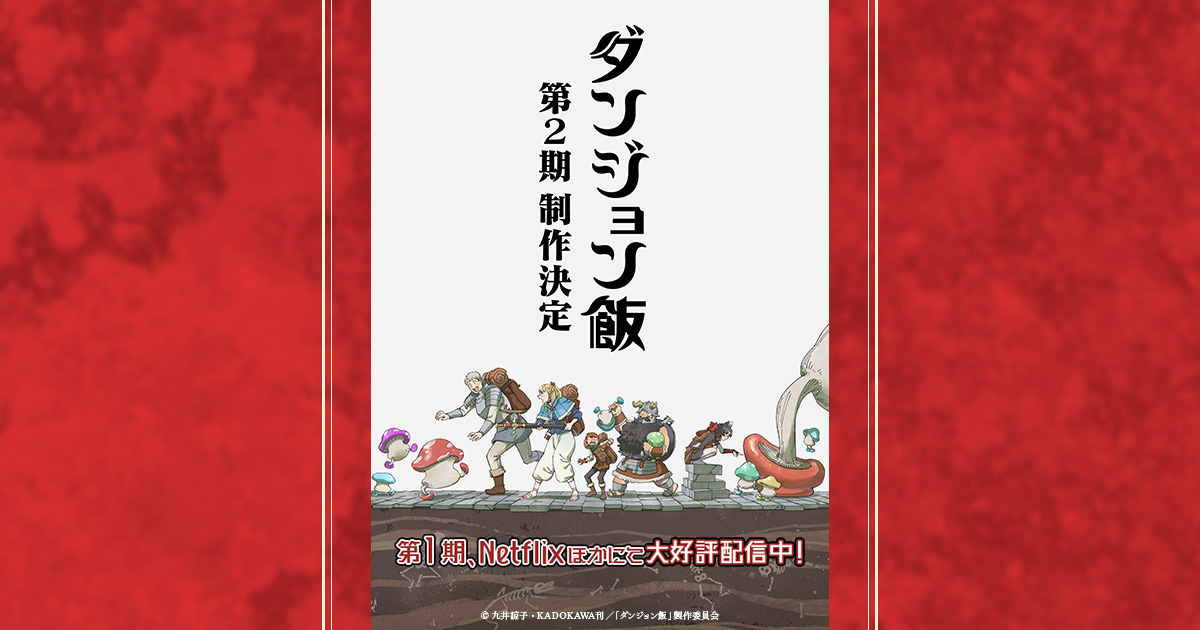
TVアニメ「ダンジョン飯」公式サイト
ダンジョン飯。それは、“食う”か“食われる”か――― シリーズ累計発行1400万部超!(デジタル版含む)TVアニメ第2期制作決定!
delicious-in-dungeon.comHow a Realist Hero Rebuilt the Kingdom
How a Realist Hero Rebuilt the Kingdom provides one of the clearest illustrations of the summoning subgenre. The protagonist is brought to another world not to wield a legendary sword but to fix a failing state -- through fiscal reform, talent management, and institutional design. The summoning framework's built-in "you have a job to do" element connects naturally to the nation-building theme, and the result is a show where conference-room scenes carry genuine intrigue.
It earns its spot because it opens up an entire dimension of isekai that newcomers often do not know exists. At 26 episodes (~10.4 hours), it is not a quick watch, but the payoff comes from seeing policies turn into outcomes over time. The rhythm is deliberation, not spectacle -- conversations and decisions accumulate into something satisfying in a way that action sequences alone cannot replicate.
It suits fans of governance stories, strategic thinking, and talk-driven narratives. Viewers who want kinetic action will find the pacing dialogue-heavy. For newcomers, this is the title that proves isekai extends beyond "adventure" into "administration" -- and if that sounds appealing rather than boring, this is your show.

現実主義勇者の王国再建記
TVアニメ「現実主義勇者の王国再建記」各配信サイトにて好評配信中!
genkoku-anime.comQuick-Reference Chart | Picking by Mood
After scanning a ranked list, the moment you actually choose often comes down less to "which is the best" and more to what mood are you in right now. When I recommend isekai to someone, I rarely lead with a single title -- instead, I start with "are you looking to laugh tonight, dive into something intense, or just unwind?" That framing cuts through the noise of equally famous shows that serve completely different purposes.
Here is the chart for quick decisions.
| Mood | First pick | Follow-up | Newcomer-friendliness | Notes |
|---|---|---|---|---|
| Want to laugh | KONOSUBA | Campfire Cooking | High | KONOSUBA for banter-driven comedy; when you want to relax even further, Campfire Cooking shifts the vibe toward food and travel. |
| Want something heavy | Re:ZERO | Saga of Tanya the Evil | Medium | Re:ZERO for emotional intensity; Tanya the Evil pivots toward tactical and military tension. |
| World-building first | That Time I Got Reincarnated as a Slime | Delicious in Dungeon | High | After enjoying ally recruitment and nation-building in Slime, Delicious in Dungeon deepens the pleasure of understanding how a world actually works. |
| Keep it easy | Campfire Cooking | KONOSUBA | High | Campfire Cooking is the lowest-stress start; KONOSUBA adds more energy when you are ready for livelier comedy. |
| Want a long commitment | That Time I Got Reincarnated as a Slime | Ascendance of a Bookworm | High | Slime for accessible momentum; Bookworm for cultural and systemic depth over a long run. |
The key to using this chart is to connect your first and second picks through different types of satisfaction. Someone who watches KONOSUBA -God's Blessing on This Wonderful World!- and realizes "isekai can actually be this relaxed" transitions smoothly into Campfire Cooking in Another World, moving from comedy into comfort. Conversely, someone who starts with Re:ZERO -Starting Life in Another World- and wants to stay in "heavy" territory but with a different flavor finds Saga of Tanya the Evil waiting -- same intensity, completely different axis. That kind of progression reveals the genre's depth faster than watching similar shows back-to-back.
For world-building enthusiasts, That Time I Got Reincarnated as a Slime remains the strongest starting point. The world expands in readable layers -- allies, territory, politics -- without overwhelming you upfront. Following it with Delicious in Dungeon shifts the focus from "a world that grows" to "a world whose internal logic you piece together," which is a satisfying change of pace. World-building fans tend to enjoy shows more when the information connects rather than accumulates, and this sequence delivers exactly that.
For viewers who prioritize ease, Campfire Cooking in Another World with My Absurd Skill is the most reliable first episode. Season 1 is 12 episodes (~4.8 hours), manageable on weeknight schedules with room to spare. Each episode offers standalone satisfaction, so it never feels like you are grinding through a series. From there, KONOSUBA -God's Blessing on This Wonderful World!- raises the energy level through snappy dialogue while keeping the barrier low.
For those who want a long-term relationship with a series, the impulse to just pick the longest one is tempting but misses the point. What keeps a long show alive is having a reason to come back, not raw episode count. That Time I Got Reincarnated as a Slime sustains forward momentum well, and following it with Ascendance of a Bookworm changes the nature of the satisfaction entirely -- from expansion to accumulation, from broad strokes to fine detail. Recognizing that shift as you go is what transforms someone who watches isekai into someone who understands it.
For branching out toward adjacent moods: if you want more lighthearted comfort, slice of life anime recommendations pair well; if battle intensity is what you are after, action anime comparisons offer a natural next step; and if emotional impact is the priority, anime that will make you cry explores that territory more deeply.
Isekai Anime Trends in 2025-2026
The Rise of Villainess, Cooking, and Slow Life Subgenres
Looking across the isekai landscape in 2025-2026, the shows gaining traction are not just "defeat the strong enemy and climb the ranks" stories anymore. Villainess isekai, cooking-focused titles, and slow life series have established a clear and growing presence, broadening the genre's appeal significantly. From what I have observed in programming trends and how shows gain traction online, isekai functions not only as a stage for battle but equally as a space for testing out an idealized way of living.
Villainess stories are particularly interesting structurally. Their core hook is a protagonist who refuses to accept a predetermined role and instead navigates around doom flags using social intelligence and relationship management. What makes them compelling is that the thrill comes from positioning, wit, and interpersonal strategy rather than combat power. Winning does not mean defeating an enemy -- it means securing freedom within a system's rules. This is essentially a reimagining of the "fresh start" and "self-actualization" impulses that isekai has always traded in, translated into a more grounded, relationship-centered form.
This evolution connects to broader academic observations as well. A J-STAGE paper on isekai and game-like worlds explores how the genre satisfies desires that are difficult to fulfill in reality by placing them in worlds with visible, learnable rules. The desires driving isekai have shifted: where "getting stronger and winning" once dominated, the field now includes "living quietly," "rebuilding relationships," and "turning a passion into a livelihood." The genre's versatility comes from its ability to absorb whatever wish its audience brings.
Cooking and slow life titles track the same trajectory. Campfire Cooking in Another World with My Absurd Skill turns daily meals, travel, and companion interactions into the show's actual substance -- victories over enemies take a distant back seat to the texture of everyday life. Season 1 is 12 episodes (~4.8 hours total), but this is the kind of show that works better consumed one episode at a time rather than binged. Watching one or two episodes on a weeknight and feeling satisfied is a feature, not a limitation -- the show's emotional center is routine, not climax.
Heavier fare remains abundant for those who want it -- Re:ZERO -Starting Life in Another World- and Saga of Tanya the Evil are right there. And for low-stress entry, Campfire Cooking and Ascendance of a Bookworm offer accessible alternatives. The breadth of isekai features at outlets like eeo Media reflects this range -- isekai has moved past "pick what is popular" into "pick what matches your current temperature."
My own perspective has shifted over the years. I used to think of isekai primarily as a vehicle for power-fantasy satisfaction. Now, the addition of shows built around quieter desires has made the genre more approachable than ever. Whether you want to laugh, decompress, or lose yourself in world-building on a given day, isekai has something calibrated for that -- and that flexibility is a major reason the genre continues to thrive.
New Titles in 2025 and Winter 2026 Movement
What matters most for understanding isekai's current position is not individual breakout hits but the sustained thickness of new supply. MyAnimeList's 2025 new isekai list carried 24 entries, and the 2026 best isekai/reincarnation stack reached 46 entries. This is not a genre coasting on past glory -- it is one that reliably fills multiple slots in every seasonal lineup.
Winter 2026 reinforced this pattern. Animate Times' 2026 roundup noted Isekai Shikkaku (The Fate of the Returned Hero) premiering January 6, 2026 and Reborn as a Dragon Egg starting January 10, 2026 -- fresh concepts entering alongside continuing favorites. The regular injection of new perspectives is what keeps the genre from stagnating.
Given this volume, a newcomer's guide cannot stop at established classics. KONOSUBA, Slime, and Re:ZERO remain essential reference points, but with new candidates appearing every season, the most effective approach is to build a foundation with the classics and sample new releases alongside them. Trying to watch everything leads to paralysis, but having a few anchor titles makes it easy to evaluate what each new show brings to the table.
The continuation of established franchises also demonstrates the genre's staying power. Campfire Cooking in Another World with My Absurd Skill has a second season scheduled for October 2025, and Ascendance of a Bookworm season 4, "Daughter of the Domain Lord," begins April 4, 2026. New shows and returning favorites run in parallel, which means isekai offers plentiful entry points and equally plentiful paths forward once you are in.
Viewed as a trend, isekai in 2025-2026 is not riding the tail end of a boom -- it is a genre maintaining strength through specialization and consistent supply. The depth of the new-release pipeline makes "watch the classics and stop" an incomplete strategy. Knowing the established titles while staying open to each season's new arrivals gives you the best vantage point -- and even a single new show per season is enough to track where the genre is heading.

異世界転生・転移・召喚アニメおすすめ一覧【2026年版】 | アニメイトタイムズ
【アニメイトタイムズ】目は開くとそこは……!? 異世界を舞台にした漫画・ライトノベルを原作にしたアニメや映画化されたアニメを、人気作品を厳選して、「おすすめの一覧」として紹介します。おすすめアニメ一覧・主人公最強アニメおすすめ32作品【2
www.animatetimes.comStreaming Platforms Reflect the Genre's Strength
Isekai's dominance shows up not just in title counts but in how streaming platforms treat the genre. ABEMA in particular leans into genre-level promotion -- the fact that ABEMA's Isekai Anime Grand Ranking was tied to November 12 (branded as "Good Isekai Day" in Japan) signals that the genre generates enough concentrated viewership for platforms to build campaigns around it. This is not a niche sustained by a small enthusiast base -- it is a category that streaming services actively market as a reliable audience driver.
Part of why isekai thrives on streaming is how low the entry barrier is. Clips travel well on social media, shows land on featured shelves and curated sections, and catching up on a series that already aired is easy. From my own experience, isekai is a genre where missing the original broadcast does not lock you out of the conversation -- you can jump in weeks or months late and still engage meaningfully. Battle highlights, comedy clips, food-porn moments, villainess reversals -- the genre generates shareable fragments from multiple angles.
Scale of comparison data matters too. Filmarks, for instance, covers over 6,999 anime titles with more than 9.21 million reviews, and placing isekai entries within that pool makes it straightforward to see what resonates within each subgenre. This is not just a popularity story -- having many similar shows actually enables comparative viewing, which is a sign of genre maturity. You can line up villainess titles against slow life entries against heavy dramas and assess temperature differences, something only possible when supply runs deep.
Specific availability shifts over time, so pinning any single show to a single platform is unreliable. What matters is the structural observation: isekai maintains consistent visibility across streaming services. Both classics and new releases stay accessible in recommendation shelves and curated features, and the conversation around the genre refreshes with each season. That combination of discoverability and ongoing renewal is why isekai continues to be chosen -- not just watched -- in the streaming era.
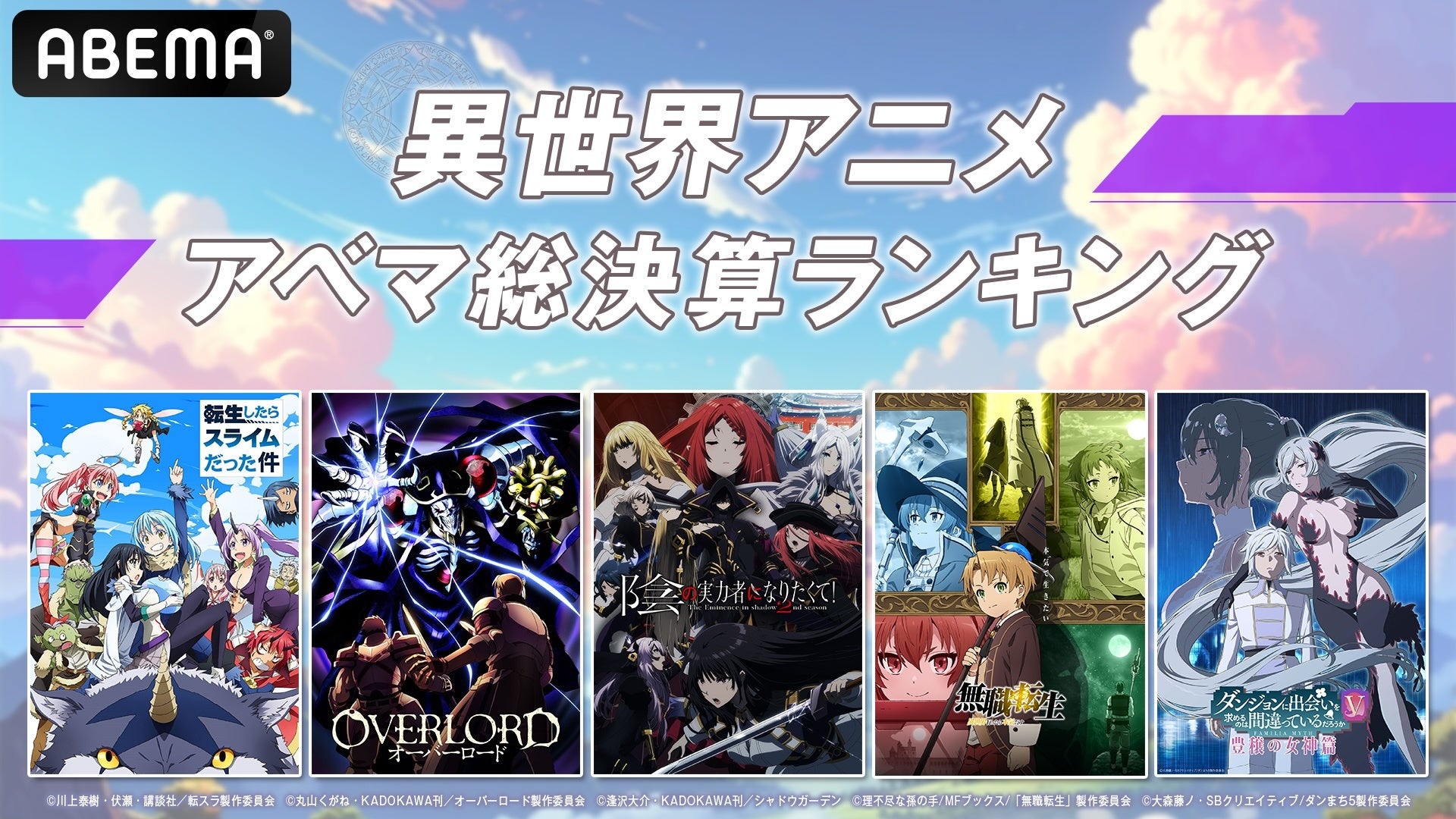
「異世界アニメ アベマ総決算ランキング」を発表!過去配信した異世界アニメにおける、シリーズ累計視聴数上位は?1位を飾ったのは映画化、舞台化もされたあの大人気シリーズ!
株式会社AbemaTVのプレスリリース(2025年11月12日 13時30分)「異世界アニメ アベマ総決算ランキング」を発表!過去配信した異世界アニメにおける、シリーズ累計視聴数上位は?1位を飾ったのは映画化、舞台化もされたあの大人気シリー
prtimes.jpCommon Questions From Isekai Anime Newcomers
Are "narou-kei" and isekai anime the same thing?
They overlap heavily but are not synonymous. Isekai anime refers broadly to shows set in another world, encompassing reincarnation, transportation, summoning, and more. Narou-kei (sometimes written "narou-style") refers to works originating from or stylistically aligned with web novel platforms -- most notably Shousetsuka ni Narou (Let's Become Novelists).
The overlap is large because many popular isekai anime adapted from web novels carry the storytelling conventions associated with that platform. But some isekai titles have source material and stylistic roots outside the narou ecosystem, while some narou-style stories are not strictly isekai at all. For practical purposes, think of them as two circles that share a lot of area without being identical.
小説家になろう - みんなのための小説投稿サイト
syosetu.comDo SAO and Made in Abyss count as isekai?
This is a point where classification genuinely varies by source. Sword Art Online involves diving into a virtual world, which gives it a structural resemblance to isekai -- and it frequently appears alongside isekai titles in broader lists. At the same time, a strong case exists for classifying it as VR/game-world science fiction, and many outlets draw that distinction.
Made in Abyss presents a similar ambiguity. The experience of descending into a world governed by alien rules feels isekai-adjacent, but it is more commonly categorized as dark fantasy or adventure fantasy. The honest answer is both can appear on the same shelf in broad discussions, but strict genre taxonomies often separate them. Genre boundaries are not clean lines -- they shift depending on which features a given outlet emphasizes. Treating these labels as orientation tools rather than rigid categories is the most useful approach.
アニメ「ソードアート・オンライン」ポータルサイト
最新作『劇場版 ソードアート・オンライン -プログレッシブ- 冥き夕闇のスケルツォ』Blu-ray&DVD 好評発売中
www.swordart-online.netHow should I start a show with a high episode count?
Rather than committing to the full run upfront, try the first three episodes or one cour's worth and assess from there. The opening stretch usually establishes the world's rules, the protagonist's role, and the show's pacing -- plenty of signal for a compatibility check.
Campfire Cooking in Another World with My Absurd Skill season 1 is 12 episodes (~4.8 hours), manageable at one per weeknight. Delicious in Dungeon at 24 episodes (~9.6 hours) is better approached as something to settle into once you know you like it. Twenty-four episodes is a meaningful time commitment -- comparable to several movies back-to-back -- so "try the first half before committing to the full run" is a more relaxed way in.
For heavier shows, binge-watching is not always the ideal format. Re:ZERO -Starting Life in Another World- and Saga of Tanya the Evil carry enough emotional and informational weight that spacing sessions out helps with processing. Lighter titles like KONOSUBA -God's Blessing on This Wonderful World!- and Campfire Cooking actively benefit from multi-episode runs because the comedic and comfort rhythms build momentum. Adjusting your viewing pace to a show's emotional temperature, rather than its episode count, prevents most common drop-off points.
Where can I watch these?
Streaming availability is not fixed -- titles move between services over time, and regional access varies. Naming a specific platform as the permanent home for any show would be misleading.
That said, patterns exist. Campfire Cooking in Another World with My Absurd Skill was promoted via its official X account as having fastest streaming on Prime Video during a certain period (this was announced for the Japanese market; availability may differ by region). How a Realist Hero Rebuilt the Kingdom has had streaming information available through d Anime Store and FOD. However, since this kind of information updates frequently, the most reliable approach is to check each show's official website or official streaming page for the latest availability once you have decided what to watch. Building a quick habit of confirming the official source before searching randomly saves a surprising amount of time.
Summary
If your first pick has you stuck, That Time I Got Reincarnated as a Slime offers the widest appeal with the least friction, and KONOSUBA -God's Blessing on This Wonderful World!- is the fastest route into isekai comedy. From there, Re:ZERO -Starting Life in Another World- takes you toward heavy drama, while Campfire Cooking in Another World with My Absurd Skill covers the comfort end of the spectrum. Each path leads to a branch that matches your personal taste.
Once you have finished reading, here is a concrete sequence to follow:
- Identify your current mood
- Use the quick-reference chart to pick one title
- Check the show's official site or streaming page for current availability, and if you enjoy it, pick a second title from the same mood category
For further reading, guides on getting started with anime as a beginner, genre-sorted anime recommendations, and this isekai selection guide itself connect well for building a broader picture. Isekai is a genre where finding the right first show opens the entire landscape -- which means how you choose that first title shapes your impression of everything that follows.
Related Articles
11 Anime Movies That Will Make You Cry | Ranked by Emotion Type: Joy, Sadness, Longing
11 Anime Movies That Will Make You Cry | Ranked by Emotion Type: Joy, Sadness, Longing
You and I Are Polar Opposites: Why It Topped the Winter 2026 Anime Rankings
You and I Are Polar Opposites: Why It Topped the Winter 2026 Anime Rankings
Madoka Magica's New Film Walpurgis no Kaiten Finally Continues the Story After 13 Years
Madoka Magica's New Film Walpurgis no Kaiten Finally Continues the Story After 13 Years
Jujutsu Kaisen Season 3: Culling Game Arc Highlights and Latest Anime Updates